The Systems Effect

Articles

Business Systems & SOP Articles

Documentation & SOP

Accounting SOP Examples: 5 Procedures Every Small Business Needs

Five real accounting SOP examples, from the weekly payables run to month-end close, with a copyable skeleton for each and the leak it plugs.

AI & Automation

AI Runs on SOPs: Why Documentation Comes Before Automation

An automation is only as good as the instructions under it. Here is why a documented process is the spec your AI runs on, what to automate first, and what to leave alone.

Tools & Resources

The Best Knowledge Base Software for Small Business (2026)

Notion, Confluence, SharePoint, Guru and Trainual do five different jobs, and picking the wrong one costs you re-keying, not subscription dollars. Here is what each is genuinely for, and the rule that decides it.

Process & Systems Fundamentals

How to Systemize an HVAC Business: From Group Chats to Real Systems

The truth about every job is scrolling away in 20-plus group chat threads. Here is the order that gets an HVAC or duct cleaning company onto real systems: routing, records, pay, reconciliation, and the software question last.

Training & Adoption

Mock Call Training: How to Coach Reps Before Real Customers Do

Your new reps are practicing on somebody, and right now it is your customers. Mock call training moves that practice into a scheduled session scored on a written rubric.

Process Mapping & Documentation

Process Map Symbols: The Small Set You Actually Need

Your mapping tool will offer you dozens of shapes, and almost every business process map needs six. Here is what each one means, and which extras quietly make your map unreadable.

Owner Dependence & Business Value

How to Sell Your Business to Your Employees

For most owners, the only realistic buyer is already on payroll. Here is how an inside exit actually works, and the blocker that kills it long before price comes up.

Documentation & SOP

Client Onboarding SOP: The Handoff From Sale to Delivery

A client onboarding SOP that runs from the last sales call to day 90: the expectations email, the handoff document sales owes delivery, the booked kickoff, and the update cadence that prevents invoice shock.

Tools & Resources

Whale vs Waybook: Which SOP and Training Platform Fits Your Team

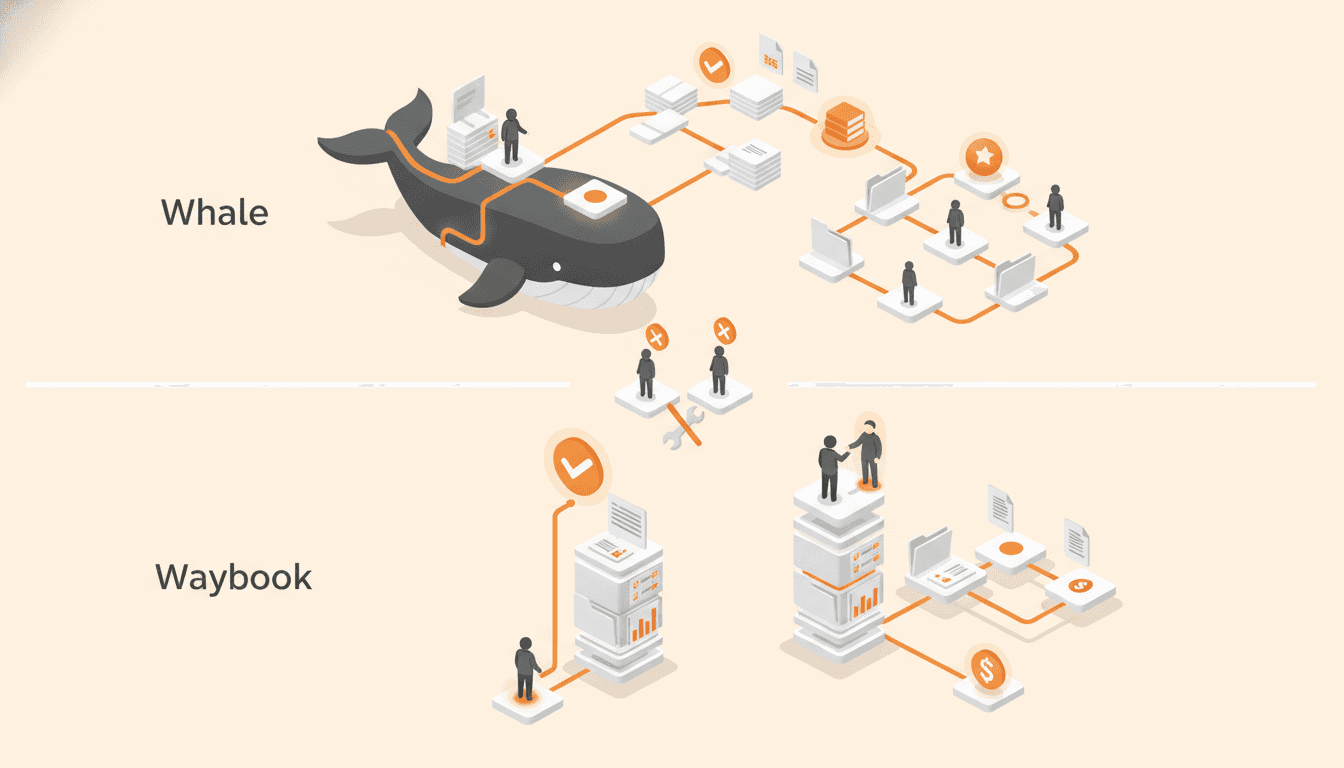
Whale keeps a documentation library alive and Waybook gets a new hire through their first month. Here is what each one really does, how they price, and the work neither platform performs.

Process Mapping & Documentation

You Have a Process Map. Now What?

A finished map is not a deliverable. Here is the review that turns a process map into SOPs, written decision rules, and a list of the people your business cannot afford to lose.

Process & Systems Fundamentals

How to Systemize a Physical Therapy Clinic: The Clinic Director Playbook

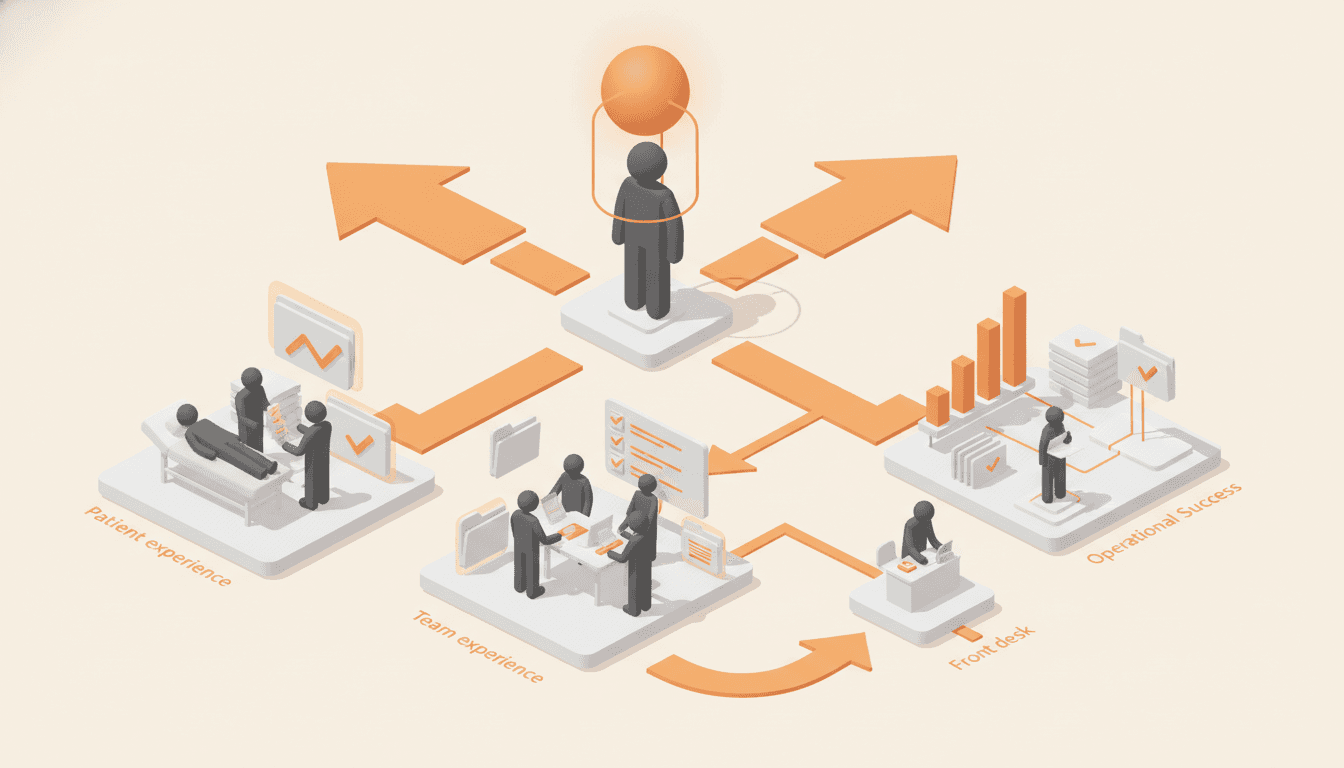
A physical therapy clinic runs on the director's memory until you move that playbook into three buckets: patient experience, team experience, and operational success. Here is where to start, and why the front desk comes first.

Tools & Resources
Is Whale Worth It? An Honest Review for SOPs and Training

Whale documents your SOPs, routes them to the roles that need them, and tracks who finished the training. Here is what it does well, where it falls short, what it really costs, and the one problem no platform on the market solves.

Documentation & SOP

Employee Scheduling SOP: Build the Week Without the Group Chat

A scheduling SOP is a chain of deadlines, not a spreadsheet. Here is how to write the one that covers requests, the build window, publishing, coverage rules, and the 5am call out.

Software & Technology

How Much Does Custom Software Cost for a Small Business?

Custom software has fallen far enough in price that small businesses can seriously consider it. Here is what actually sets the number, one real $61,000 quote, and the five questions that decide whether to build at all.

Process & Systems Fundamentals

How to Systemize a Cleaning Business (Without Bloating the Playbook)

Most established cleaning companies do not need more documentation. They need less of it, organized better, rebuilt one playbook at a time.

Training & Adoption

Core Values People Actually Use (Not Wall Art)

Integrity on a plaque changes nothing. Here is how to surface the values your team already runs on, write each one as a behavior somebody can do, and use them where it costs you something.

Tools & Resources
Process Street vs Trainual: Checklists or Training?

Process Street runs recurring work and records that it happened, while Trainual teaches the job and reports who learned it. Buying the wrong one is how teams end up paying for both.

Training & Adoption

The Skills Matrix: See Who Can Actually Do What

A skills matrix is a grid of processes against people, scored by what each person can run alone today. Here is how to build one, score it so the numbers mean something, and read the row that should worry you.

Process & Systems Fundamentals

How to Systemize an Electrical Contracting Business (When Everything Runs Through You)

The bids, the material calls, the hard conversations: everything routes through you. Here is the sequence for moving an electrical contracting business out of your head and into systems your crews will actually run.

Software & Technology

What Is a Business Operating System? (Not the EOS Kind)

Two different things share the name. One is a management framework like EOS, and the other is one app, on one database, where every step can see the step before it.

Documentation & SOP

The Exit Interview Nobody Runs: Capture the Knowledge, Not the Feelings

Almost every company runs an exit interview, and almost none of them ask about the work. Here is the other meeting: booked in the first 48 hours after notice, recorded, and aimed at the processes that leave with the person.

Software & Technology

How to Clean Up Your Business Data (Before You Automate Anything)

Nobody trusts the reports, so everybody keeps a private spreadsheet. Cleaning the file is not the fix: the fix is repairing the four things that break the data in the first place.

Process & Systems Fundamentals

How to Systemize a Coaching Business (So Clients Actually Implement)

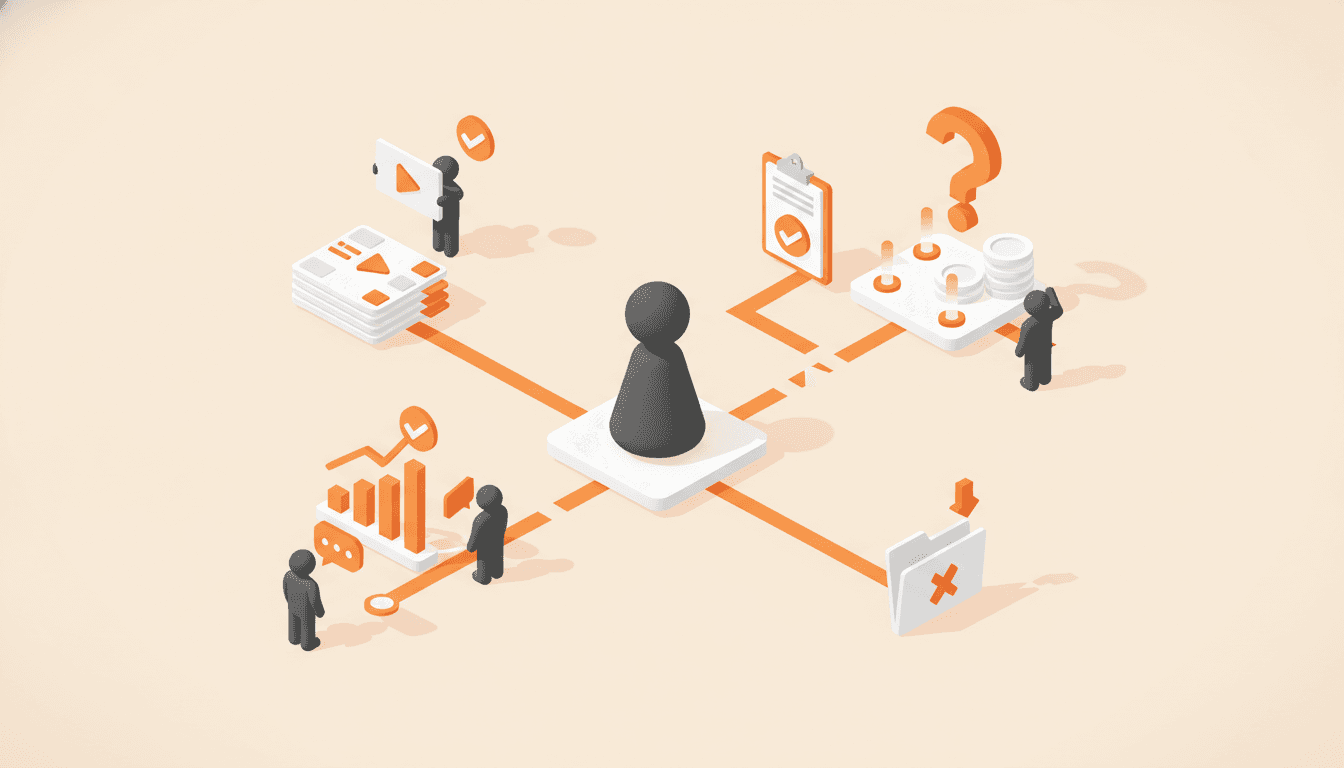
Coaching businesses rarely fail at delivery, they fail at the client's install. Here is how to systemize the offer, the packaging, and the video so what you sell actually gets used.

Documentation & SOP

How to Write Training Documentation New Hires Actually Use

New hires skim page one and start working, so training documentation has to survive that: gated depth, the why layer, and a job aid at the desk.

Owner Dependence & Business Value

Key Person Risk: What It Costs and How to Take It Off the Table

Key person risk is what your business loses when one person is the process. Four costs, only one of which ever gets a line item, and the two-week test that measures the rest.

Software & Technology

No-Code vs Custom Software: When the Low-Code App Stops Being Enough

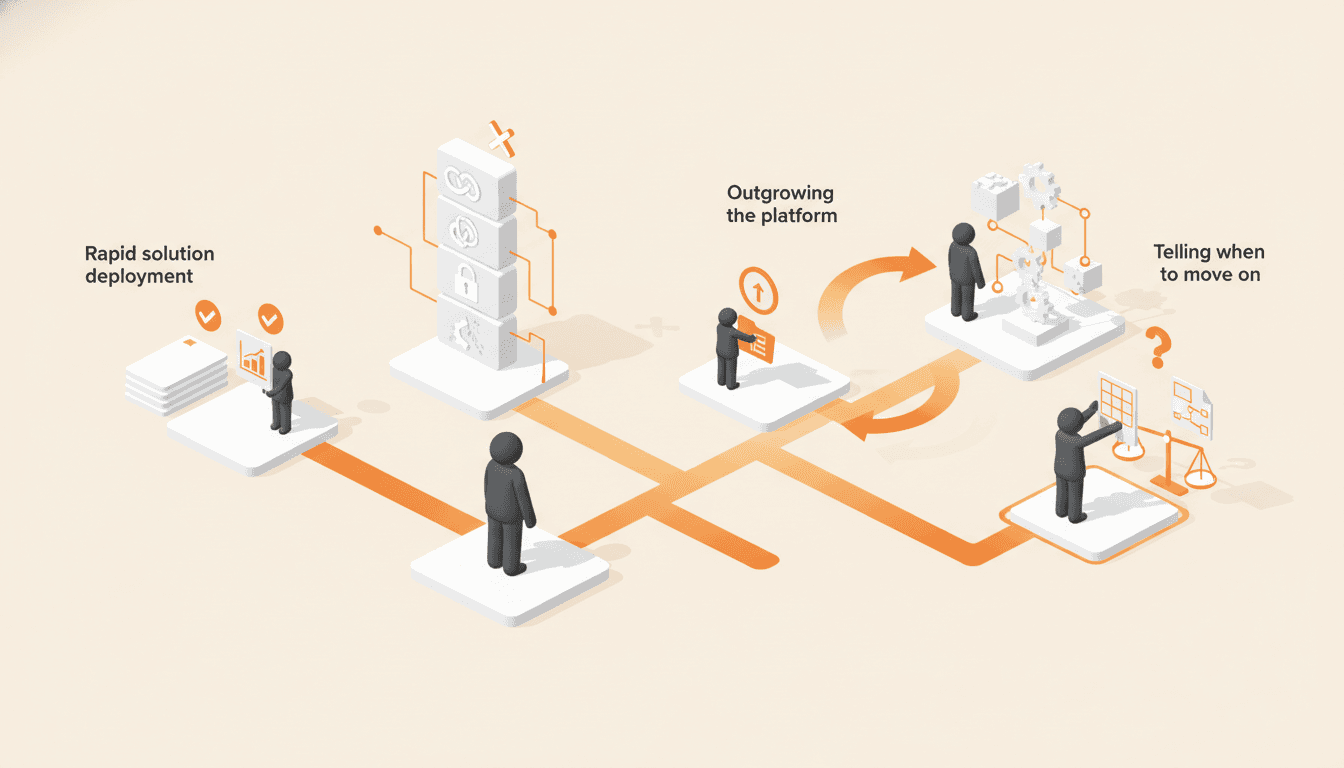
No-code tools put a working internal app in an operator's hands in days. Here is what they genuinely solve, the four walls every low-code build eventually hits, and how to tell when a workflow has outgrown the platform it lives on.

Training & Adoption

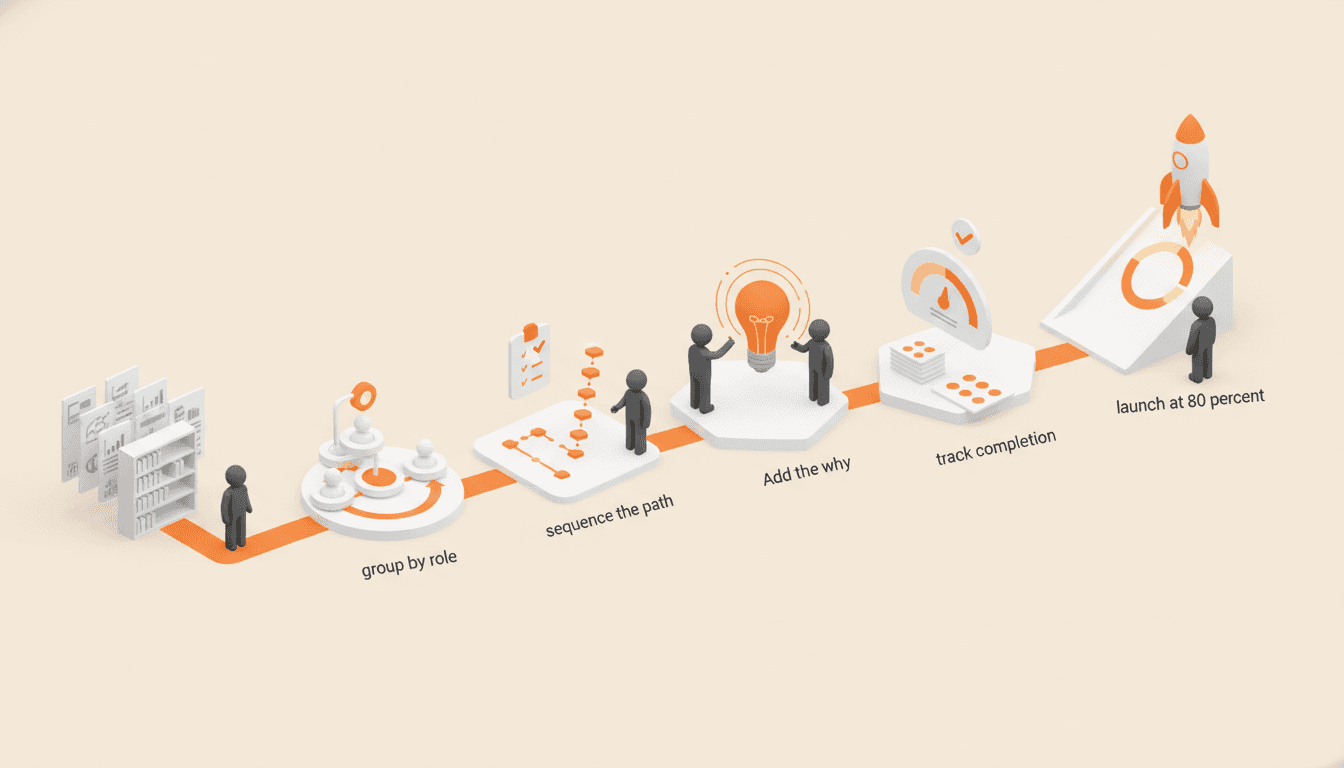
How to Turn Your SOPs into a Training Program

Your SOP library is not a training program yet. Here is the five step conversion: group by role, sequence the path, add the why, track completion, and launch at 80 percent.

Process & Systems Fundamentals

The Scorecard Every Small Business Needs (and Who Owns Each Number)

The numbers are usually already in the building. What turns them into a scorecard is one owner on every line, a written definition, and 15 minutes on the same day every week.

Training & Adoption

Train the Trainer: How to Build People Who Can Teach the Process

Most small businesses hand training to whoever is best at the job, then wonder why it does not transfer. Here is how to pick an internal trainer, equip them with a script and a rubric, and measure them on what the new hire can do alone.

Owner Dependence & Business Value

Why 4 of 5 Businesses Never Sell (And How to Be the One)

Four of five businesses that list for sale never close, and the reason is rarely profit: the value cannot be handed to anyone. Here is what buyers price against, and the two-year fix that changes it.

Software & Technology

Custom CRM vs Off the Shelf: When to Stop Fighting Your CRM

Most small businesses should keep renting their CRM. Here are the four fights that mean yours no longer fits, what a build really costs, and the five questions that decide it.

Documentation & SOP

Field Operations SOP Examples: SOPs That Survive the Truck

Five field operations SOP examples from real crews: job closeout, dispatch handoff, time capture, vehicle checks, and on-site quality, each written to be finished on a phone in a driveway.

Documentation & SOP

HR SOP Examples: Hiring and Onboarding Procedures That Get Used

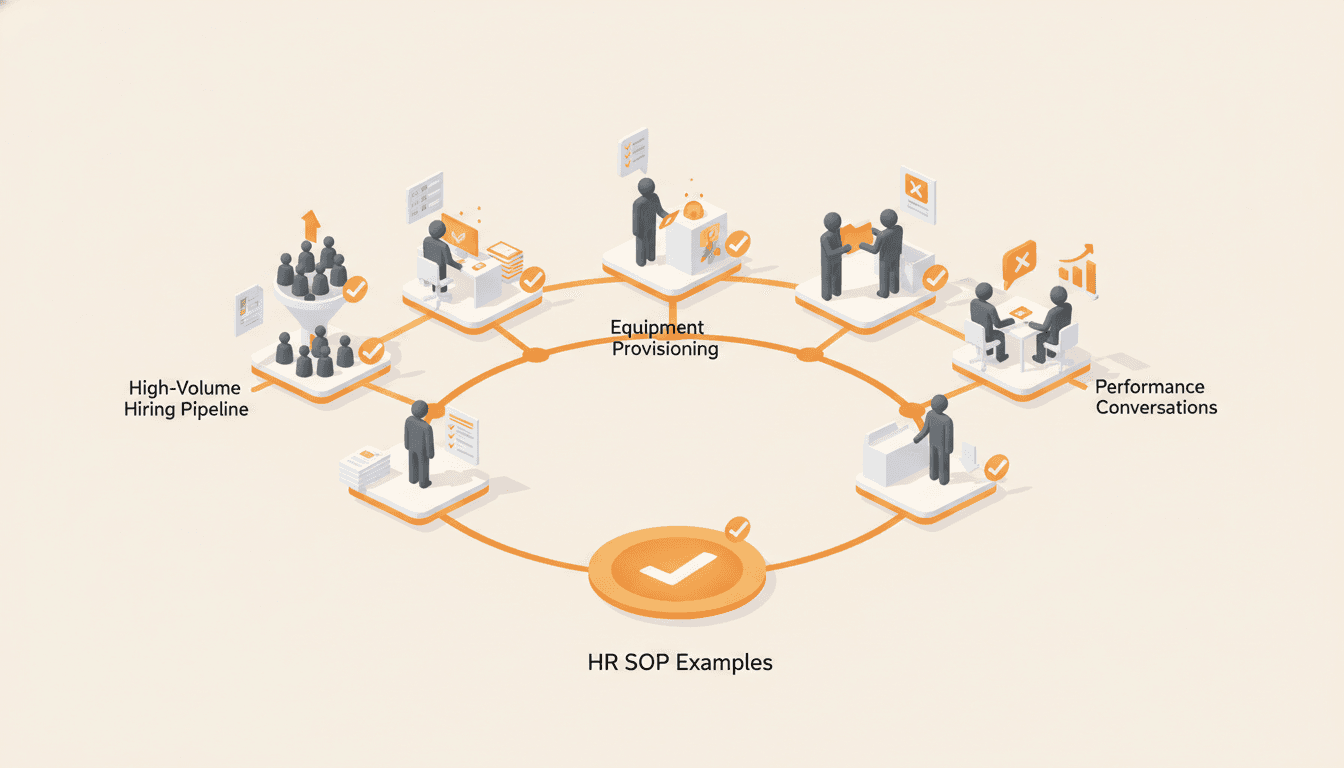
Five real HR SOP examples from small businesses: a high-volume hiring pipeline, day-one setup, equipment provisioning, the exit handoff, and performance conversations that actually happen.

Documentation & SOP

Knowledge Management for Small Business: A Practical Starting Point

Knowledge management at 40 people is not a software purchase. It is four kinds of knowledge, one home for each, an owner on every document, and an index you build before you write anything new.

Process Mapping & Documentation

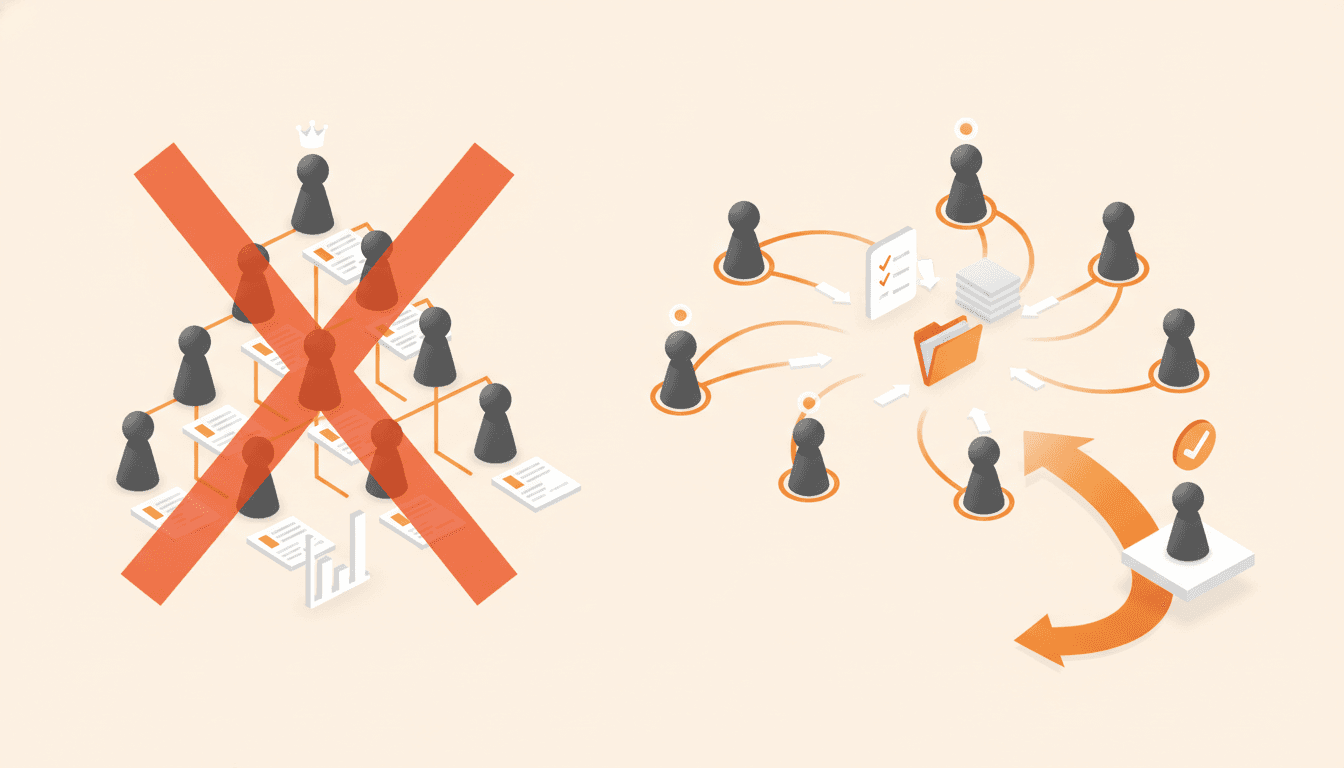
Your Org Chart Is Not How the Work Happens

An org chart shows reporting lines, not who owns the work, which is why systems built off the boxes end up documenting titles. Here is how to map roles and responsibilities starting from the work itself.

Process & Systems Fundamentals

How to Systemize a Construction Business (One Role at a Time)

Construction knowledge lives on the jobsite, not in the office. Systemize one role at a time, from the first five SOPs to the monthly rhythm that keeps them alive.

Scaling & Growth

Opening a Second Location: What to Document Before You Sign the Lease

A second location does not fix a weak process, it runs a second copy of it. Here is what to document, who to train, and which numbers to check before you sign anything.

Process & Systems Fundamentals

Real Estate Business Systemization: An Honest Comparison of Methods

Real estate teams systemize one of three ways: buy an operations template, build in a low-code tool, or document through interviews. Here is what each costs and where each fails.

Documentation & SOP

What Is a Work Instruction? (And How It Differs From an SOP)

A work instruction is the click-by-click layer underneath an SOP. Here is where it sits in the stack, what belongs in one, and why fusing the two makes your documentation go stale.

Documentation & SOP

SOP Version Control: How to Keep One Current Copy of Everything

Three copies of the same process, and nobody sure which one is current, is a filing problem rather than a writing problem. Here is the header, the numbering, the approval step, and the archive rule that keep exactly one copy live.

Process & Systems Fundamentals

What Is an Operations Manual? What Goes In One and What Does Not

An operations manual is the one document that explains how your business runs. Here is what belongs in each chapter, what to keep out of it, and how to stop it from turning into a file nobody opens.

Training & Adoption

Why "Shadow Someone" Training Fails (And What to Build Instead)

Watching someone do the job is not training, it is proximity. Here is why shadowing produces three versions of every process, and what to build in its place.

Documentation & SOP

Customer Service SOP Examples: From First Call to Escalation

Five customer service SOP examples from real service businesses, covering the whole arc from the first inbound call to the escalated case nobody wants to improvise.

Process & Systems Fundamentals

How to Find the Bottleneck in Your Business (Before You Hire Around It)

A bottleneck is the one step that sets the pace for everything after it. Here is how to locate yours with a stopwatch instead of a hiring req, and why the fix is almost never another person.

Documentation & SOP

Inventory SOP Examples: Ordering, Receiving, and Counting Procedures

Five inventory SOP examples you can copy, covering the standing order day, receiving, job materials, cycle counts, and supply requests, plus how to write your own.

Documentation & SOP

Knowledge Risk Assessment: Find Your Single Points of Failure

A structured way to find out whose head your business lives in. Score every role on who holds what and how replaceable it is, then document in order of damage.

Owner Dependence & Business Value

Owner Co-Dependence: You Built the Business. It Built You Back.

The business cannot run without you, and you cannot run without the business. That second half is the one nobody audits, and it is why owners who finally get free sell and regret it within a year.

Software & Technology

SaaS Sprawl: When Your Tool Stack Becomes the Bottleneck

A dozen subscriptions, each bought for a good reason, and nobody owning the seams between them. The subscription total is not what SaaS sprawl costs you: the re-keying is.

Scaling & Growth

How to Standardize Operations Across Franchise Locations

Every franchise location drifts into its own way of working. Here is how to standardize from a model store without killing the details your teams love.

Process & Systems Fundamentals

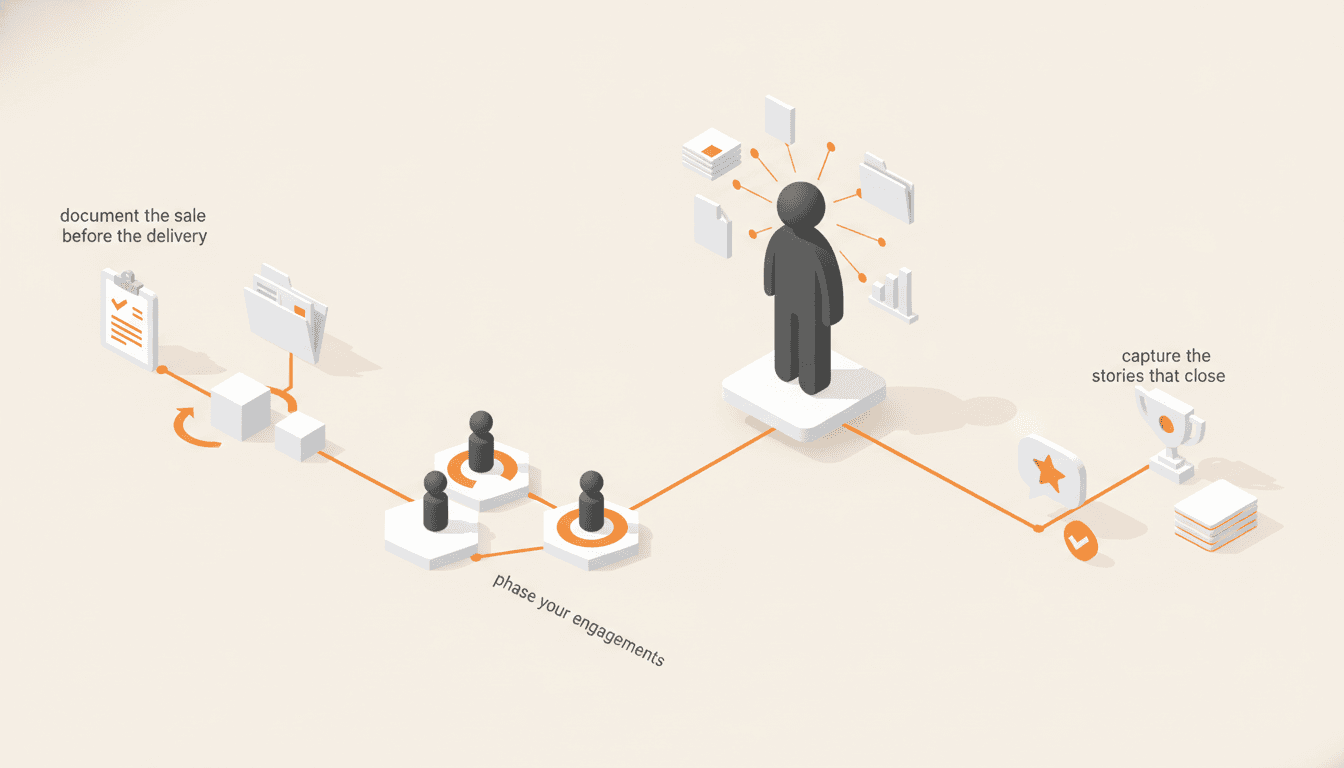
How to Systemize a Consulting Firm (When You Are the Product)

Consulting firms stay founder-dependent because the founder is the product. Here is the order that works: document the sale before the delivery, phase your engagements, and capture the stories that close.

Tools & Resources

Trainual vs Notion for SOPs: An Honest Comparison

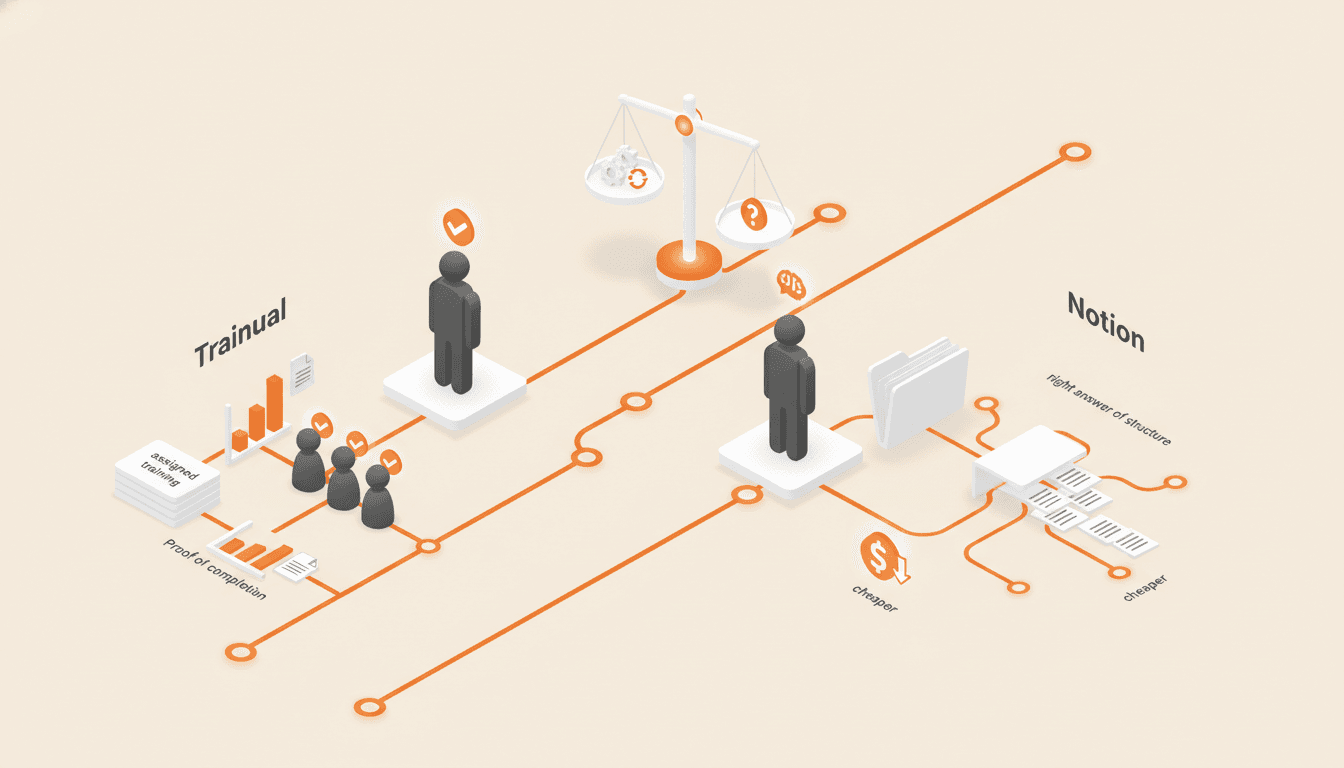
Notion is cheaper and more flexible, but Trainual assigns training by role and proves who finished it. The right answer depends on headcount, turnover, and whether anybody owns the structure.

Documentation & SOP

Wisdom Interviews: How to Capture Why Your Best People Get It Right

Two people follow the same SOP and only one gets it right. The difference is a short list of unwritten principles, and a wisdom interview is how you capture them before they walk out the door.

EOS-Specific

Delegate and Elevate: How to Actually Hand Off the Work

The EOS Delegate and Elevate grid tells you what to hand off, then leaves you to do the hard part alone. Here is the handoff that sticks: record the task, capture the decision points, name one owner.

Process & Systems Fundamentals

How to Systemize a Membership Association (When Officers Change Every Year)

An association repeats the same year forever while the people running it rotate out. Document the membership lifecycle, chapter events, certificates, and the officer handoff, in that order, and the calendar stops depending on memory.

Documentation & SOP

How to Build a Knowledge Transfer Plan (Before You Need One)

Most knowledge transfer plans get written in the two weeks after a resignation letter. Here is the version you build while you still have runway: ranked by damage, recorded from the real work, proven by a solo run.

Owner Dependence & Business Value

The Owner Dependency Audit: Score How Much Your Business Needs You

A 15-question audit that scores how much your business needs you across five separate dependencies, and what to do first with the number you get.

Process & Systems Fundamentals

What Is Standard Work? Turning Three Ways of Working Into One

Three people run the same task three different ways and nobody in the building knows it. Standard work is how you turn those three versions into one everybody actually uses.

Tools & Resources
Free SOP Software: What You Get Free and Where It Stops

Free tiers cover more of the SOP job than most owners expect, and they all stop at the same place. Here is the free stack that works under 10 people, and the trigger that tells you it is time to pay.

Tools & Resources

Is Guidde Worth It? An Honest Review for SOP Creation

Guidde turns a screen recording into a narrated step-by-step guide in minutes. Here is what it captures well, where it goes blind, what it really costs, and the documentation work no capture tool does for you.

Documentation & SOP

Safety SOP Examples: Write the Rule Before the Fire

Five safety SOP examples from real field and service crews: the daily hazard check, incident reporting, equipment inspection, return to work, and the safety meeting that is not a lecture.

Training & Adoption

Stay Interviews: Ask Before They Quit

An exit interview asks someone who has already gone why they left. A stay interview asks while they are still here, and the same hour surfaces the work only they know how to do.

Documentation & SOP

The Two-Interview Method: Map First, Film a Week Later

The fastest way to ruin a training video is to film the first conversation you ever have with the expert. Map the process in one session, film it a week later, and let the week in between do work neither interview can.

Training & Adoption

The 30-60-90 Day Plan for a New Manager (With the Handoff Built In)

Most 30-60-90 day plans list meetings and reading. Write yours as a handoff schedule: what a new manager learns, runs, and permanently takes off the owner's plate.

Documentation & SOP

Accounts Receivable SOP Examples: Invoicing and Collections Procedures

Five AR procedures built from real businesses, plus the decision points that make them work: when is a payment real, who closes a job, and when does a reminder become a call.

AI & Automation

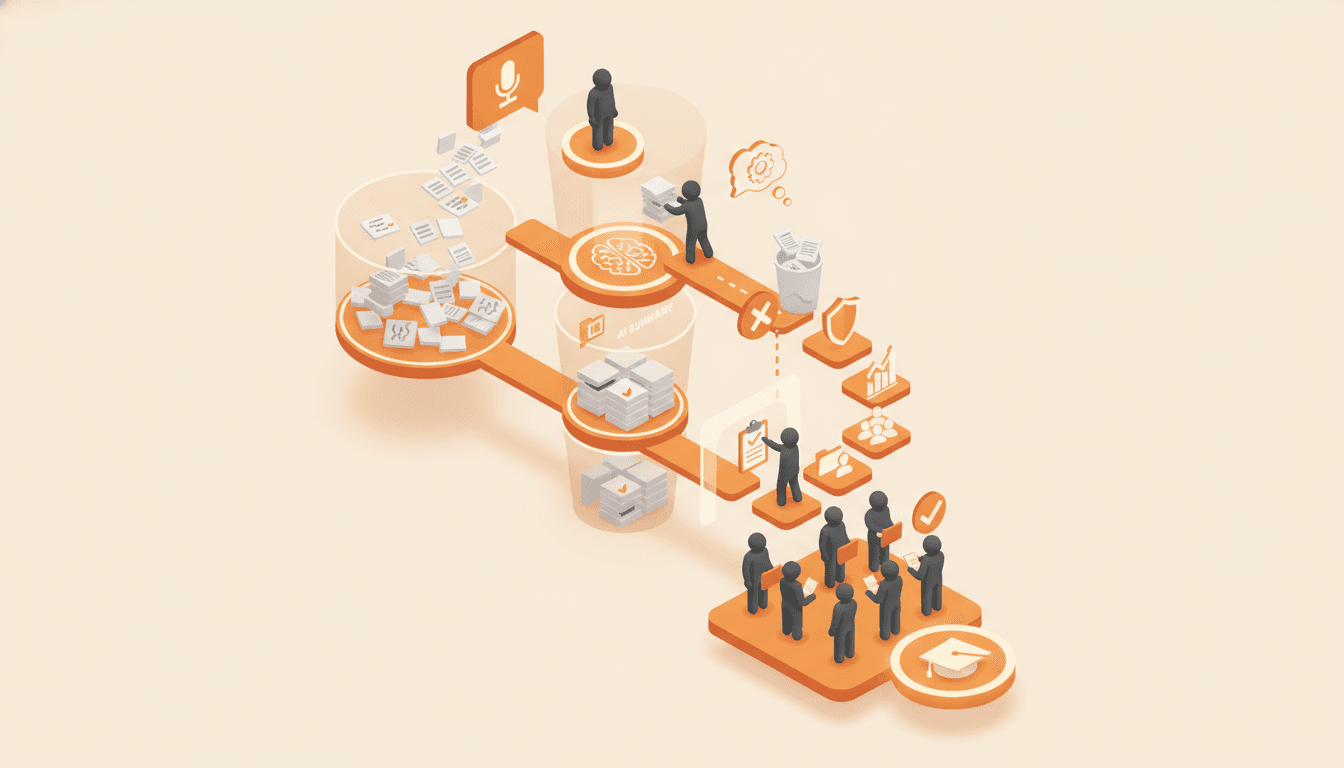
AI Meeting Notes Are Not Documentation. Here Is What to Do With Them.

Your notetaker produces an accurate summary of every call and none of it is documentation. Here is what AI meeting notes are genuinely good for, what they silently drop, and the funnel that turns a raw transcript into training people can follow.

Tools & Resources

AI SOP Generators: What They Get Right and What They Miss

An AI SOP generator will draft a simple screen-based task in minutes and get your hardest process confidently wrong. Here is what these tools actually do, which ones are worth using, and the workflow that keeps them honest.

EOS-Specific

The Best EOS Software in 2026: Ninety vs Strety vs Bloom Growth

Ninety, Strety and Bloom Growth all run the model competently, so buy for the ritual that is broken. Here is what each is best at, and why none of them will document a core process for you.

Documentation & SOP

Why Self-Serve Documentation Never Gets Done (Book the Hour Instead)

Handing your team a login and a recording tool does not produce documentation. A standing session on the calendar does, and here is how to run it.

Documentation & SOP

How Much of Your Business Is Actually Documented?

We measured 16 businesses across 68 roles and 461 process areas. The average was 27% documented, half the role areas had nothing at all, and the gaps were almost never where the owner expected them.

Process & Systems Fundamentals

The Job Debrief That Makes the Next Bid Smarter

Lessons learned is the step everyone signs off and nobody reads again. Here is what belongs in a job debrief, who runs it, and how to store it so the next estimator can actually find it.

Process & Systems Fundamentals

Schedule to the Client's Deliverables, Not Your Finish Date

Most contractors build a schedule that can only report one date, while the client is asking about one system. Here is how to get the sequencing question answered before anyone prices the job.

Process & Systems Fundamentals

How to Systemize a Financial Advisory Practice (When the Rules Live in a Chat Thread)

In advisory firms, the advice is rarely the bottleneck. The servicing work behind it is, and most of the rules that govern it are sitting in an old chat thread nobody can search.

Process & Systems Fundamentals

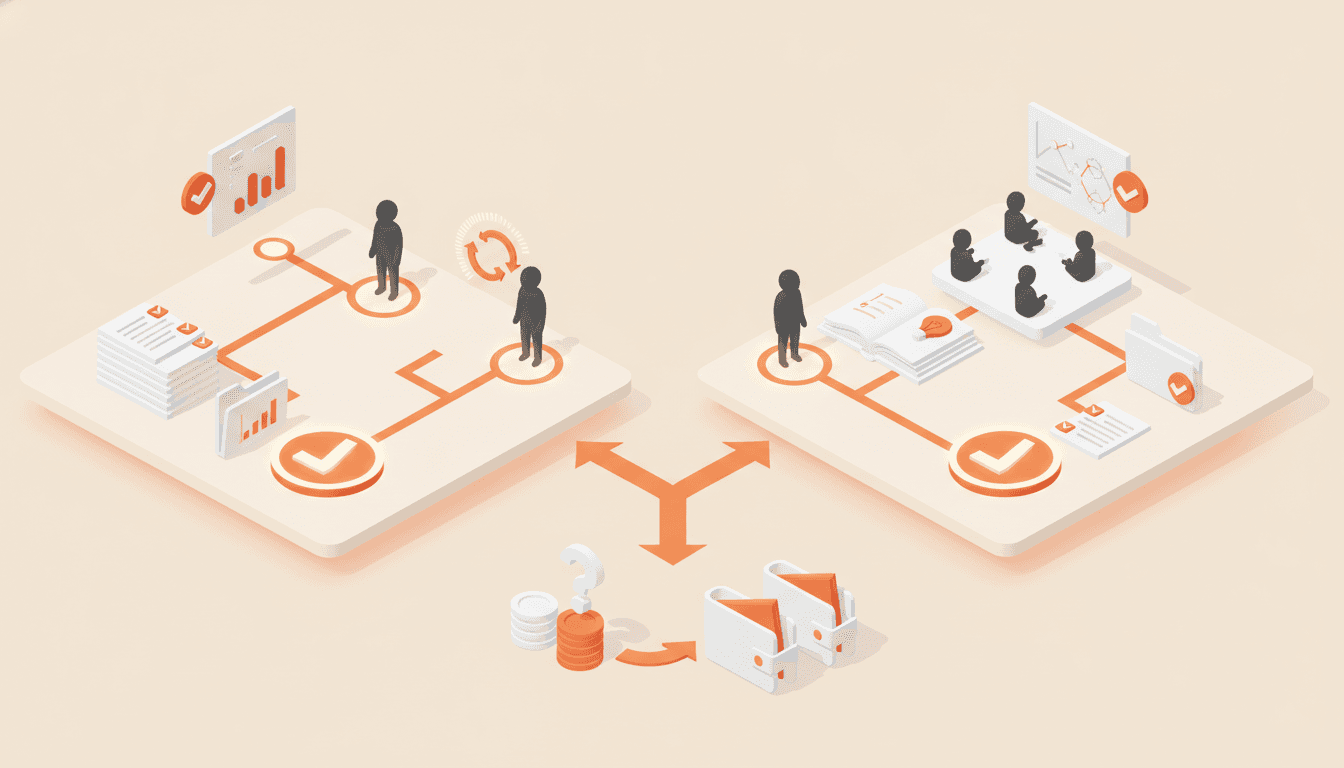
How to Systemize a Real Estate Wholesaling Business (Intake to Assignment)

Wholesaling operations do not lose money on marketing. They lose it at title, at the fork between two deal paths, and in the month they hire ten people at once, so document in that order.

Owner Dependence & Business Value

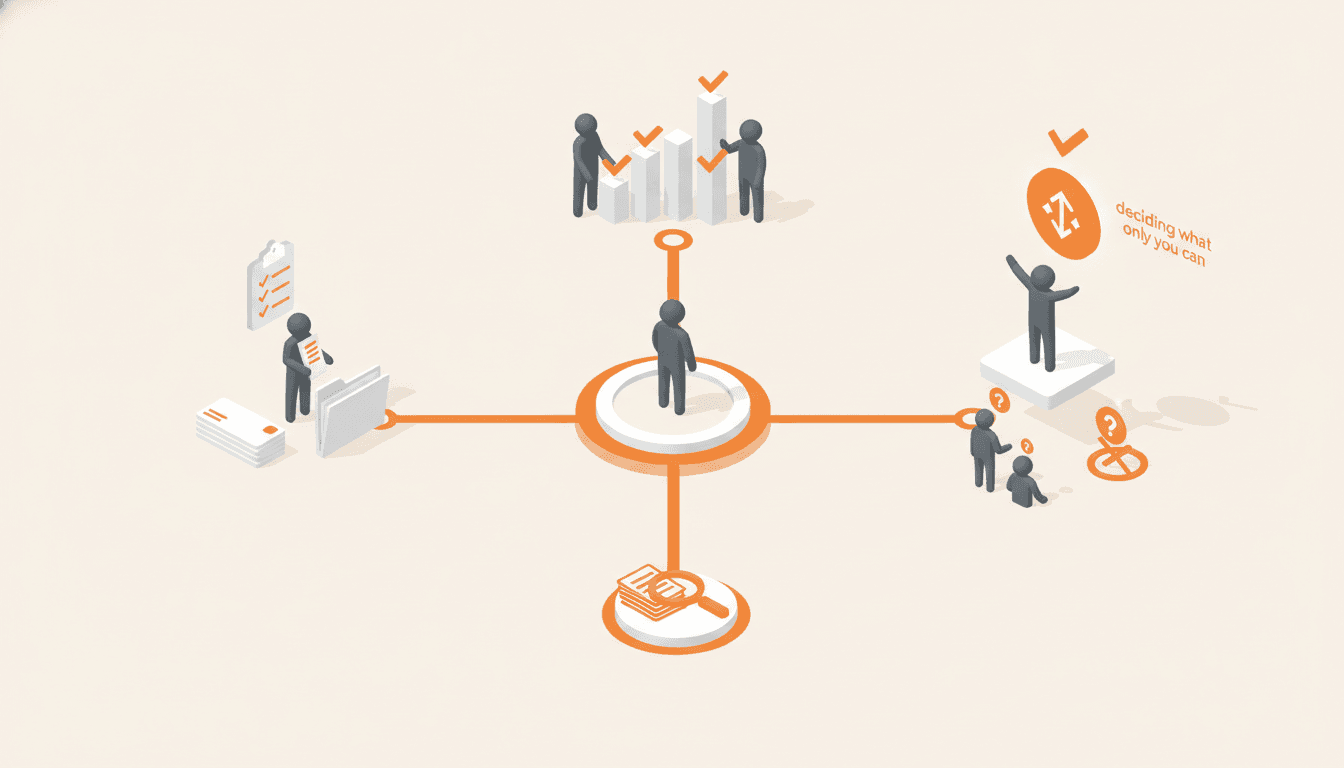
The Interruption Log: Find Out What Only You Can Decide

Stop guessing which parts of the business genuinely need you. Log one real day of interruptions, sort them by why people came to you, and the answer writes itself.

Process Mapping & Documentation

Ask How It Works, Then Ask How It Should

Most mapping sessions ask one question and get a blended answer. Ask how the work runs today and how it should run as two separate questions, and the gap between them names your next change.

Scaling & Growth

How to Systemize a Multi-Location Auto Repair Shop (3 Locations to 8)

Most three-shop owners assume systemization starts with a broken process, and it usually does not. Here is what to document first, how long each document should run, and how to do it without insulting the people you promoted.

Training & Adoption

Stop Scripting Your Training Videos. Answer Questions Instead.

A trainer rejected three usable takes of her own script in a row, then named the fix herself: turn the camera on and ask questions. Here is the recording format that gets a fluent expert on tape in one sitting.

Documentation & SOP

What Belongs in a Quote: The Lines That Stop the Argument Later

A quote is the only record most jobs ever get, so it has to carry more than a price. Here are the eight sections a quote should include, and why the exclusions line saves more money than the markup.

Process & Systems Fundamentals

Continuous Improvement for Small Business: Keeping Systems Alive After the Project Ends

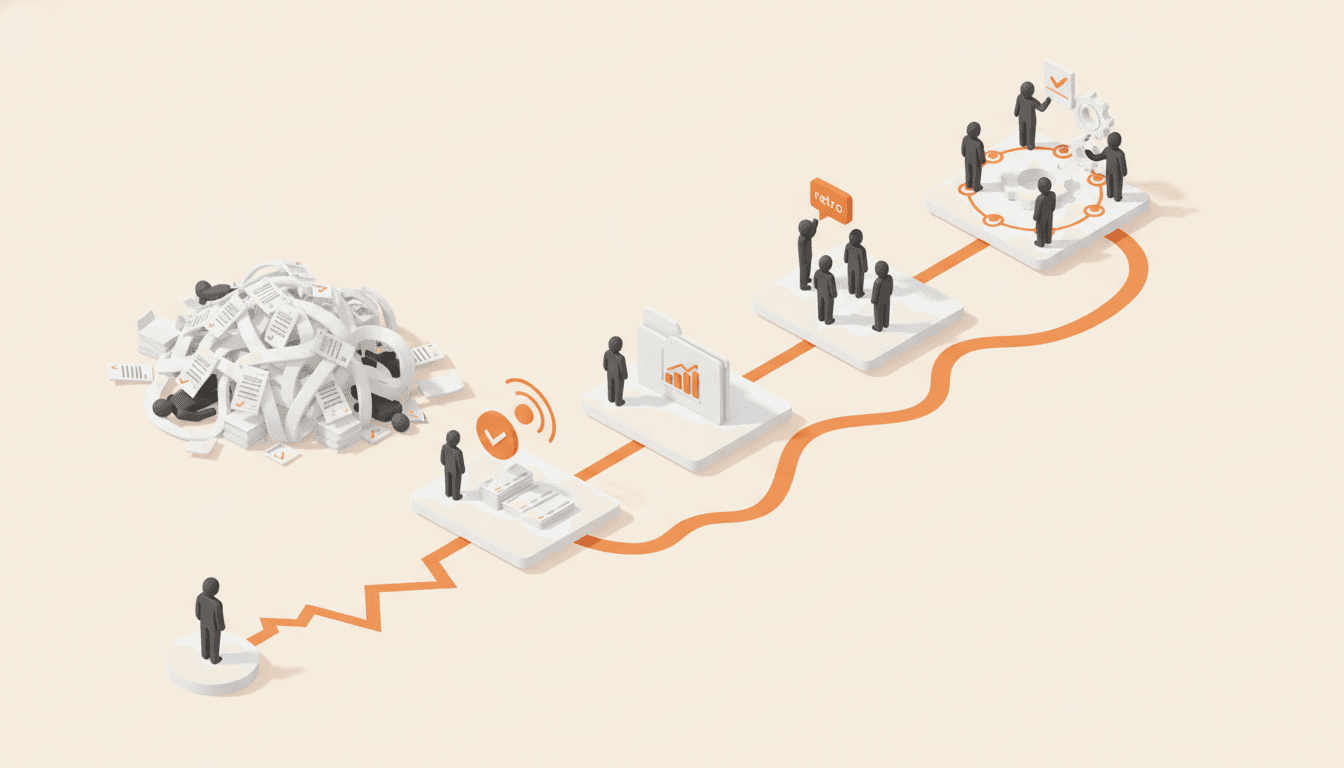
A client asked us how to keep using the systems, improve them, and grow on them without staying on a contract forever. Here is the answer: one named owner, one hour a month, a retro after every wave, and a document that changes the same day the process does.

Process Mapping & Documentation

Every Task Needs an Owner and Someone Who Notices

Responsible and accountable are two different jobs on the same task. One person does the work, a second person is answerable for noticing when it did not happen, and the gap between them is where small businesses lose things.

Process & Systems Fundamentals

How to Systemize a Mechanical Service Contractor (Deliverables, Not Dates)

In a mechanical service contractor, the estimate becomes the schedule everyone else inherits. Here is the order to document the work, from bid solicitation to lessons learned, and the seven places it usually breaks.

Scaling & Growth

How to Systemize a Social Media Agency (When Every Account Needs Context)

In most social agencies every role is welded to a client except design. Here is how to systemize a social media agency by fixing the three artifacts that move client context between people: intake, the scope rule, and the brief.

Documentation & SOP

Who Is Allowed to Change an SOP? Set the Edit Rules First

Most documentation libraries stall on a question nobody says out loud: who is allowed to change this. Name one owner per document, split editing from publishing, and the standoff ends.

Owner Dependence & Business Value

You Have to Let Go the Only Person Who Knows How

You have to let go the one person who holds the process, and what you can safely do today was decided months ago by whether anyone was writing it down. The fix is documentation as a standing practice for every role, not a scramble at the exit.

Process Mapping & Documentation

How to Run a Process Mapping Session Your Team Doesn't Dread

Run it with one practitioner on a screen share and two facilitators, one building the map live and one probing what gets skipped. Here is the format, the prompts that surface real work, and what to do in the 48 hours after.

Training & Adoption

Ask What the Last New Hire Got Wrong (Then Blame the Onboarding)

One question finds more onboarding gaps than any survey, because of how it is phrased. Here is the question, the four follow-ups that keep the answers coming, and what to build from each one.

Documentation & SOP

How to Document an Outside Sales Role (The Rules Your Best Rep Never Wrote Down)

An outside sales role looks like pure personality until you write it at the right grain. Here is how to capture the route, the visit window, the sentence that wins referrals, and the small rules nobody ever said out loud.

Process Mapping & Documentation

How to Document an Estimating Process (It Only Looks Linear)

Estimating is the process most likely to produce a map that is wrong the day it is finished. Map it backwards from the final review, ask how far each rework loop reaches, and write down the judgment calls a straight line has nowhere to put.

Training & Adoption

The Queue Is Not a Curriculum: Build a Training Caseload

New hires learn whatever the queue sends them, which is how someone ends up two weeks in, confident on two case types, and lost on the third. A training caseload fixes the order.

Documentation & SOP

Price the Change Before Your Crew Touches It

Extra work that gets settled at closeout always settles low. Here is the change order process that prices and approves the work before anyone lifts a tool.

Process Mapping & Documentation

Should a Process Map Include Exceptions? The Frequency Test

Most process maps drown in branches that almost never fire. The frequency test decides which exceptions earn a diamond, which become a one-line note, and which are really a second process.

Training & Adoption

Nobody Activated Their License: Why Training Seats Go Unused

Finished training sits unlaunched because most of the company was never added to the platform. Here is how to gate, send, and chase every seat you buy.

Process Mapping & Documentation

Your Process Map Is Already Out of Date. Here Is the Review That Fixes It.

A process map goes stale within months of being drawn. Here is the review session that pulls it back to reality: run it left to right, invite interruption, delete dead steps out loud, and close on a dated list.

Training & Adoption

How to Train New Real Estate Agents (When You Are Also Their Team Lead)

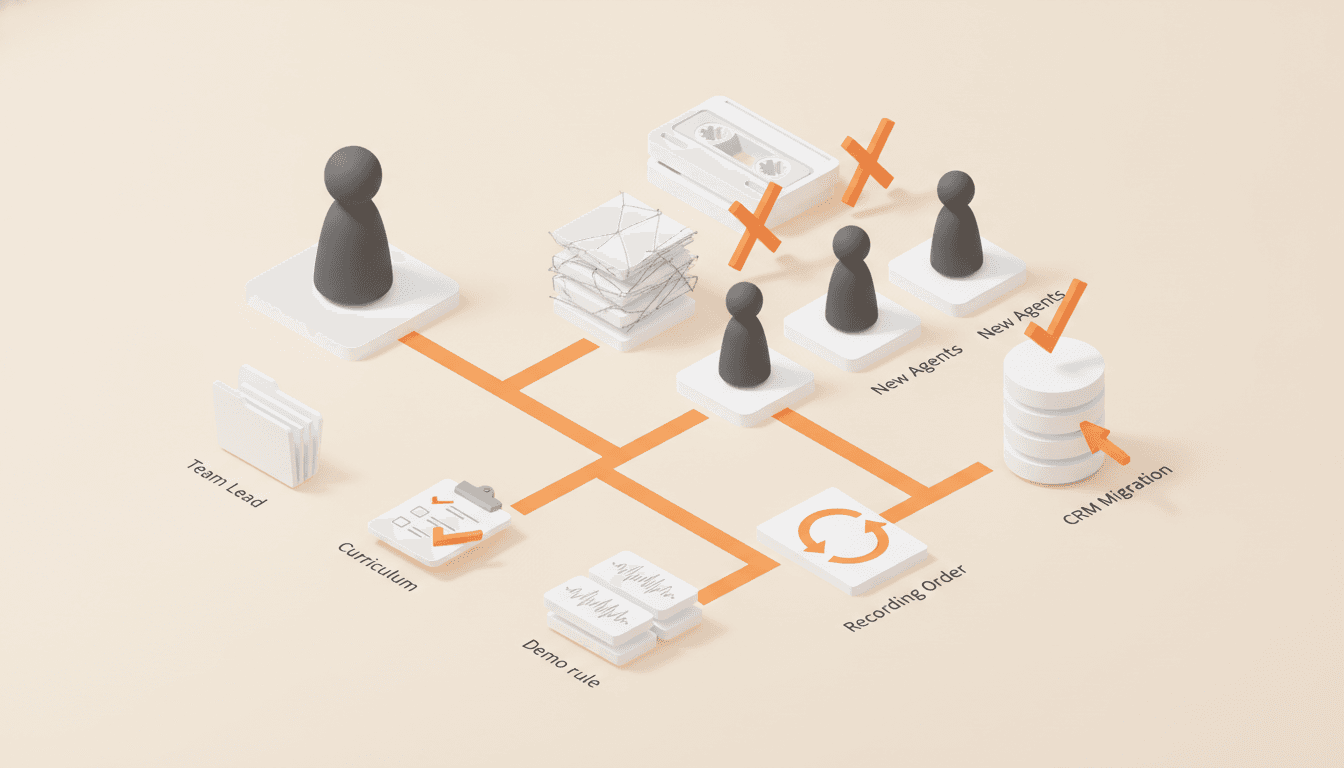
The person who trains new agents is usually the top producer, which is why agent training stalls at three half finished videos. Here is the curriculum, the demo rule, and the recording order that survives a CRM migration.

Training & Adoption

Nobody Spoke Up: How to Get Honest Answers From Your Own Team

You opened the floor, asked for brutal honesty, and got a room full of nodding. The silence was not apathy, it was a correct read of what it costs one person to speak.

Process & Systems Fundamentals

How to Systemize a Mortgage Brokerage (When Every Lender Wants It Different)

A brokerage with twenty-five lending partners has twenty-five sets of rules and no map of who takes what. Here is the order to document a lending operation in, and why the lender map comes before the SOPs.

Process & Systems Fundamentals

How to Systemize an Assisted Living Home (Across Three Shifts)

A small senior care home already runs on routine. Here is how to get that routine out of people's heads and into checklists, catches and handoffs that survive three eight-hour shifts.

Tools & Resources

The Best Process Mapping Software for Small Business (2026)

Lucidchart, Miro, Visio, and a handful of lighter tools all draw the same boxes and arrows. Here is what actually separates them for a small team, and why your first map may not need software at all.

Tools & Resources

Guidde vs Trainual: Which Tool Fits How You Actually Document

Guidde captures screen workflows while Trainual assigns them by role and tracks completion. Here is what each one really does, which to buy first, and the job neither one performs.

Owner Dependence & Business Value

Nothing Is Broken. Document It Anyway.

Most owners only reach for documentation after something breaks. The stronger case shows up in a business where nothing is broken at all, where the work is already good and the only thing missing is a record of it.

Owner Dependence & Business Value

How to Document Your Own Job Before You Hand Any of It Over

The owner is the hardest expert in the building to document, because most of the job is decisions and relationships that never made it onto paper. Here is the method we use to get an owner's role out of his head, starting with two weeks of tracking instead of a job description.

Training & Adoption

How to Cross-Train Employees Without Slowing the Team Down

Cross-training dies in busy weeks because it gets scheduled like a training program instead of bought like coverage. Here is the version that survives: rank by damage, one named backup per critical process, and a real shift as the test.

Tools & Resources
Google Docs vs Word for SOPs: Where Should Your Procedures Live?

Both formats work, and neither one is what fails. Here is what Google Docs and Word each do well for procedures, and the folder problem that sinks libraries in either.

Documentation & SOP

How to Interview a Subject Matter Expert (Questions That Actually Work)

Most expert interviews produce a tidy document describing a job nobody actually does. Here is the interview method we use with clients: benchmark first, practitioner over manager, frustration as data, and the real work recorded on a screen share.

Software & Technology

How to Scope a Custom Software Build (What to Hand a Developer)

A developer builds exactly what you describe, so the scope document is the whole game. Here is what belongs in it: the process as it really runs, every record, the decision rules, and one paragraph defining done.

Process & Systems Fundamentals

How to Systemize a Nonprofit: SOPs in Waves, Not All at Once

Nonprofits stall when they document everything at once. The wave method takes one department at a time, closes each wave with a retro, and leaves a team that keeps the system alive.

Tools & Resources
Is PlaybookBuilder Worth It? An Honest Review

PlaybookBuilder is a training and playbook platform with video hosting, SMS delivery, and reporting on who is engaged. Here is what it does well, where it falls short, and what it really costs.

Training & Adoption

The New Hire Onboarding Checklist for Small Business (First 90 Days)

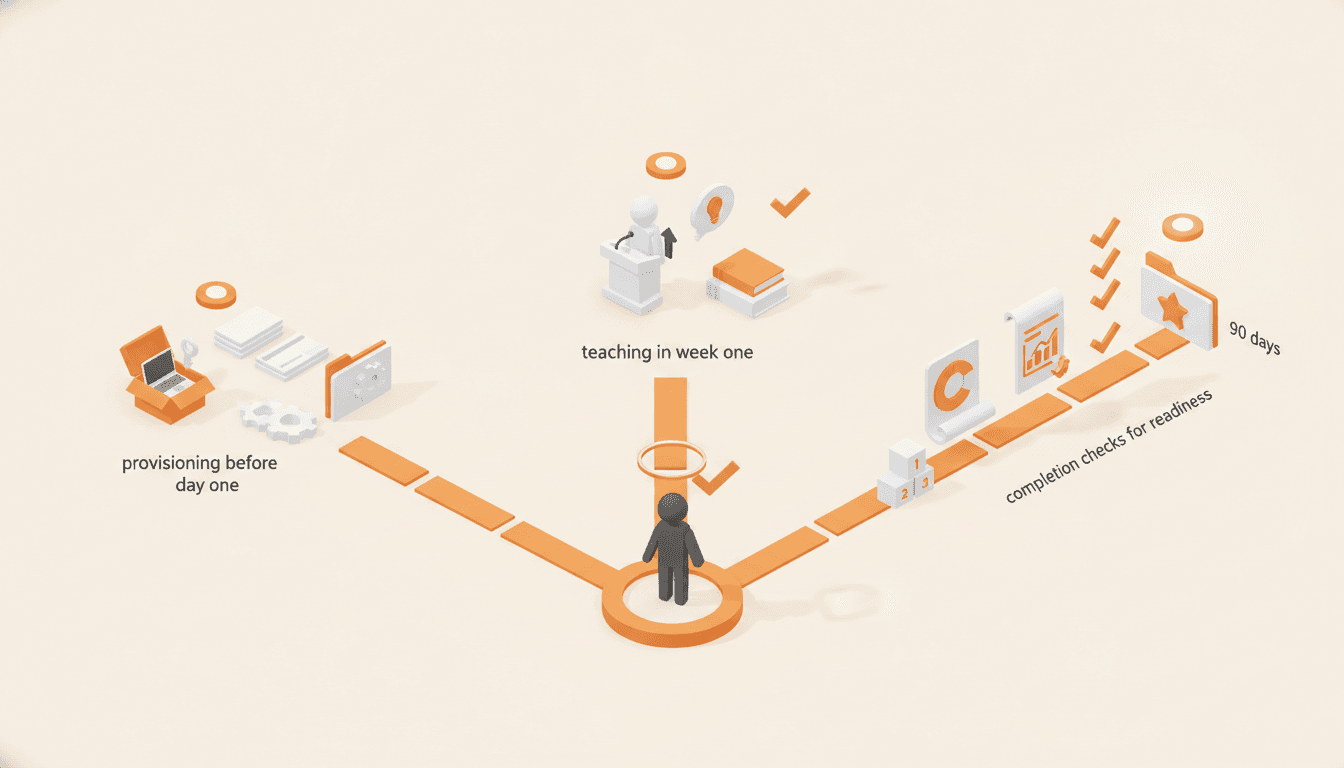
A 90-day onboarding checklist for small businesses: what to provision before day one, what to teach in week one, and the completion checks that prove a new hire is ready.

Tools & Resources

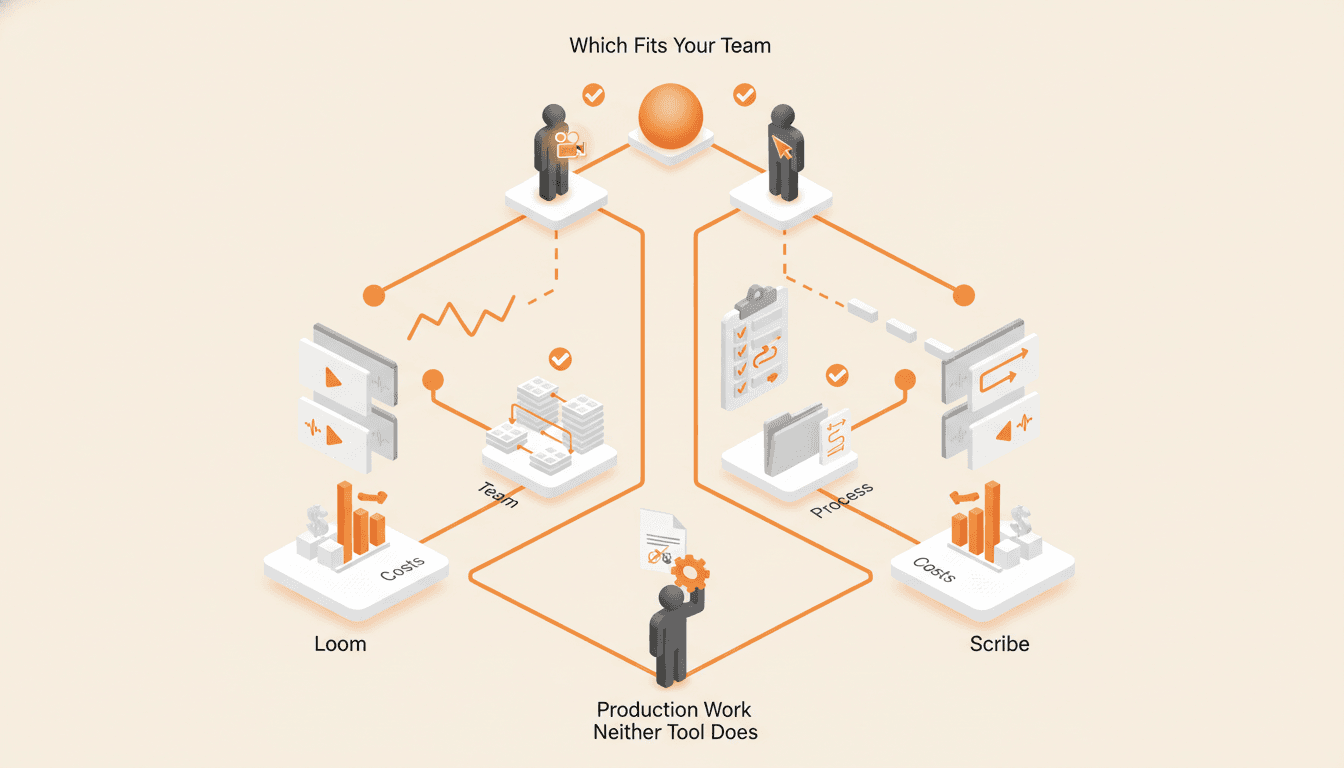
Loom vs Scribe for SOPs: Which Recorder Fits Your Team

Loom records a narrated video and Scribe records your clicks. Here is which one fits which process, what each costs, and the production work neither tool does for you.

Process Mapping & Documentation

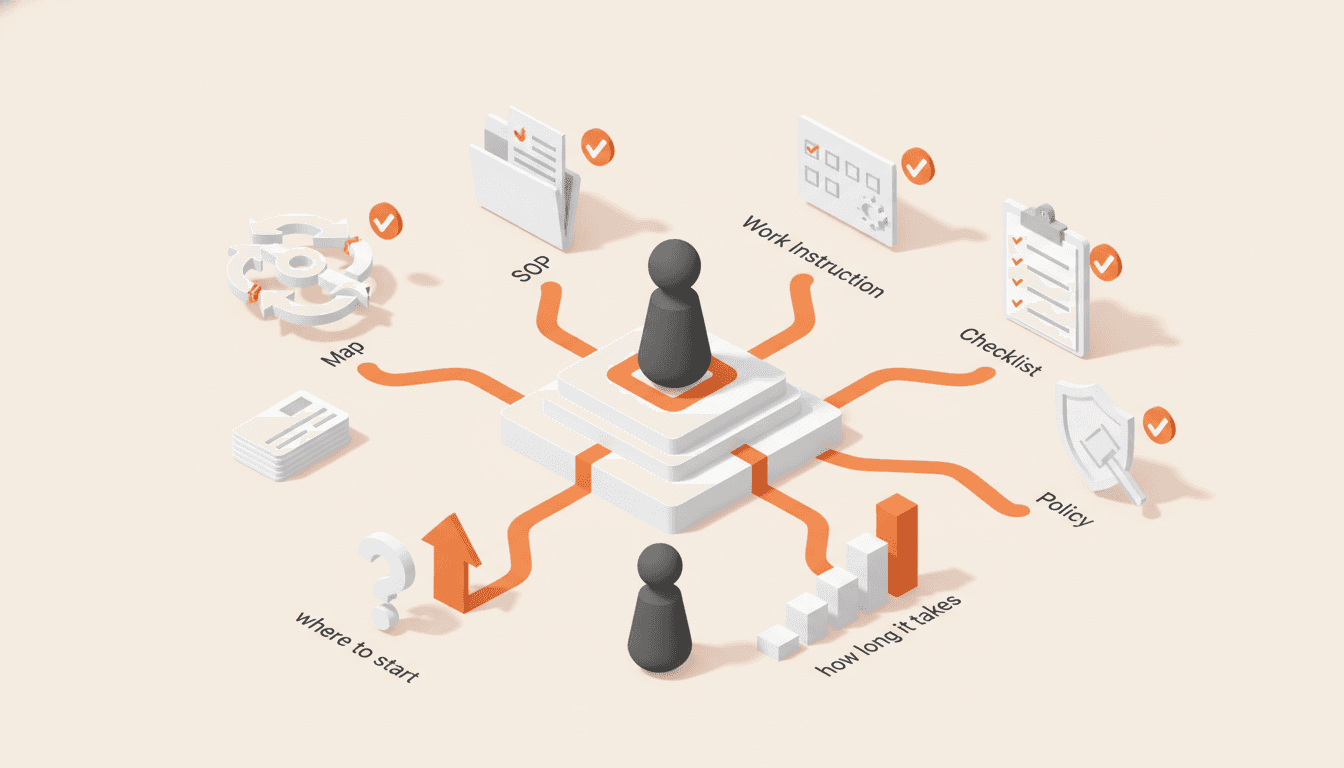
What Is Process Documentation? Definition, Types, and Where to Start

Business process documentation is not one document, it is five: a process map, an SOP, a work instruction, a checklist, and a policy. Here is what each one covers, how long documenting a process really takes, and where to start.

Documentation & SOP

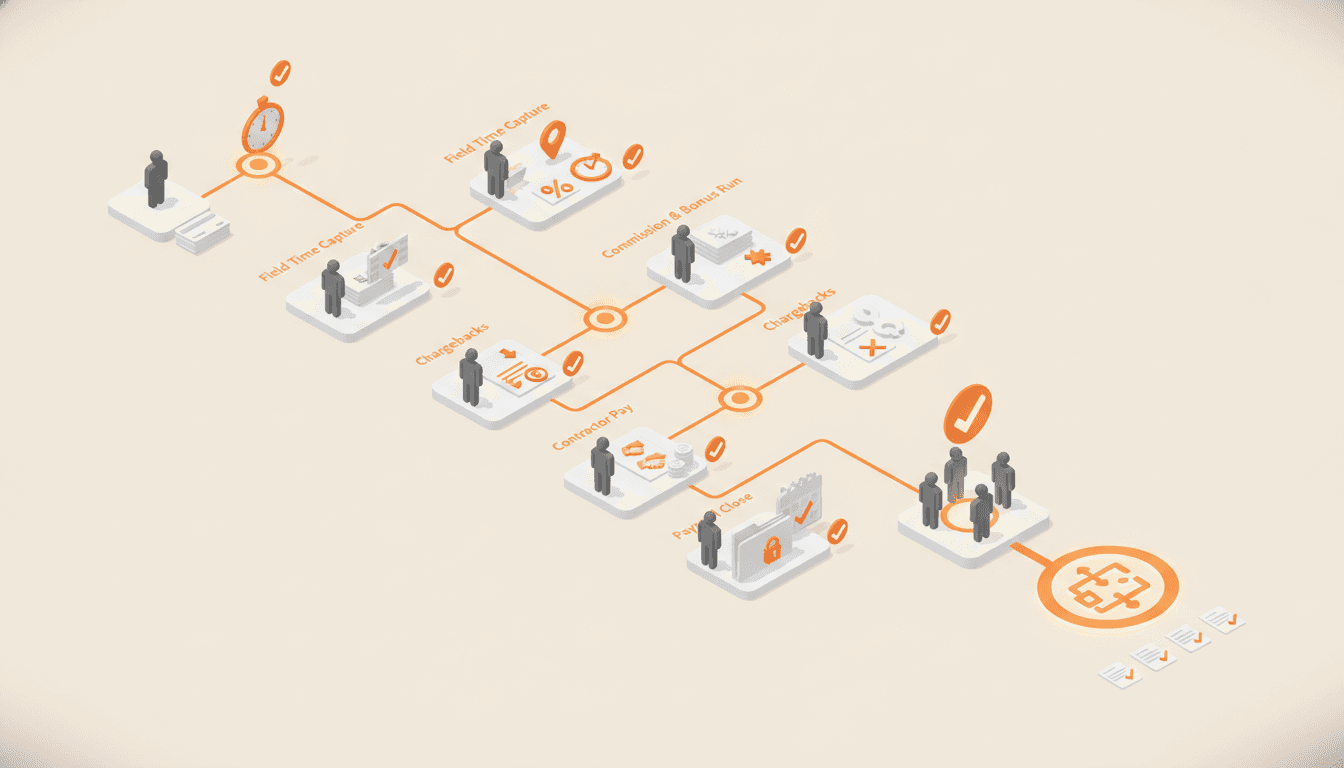
Payroll SOP Examples: 5 Procedures That Get Everyone Paid Right

Five payroll SOP examples from real documentation work: field time capture, the commission and bonus run, chargebacks, contractor pay, and the payroll close.

Scaling & Growth

When to Hire an Operations Manager (and What to Hand Them First)

Hire an operations manager when decisions queue on you daily and recurring work has no owner, not when you are tired. Here is how to define the seat, what to document first, and how to judge the hire at 90 days.

Documentation & SOP

Sales SOP Examples: 5 Procedures That Make Revenue Repeatable

Five real sales SOP examples, from lead intake to the operations handoff, each built from documentation work with real sales teams. Copy the skeleton and write your first one this week.

Process Mapping & Documentation

Swimlane Diagrams: How to Map Handoffs Between Departments

A swimlane diagram puts every step in the lane of whoever performs it, so the handoffs between departments finally become visible. Here is how to set up the lanes and write a rule for every crossing.

Documentation & SOP

Unconscious Competence: Documenting the Expert Who Can't Explain It

Your best person does the job perfectly and describes it terribly. Here is how to document a process from an expert who cannot explain it: record the work, ask why, and let a newcomer catch the invisible steps.

Owner Dependence & Business Value

What Is the Bus Factor? The One-Number Test for Key Person Risk

The bus factor is the number of people who can vanish before the work stops. Here is how to calculate yours in about 20 minutes, and what it takes to move the number off one.

Owner Dependence & Business Value

How to Write a Business Continuity Plan for a Small Business

The disruption that takes a small business down is almost never weather; it is a person. Here is the continuity plan that fits a 30-person company: what cannot stop for 48 hours, who picks it up, and how you prove it.

Documentation & SOP

Decision Points: The Part of the Process Nobody Documents

Most SOPs capture the steps and skip the forks. Here is how to find the moments where the right answer depends on context, and how to write them down so two people make the same call.

Process Mapping & Documentation

How to Streamline a Process: Turn a 15-Minute Task into 5

Streamlining is not a software purchase. It is a stopwatch, four buckets, and one piece of arithmetic that turns three saved minutes into a number your leadership team will actually fund.

Process & Systems Fundamentals

How to Systemize a Staffing Agency: Dispatch, Sales, and Service

Staffing agencies run on a 4:45am dispatch, an escalated case taxonomy, and knowledge held in one or two heads. Here is the documentation order that protects you fastest.

Tools & Resources
Is Scribe Worth It? An Honest Review for SOP Creation

Scribe turns a click path into a written guide with a screenshot at every step. Here is what it captures well, where it goes blind, what it really costs, and the two thirds of a process it cannot see.

Documentation & SOP

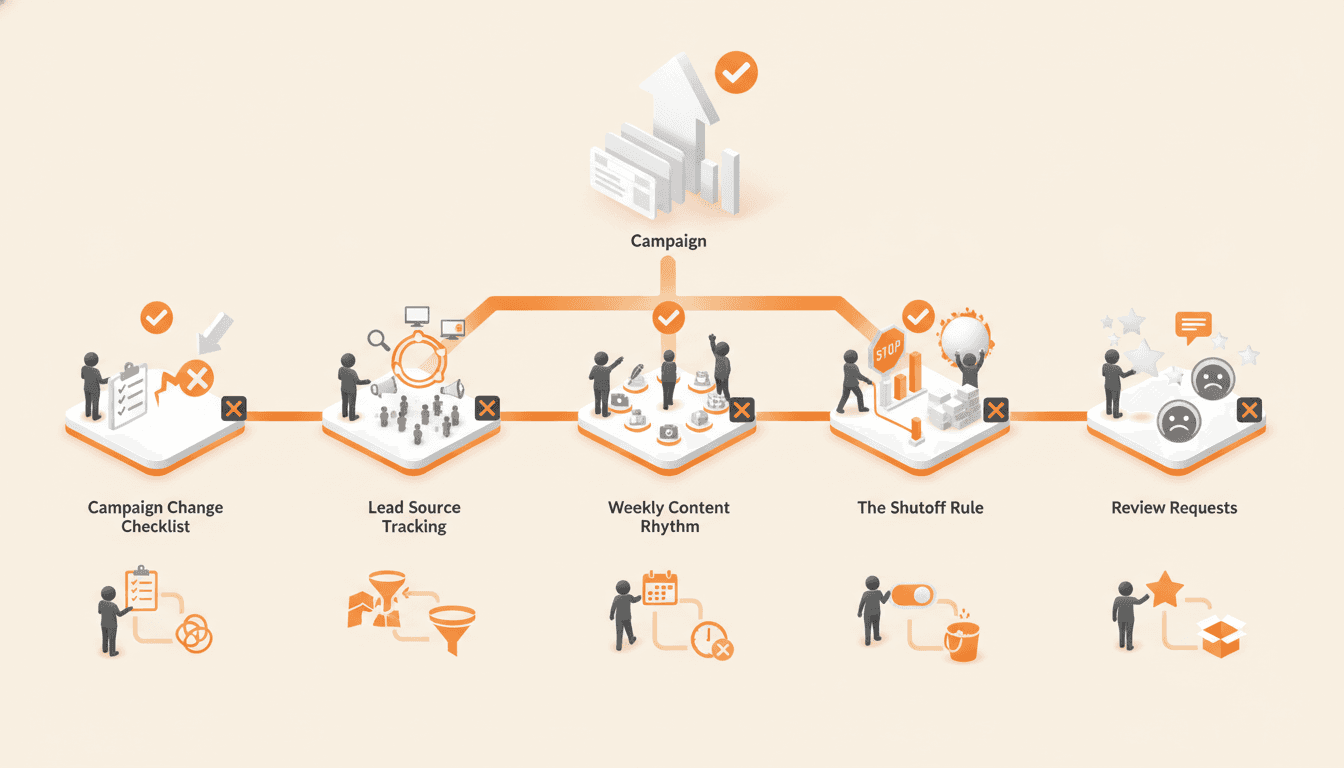
Marketing SOP Examples: 5 Procedures That Keep Campaigns Running

Five marketing SOP examples you can copy: the campaign change checklist, lead source tracking, a weekly content rhythm, the shutoff rule, and review requests. Each one comes with a skeleton and the failure it prevents.

Process Mapping & Documentation

The Process Audit Checklist: Find Out Which Documents Are Fiction

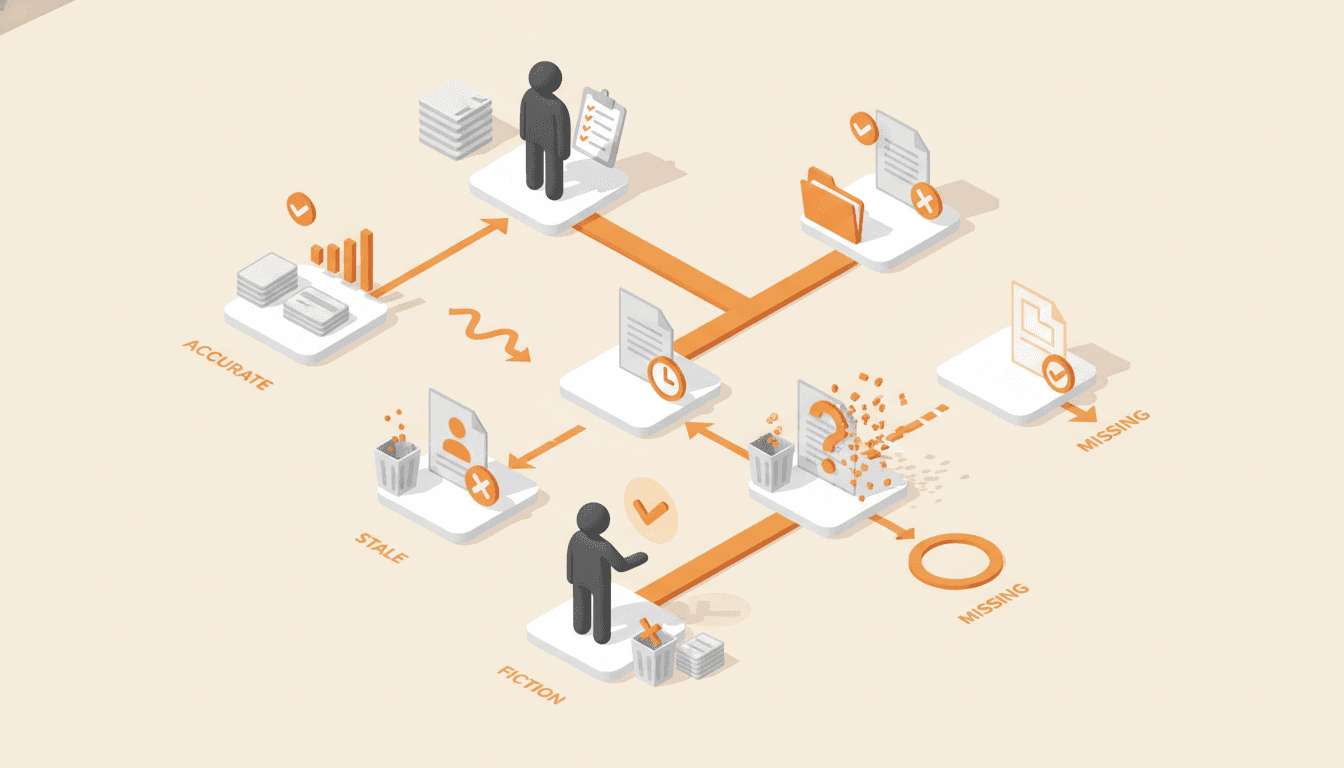
Most companies have documentation, and far fewer have documentation that matches how the work gets done. This audit sorts every process into accurate, stale, fiction, or missing, and tells you what to delete.

Tools & Resources
Scribe vs Tango: Which Step Capture Tool Fits Your Team

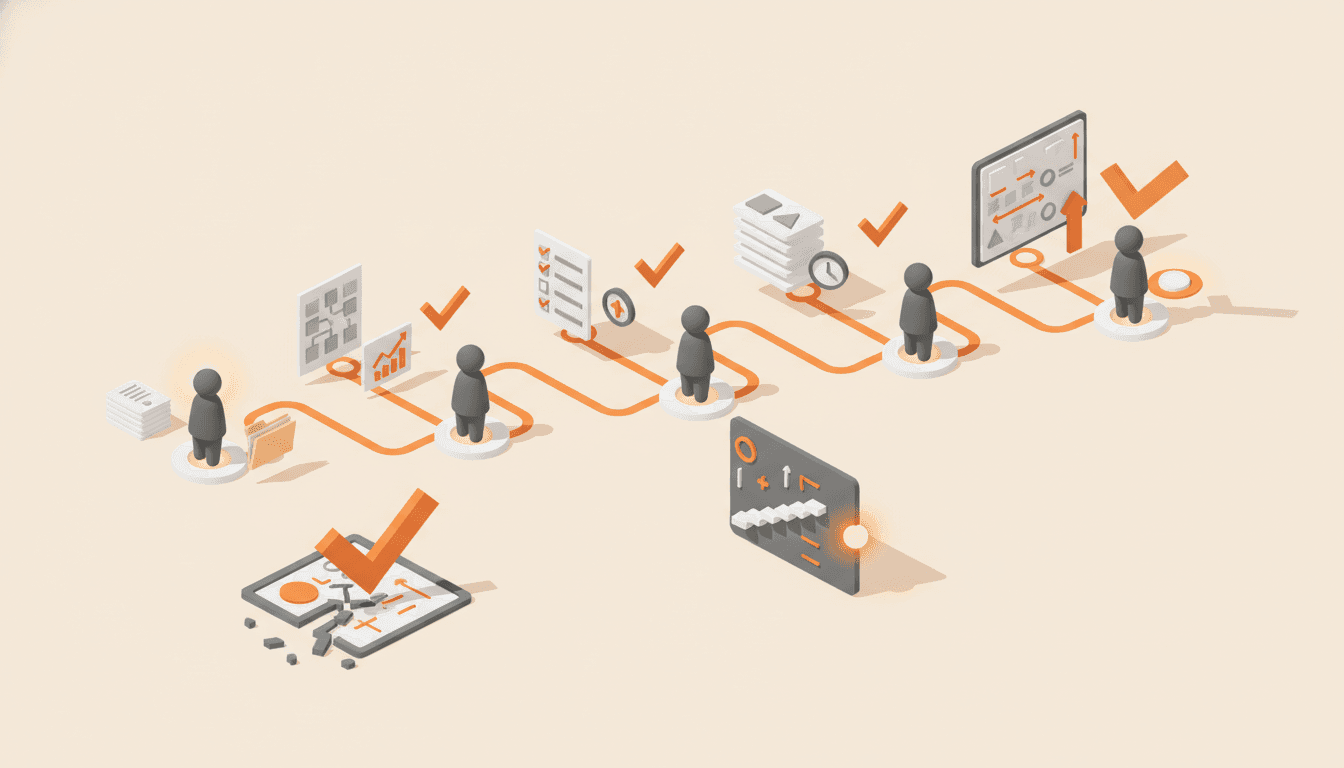
Scribe and Tango both turn one real run of a task into a numbered guide with screenshots. Here is what actually separates them, what each costs, and the work neither one does for you.
Process & Systems Fundamentals

Systemizing a Family Business Before Succession: Start 3 Years Early

The legal paperwork will not sink the handover. The knowledge that never left the outgoing owner's head will, and moving it takes a 3-year runway, not a dusted-off binder.

Process Mapping & Documentation

Value Stream Mapping for Small Business: A Practical Guide

A value stream map is a process map with a time written next to every step. Here is how to run one in five steps, and why a wall of steps ends arguments a dashboard never could.

Documentation & SOP

What Is Tribal Knowledge? Definition, Examples, and What It Costs

Tribal knowledge is the operating know-how that lives in your team's heads and nowhere else. Here is where it hides, what it costs while everyone is still employed, and how to convert it into something the business owns.

Owner Dependence & Business Value

Buying a Business? Capture the Seller's Knowledge Before Close

The financials tell you what the business earned, not whether the operation runs when the seller stops answering his phone. Score that risk during diligence and buy the knowledge before the wire clears.

Training & Adoption

The Employee Offboarding Checklist That Protects the Business

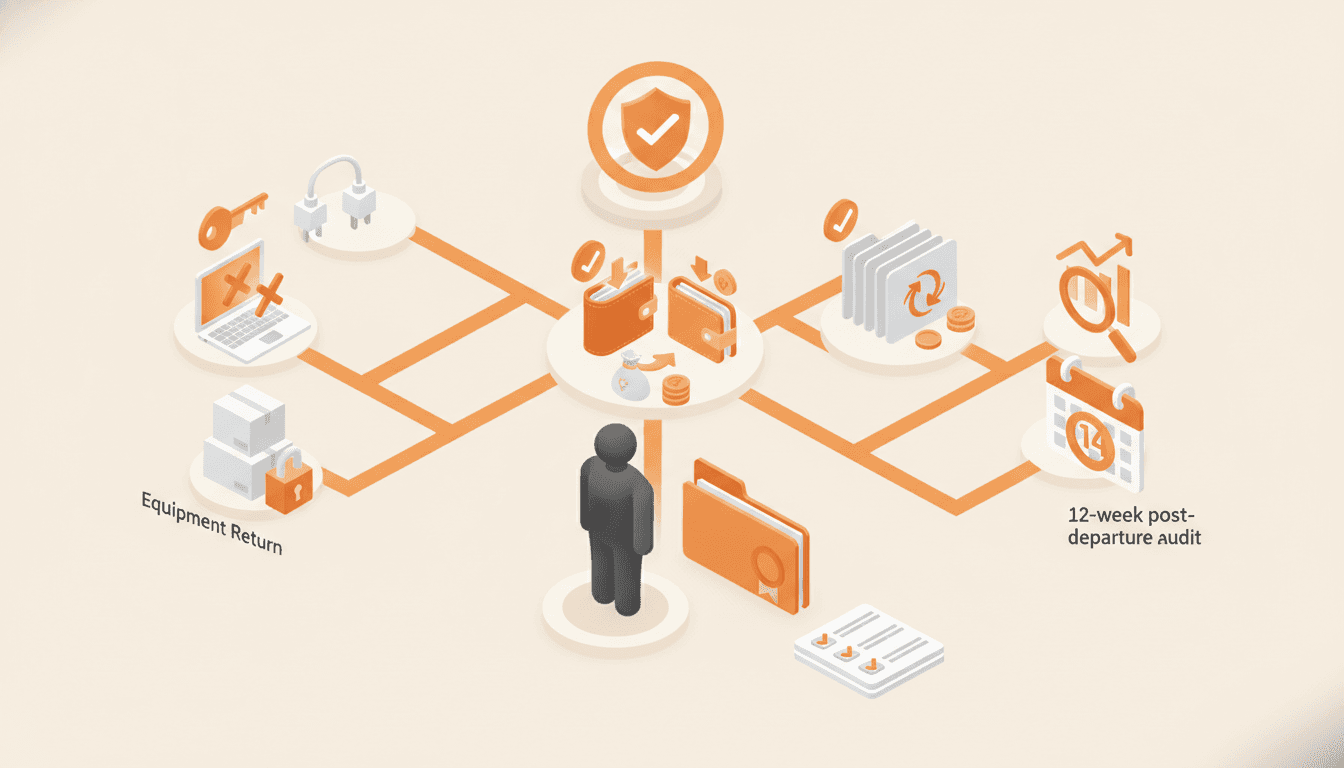
The operational close-out most small businesses improvise: access, equipment, money owed in both directions, the recorded knowledge handoff, and the audit two weeks after the last day.

Scaling & Growth

How to Hire Fast Without Breaking the Systems You Just Built

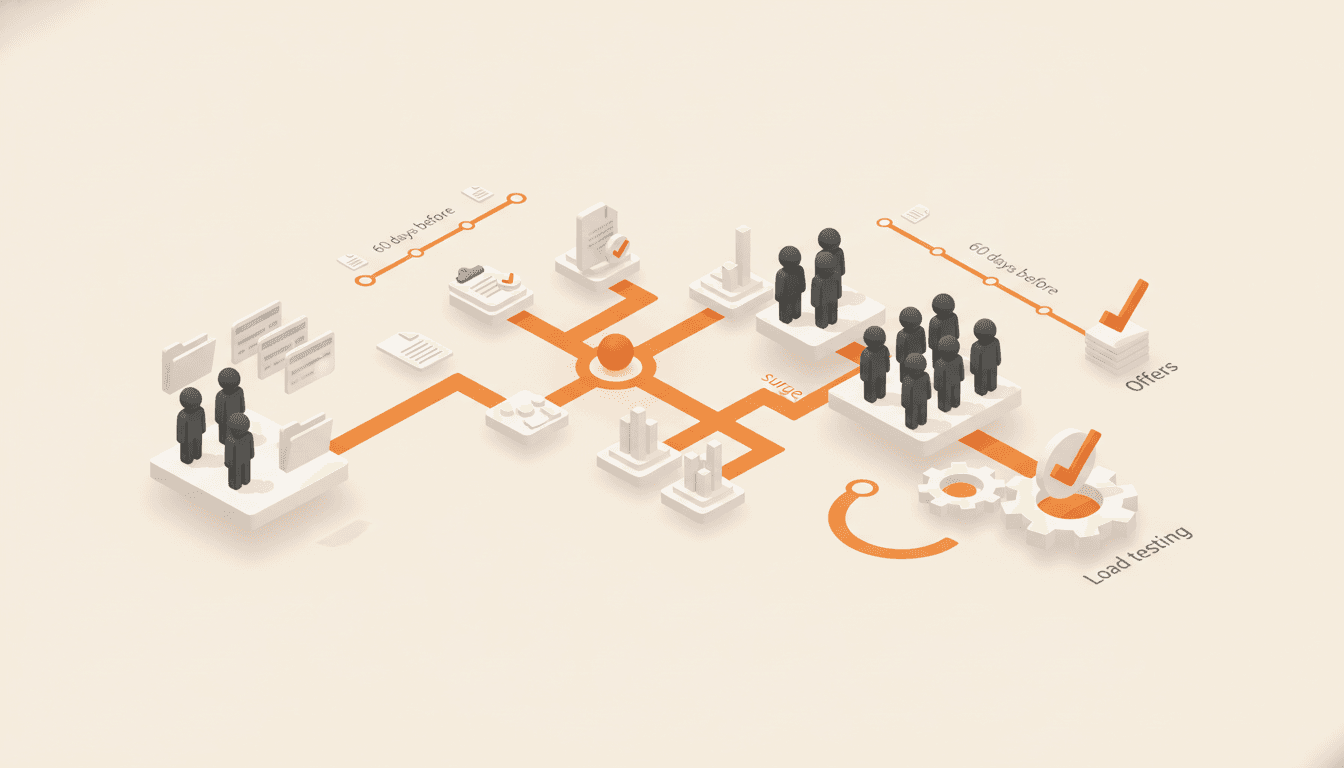
A hiring surge does not create process, it load tests the process you already have. Here is what to document in the 60 days before the offers go out, and the sequencing rule that keeps fast hiring from undoing a year of work.

Process & Systems Fundamentals

How to Systemize an Inbound Call Center (Booking, Scripts, and Escalations)

Call centers drift because nobody ever named the call types. Here is the order that fixes it: map the calls, write booking rules, define escalations, then score real recordings against a rubric.

Tools & Resources

Is Waybook Worth It? An Honest Review of the Onboarding Platform

Waybook groups your processes into books, assigns them by role, and proves who finished them. Here is what it does well, where it falls short, what it costs, and why an empty account is the real risk.

Owner Dependence & Business Value

Software as Exit Value: How an Owned App Raises Your Multiple

A custom app you own conveys with the sale, lowers key-person dependence, and proves the operation is systemized. A rented SaaS stack conveys nothing at closing.

Software & Technology

A Custom App for Your Business Is Finally Realistic

AI has dropped the cost and time of building custom business apps so far that a small company can now afford to build one around its single most painful workflow, instead of renting a stack of half-fitting subscriptions.

Software & Technology

Off-the-Shelf Software: When to Stop Using It

Off-the-shelf software is right for standard problems. You have outgrown it once your team is quietly rebuilding the real work in spreadsheets and workarounds, and the fix is to map your process before you buy a bigger plan.

Software & Technology

Should You Own Your Software or Rent It?

Renting software is fast and low commitment but builds no equity, while AI has made owning a custom app realistic for small businesses. Own the workflows that are core to how you make money, and rent the commodity tools everyone else uses too.

AI & Automation

Will AI Replace My Team? Here Is What Actually Happens

AI replaces the repetitive work inside a role long before it replaces the person doing it. Here is what actually happens to a job when AI arrives, and how to redesign the role instead of cutting the seat.

Training & Adoption

Why Your Team Resists New Tools (and How to Fix It)

Teams revert to spreadsheets and group chats because those paths are faster than a new tool. Real adoption comes from making the new way cheaper, removing the fallback, wiring the tool into the daily rhythm, and leading by example.

AI & Automation

AI Adoption Without the Fear: From Victim to Creator

AI adoption stalls for emotional reasons, not technical ones, because your team quietly fears replacement and falls into victim, persecutor, and rescuer roles. You introduce AI without that fear by naming the old broken way of working as the real villain.

Process & Systems Fundamentals

System Problem or People Problem? How to Tell the Difference

A system problem is built into the work itself, so it defeats any capable replacement. Use the substitution test to tell it from a people problem, because the fixes are opposite: you coach a person, you redesign a system.

Documentation & SOP

Undocumented Processes: The Risk You Know by Heart

Undocumented processes are the tasks that live only in someone's memory. Here is the three-part danger test that ranks them by real risk, and how to capture the worst ones first.

Owner Dependence & Business Value

The Vacation Test: Can Your Business Run Without You?

The vacation test is a diagnostic: take a real, fully unplugged week off and watch what breaks. A backlog with your name on it, a blown-up phone, or a team that freezes on decisions each point to a specific missing system.

Owner Dependence & Business Value

The Key Employee Bottleneck: When Your Best Person Holds It All

An employee bottleneck forms when one indispensable person becomes the whole team's search engine and help desk. The fix is to move what is in their head into a shared system, then measure whether questions stop routing to their desk.

EOS-Specific

Self-Implementing EOS: Document All 6-10 Core Processes

Even EOS companies that pay an implementer document their own processes, because the implementer facilitates the framework and your team does the writing. Self-implementing teams close the gap by stealing the working structure: one process per session, the owner talks, a pen-holder writes.

Tools & Resources
The Best Process Software for EOS Companies: PlaybookBuilder vs Whale vs Waybook vs Trainual vs Strety

An honest comparison of five process documentation platforms for EOS companies: PlaybookBuilder, Whale, Waybook, Trainual, and Strety. No software fixes an empty shelf, so extraction has to happen before you buy the tool.

EOS-Specific

The 20/80 Rule in Practice: What the 20% Actually Looks Like (Real Examples)

Three worked examples, a sales process, client onboarding, and hiring, show what the EOS 20/80 rule looks like in practice: 6 to 10 steps per core process, each a verb with a one-line standard, with all deeper detail pushed into SOPs and checklists underneath.

Documentation & SOP

Core Process vs SOP vs Checklist: What EOS Actually Asks For (and What Your Team Needs)

A core process, an SOP, and a checklist are three layers of the same process, not three competing documents. Here is what each layer holds, who reads it, and how they stack.

EOS-Specific

The 3-Step Process Documenter Is Simple. So Why Is Your Team Stuck on Step 2?

The EOS 3-Step Process Documenter is free, one page, and still stalls at Step 2 for most teams. Here are the four reasons it happens and the fix that covers all four.

EOS-Specific

Document Your Core Processes Yourself or Hire It Done? An Honest Breakdown for EOS Companies

An honest framework for deciding whether to document your EOS core processes in-house or hire it out. The call comes down to team size, writing capacity, meeting cadence, and how many times the same documentation Rock has already failed.

EOS-Specific

Followed By All: How to Actually Measure FBA (Without Becoming the Process Police)

Followed By All is a measurement problem, not a motivation problem. Wire each core process to one Scorecard measurable, train against the documented version, and manage to the number in your weekly meeting.

EOS-Specific

Process Is Your Lowest Checkup Score. Here's Your Next 90 Days

A 90-day plan for companies whose EOS Organizational Checkup scored Process lowest: triage your 6-10 core processes by pain and key-person dependence, document the top few at 20/80, then train and measure Followed By All.

EOS-Specific

Why Your EOS Process Rock Keeps Failing (and What to Change This Quarter)

The "document our core processes" Rock fails quarter after quarter because it is a craft job disguised as a task. Here is how to restructure it around one process, a named pen-holder, and scheduled extraction sessions.

EOS-Specific

The EOS Process Component: Why It's the Most Neglected of the Six (and How to Get It to 80%)

Why the Process Component is the most neglected of the Six Key Components, and what a weak one actually costs a business. Plus a realistic two-quarter path to 80% strength on the Organizational Checkup.

Tools & Resources

Business Playbook Template: A Free Outline to Copy

A business playbook template is the eight-part outline for documenting how your company runs. Here is the whole thing, free to copy, plus how to fill each section and where to host it so the team uses it.

Process & Systems Fundamentals

Playbook vs SOP vs Operations Manual: The Difference

An SOP is one documented task, a playbook is the organized collection of plays for a role, and an operations manual is the full company reference; the labels matter less than whether the answer can be found and followed.

Documentation & SOP

What Is a Sales Playbook? What to Include and How to Build One

A sales playbook is the single documented system your team sells from, from the first touch to the closed deal. Here are the eight components to include and the six-step method for building one your reps actually open.

Tools & Resources

Business Playbook Software: How to Choose the Right Tool

Business playbook software is only worth buying if your team opens it. Here is the seven-job scorecard and the six-step trial we use to pick one.

Documentation & SOP

How to Build a Business Playbook (Step by Step)

The five-step method we run with clients to build a business playbook people actually use. The last two steps, hosting and maintenance, decide whether it gets opened.

Documentation & SOP

What Is a Business Playbook? Definition and Examples

A business playbook is the documented operating system of your company: every role, process, decision rule, and handoff gathered into one place. Here is what belongs in one, what a good one looks like, and how it differs from a plan or a single SOP.

Process & Systems Fundamentals

How to Build the Business Case for a Systems Overhaul (and Get It Funded)

Leadership funds risk and return, not tidiness. Here is how to price the four hidden costs of the status quo, build the ROI comparison, and pitch a first step small enough to get a yes.

Documentation & SOP

Who Should Actually Build Your SOPs and Training?

A decision framework for choosing between an internal coordinator, a consultant, SOP software, or a done-for-you partner, based on which of three jobs (extract, build, adopt) your business is weakest at.

Training & Adoption

How to Make Training Your Team Actually Finishes

Most training fails because it was built to be sat through instead of used. Five design moves make training engaging enough that people finish it and apply it.

Documentation & SOP

Years of Messy Training Content? Here Is Where to Start

You do not organize your way out of years of accumulated training documents. You triage them into keep, rebuild, and kill, then rebuild the few processes that would hurt most to lose.

Documentation & SOP

What to Do When Your Expert Won't Document Their Work

When a key employee will not document their work, the problem is usually that writing is a second unpaid job, not defiance. Here is how to capture the knowledge by recording instead of assigning, so the expert's only task is correcting a draft.

Training & Adoption

How to Train a Large Department (30+ People) the Right Way

Emailing a document to thirty people is not a training system, it is the absence of one. This guide lays out the four-layer Department Training Stack: one source of truth, role-based paths, verified completion, and manager ownership.

Training & Adoption

How to Retrain Veteran Employees Without Pushback

Retraining a veteran employee is change management disguised as training. This guide covers leading with the business reason, making veterans co-authors of the new standard, and winning the hardest skeptic first.

Scaling & Growth

How Agencies Scale Without Constantly Hiring More Staff

Agencies hit a growth ceiling because delivery lives in founders' and seniors' heads, not because they lack hands. Productize the delivery work and the team you already have can carry more clients at the same quality.

Scaling & Growth

How to Scale Marketing Without Adding Headcount

In most owner-led businesses the marketing bottleneck is not too few marketers, it is that every post and campaign gets rebuilt from a blank page and routed through the owner. Here is the four-lever framework for scaling output without adding a salary.

Tools & Resources

Is Trainual Worth It? An Honest Review for SOPs

Trainual is a genuinely strong tool for documenting SOPs, assigning training to roles, and tracking completion. The catch is that adoption, not the software, decides whether the subscription was worth the money.

Documentation & SOP

SOP Examples: What Real Standard Operating Procedures Look Like

Three complete, genericized SOP examples spanning sales, finance, and client services, showing the seven-part skeleton every good SOP shares and how to adapt it to your own business.

Documentation & SOP

How to Write an SOP: A Free Template You Can Copy

A fillable SOP template built on the seven-part format real procedures follow: title, metadata, Why This Matters, the trigger, steps, Done, and edge cases. Copy it, fill it in for one task, and you have a usable SOP in under an hour.

Training & Adoption

Nobody Uses Your Trainual? How to Fix Training Platform Adoption

A dead Trainual account is almost always a culture and strategy failure, not a software failure: nobody logs in because the current answer still lives in a manager's head or a chat thread. Here is how to make the platform the one place that answer lives.

Documentation & SOP

When the Rules Change but Nobody Updates the SOP

Procedures go stale the moment a rule change is spoken instead of written into the one document your team trusts. Here is the four-part change loop that keeps SOPs current when your processes change often.

Training & Adoption

Why Your Employee Training Isn't Working (How to Diagnose It)

A team saying "our training isn't good" is reporting a symptom, not a diagnosis. Here are the six root causes behind ineffective employee training, and the six-question audit that tells you which ones are yours.

Training & Adoption

The Process-Based Culture Every Business Needs (to Make Systems Stick)

A process-based culture is one where the documented way is the real way. Here are the six ordered moves that turn SOPs nobody opens into how your team actually works.

Process & Systems Fundamentals

How to Systemize a Service Business (Step by Step)

Even when every job looks custom, three things repeat underneath: decision points, quality standards, and handoffs. That spine is what you document and delegate, and intake is where to start.

Process Mapping & Documentation

Business Process Documentation Template (With Real Filled-In Examples)

A copy-paste process documentation template built from the twelve fields that repeat across a real corpus of 221 process maps and 49 SOP drafts. Includes a fully filled-in client onboarding example.

Training & Adoption

How to Get Your Team to Actually Follow SOPs

Teams ignore SOPs because not following the SOP is easier than following it. Here is the five-move Adoption Loop that makes the documented way the easy way, and the four fixes that never work.

Scaling & Growth

Scaling Systems: The 6 Systems Every Business Needs to Grow

Growth multiplies whatever system already sits underneath a business, so scaling on chaos just produces faster chaos. Here are the six systems for scaling a business, built in order, so you can grow without staying the bottleneck.

Process Mapping & Documentation

In-House Process Mapping: How to Map Your Processes Without a Consultant

In-house process mapping takes sticky notes, the person who actually does the work, and about an hour with five simple shapes. Here is the method, the glance test that keeps a map readable, and when a consultant is genuinely worth the fee.

Documentation & SOP

How to Write an SOP: A Simple Template and Steps

An SOP is a written, repeatable set of steps for doing one task the same way every time. This guide gives you the five-step method, a copy and paste template, and the quality check that proves it works.

Process Mapping & Documentation

How to Document Business Processes: A Step-by-Step Guide

Most owners never document their processes because they picture writing a manual from memory, which is exhausting and inaccurate. This guide gives a six-step method built around recording the person who actually does the work first, then shaping that recording into numbered steps and testing it on someone new.

Tools & Resources

When Spreadsheets Stop Scaling: The Hidden Tax of Running Your Business in Excel

Spreadsheets feel free, but the labor they eat and the errors they hide quietly cost you margin as you grow. Here are the three signs you have outgrown spreadsheets, and the order to graduate out of them.

Software & Technology

Build vs Buy: When Custom Software Finally Makes Sense for Small Business

AI-assisted development dropped the cost of custom software, so the old rule of always buying off-the-shelf no longer holds automatically. Here is how to tell which side of the build vs buy line you are on, and why you never build on a broken process.

Tools & Resources
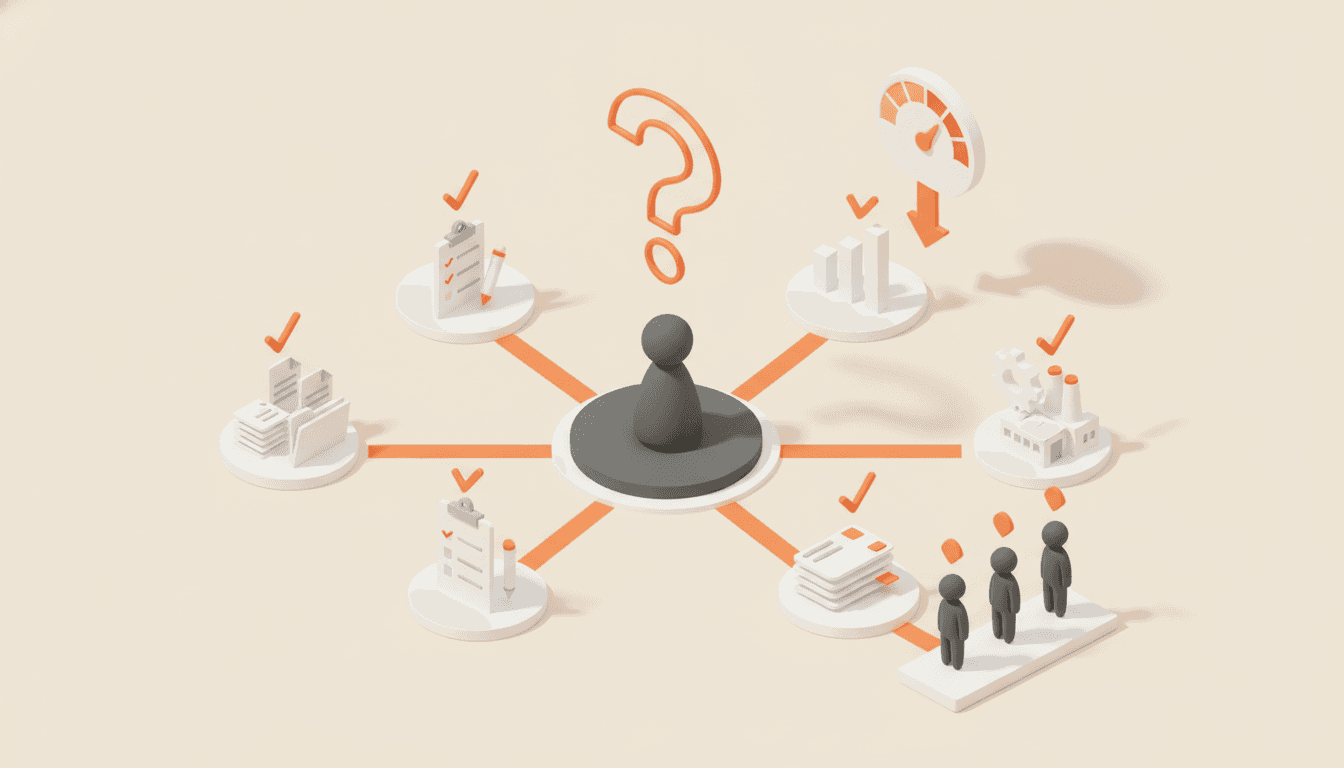
Your Business Needs a Single Source of Truth (Not More Apps)

A single source of truth is not software you buy. It is a decision to give each kind of answer exactly one official home, so your team stops routing every question through you.

Scaling & Growth

How Home Service Companies Scale Without Adding Staff

Home service companies keep the back office flat while the field doubles by moving payroll, dispatch, and paperwork onto one system of record instead of hiring admins to absorb manual work. Here is the playbook, and the three-day weekly payroll reconciliation it made disappear.

Scaling & Growth

How to Scale a Service Business Without Hiring

Most service businesses can carry more volume without adding staff by removing the recurring waste and owner bottlenecks that make hiring feel necessary. This is the five-step method for finding and fixing those bottlenecks, plus the moment when hiring really is the right call.

Owner Dependence & Business Value

How to Make Your Business Sellable

Buyers pay for a business that runs without you, and owner dependence can cut the multiple in half. Here are the three moves that make your business sellable: reduce owner dependence, document the critical work, and prove the systems to a buyer.

Tools & Resources

The Best Screen Recording Tools for Creating SOPs (2026)

A comparison of the top screen recording tools for building SOPs, arguing that the tool matters far less than the workflow that turns a raw recording into a finished, human-reviewed procedure.

Tools & Resources

Trainual Alternatives: SOP and Training Tools Compared (2026)

SOP software is really three jobs wearing one coat: training delivery, process documentation, and fast capture. Here are six Trainual alternatives compared by the job each does best, and why adoption rather than features decides whether any of them sticks.

Owner Dependence & Business Value

What Is an Owner-Dependent Business? Signs & Fixes

An owner-dependent business cannot run, grow, or sell without the owner's daily involvement, because the critical knowledge and decisions live only in their head. Here are the seven warning signs of owner dependency, what it costs you, and the order to fix it in.

Owner Dependence & Business Value

How to Reduce Owner Dependence: A Step-by-Step Guide

Owner dependence drops when the knowledge in your head becomes systems your team can actually run. Here is the five-step order that works, and why you start with one process instead of all of them.

Process Mapping & Documentation

Process Mapping for Small Business: The Complete Guide

Process mapping is drawing a picture of how work actually gets done, from the trigger that starts it to the result that ends it. This guide covers the five symbols you actually need, a six move session method, the mistakes to avoid, and how a finished map becomes SOPs and training.

Process & Systems Fundamentals

How to Systemize Your Business: A Step-by-Step Guide

Systemizing your business means moving how the work gets done out of people's heads and into documented systems your team can run without you. Here is the six-step loop, run on one process at a time, starting with the one that hurts most.

Tools & Resources

SOP Software vs. Hiring a Pro: Which Is Right for Your Business?

DIY SOP software looks cheap until you count the leadership hours it eats. Here is when doing it yourself works, when hiring a pro is faster, and why starting DIY and switching later usually costs more.

Documentation & SOP

Capturing Tribal Knowledge: Why SOPs Aren't Enough and What to Build Instead

SOPs capture the steps of a job but miss the judgment and instinct that live only in an experienced employee's head. Here is how to get that tribal knowledge on record with short video interviews before your expert retires.

Training & Adoption

The 80% Launch Rule: Stop Waiting for Perfect and Start Training Your Team

Launch your playbook when it is roughly 80% done and let the people doing the work finish it. Waiting for perfect is what keeps most training projects from ever reaching the team.

Training & Adoption

The Training Investment Gap: 60% on Salaries, 1% on Training

Most small businesses put 60 to 70 percent of overhead into salaries and about 1 percent into training those same people. That gap is why companies stall instead of scaling, and closing it starts with one playbook built to 80 percent.

Owner Dependence & Business Value

The State of Owner-Dependence

Original research across 16 small businesses and 461 process areas found average documented-process coverage of just 27%, with half of all role areas at zero. Four findings on how deep owner dependence actually runs.

Process & Systems Fundamentals

How to Build Repeatable Systems That Free Up Your Time

A repeatable system comes down to four questions (trigger, steps, owner, end state) plus one KPI that proves it is working. This walks through the framework with a worked invoicing example, a testing loop, and what the upfront hours buy you.

Owner Dependence & Business Value

You're Not a Control Freak: You Just Don't Have Systems

Owners labeled as micromanagers are usually not control freaks. They have no documented process and no KPIs that would let them trust the work without watching it, and this is how to tell that gap apart from a real trust issue.

Process & Systems Fundamentals

Process vs Procedure vs Policy: The Clear Difference (With Examples)

Process, procedure, and policy describe the same work from three angles: process is the what, procedure is the how, and policy is the rule that governs it. An HVAC repair call shows all three in action, and why mapping the process first keeps the other two from becoming documentation nobody uses.

Scaling & Growth

The Systems You Need Before You Can Scale

Volume amplifies whatever waste or owner-dependence already exists, so scaling before the foundation is ready breaks your own operations. Here are the four systems to build first and the capacity math that tells you whether you are ready to grow.

Process & Systems Fundamentals

What "Systemizing Your Business" Actually Means (And How to Start)

Systemizing your business means making what you do repeatable and shareable so someone else can run the work and get the same result. Here is what a real system contains, how systemized differs from just organized, and which system to build first.

Process Mapping & Documentation

How to Turn a Messy Workflow into a Documented System

Most workflows that feel messy are simply undocumented. Define a clear start and stop, watch the work happen instead of asking about it, and the process usually turns out to be far simpler than it felt.

Owner Dependence & Business Value

The Delegation Paradox: How to Hand Off Work When You Have No Time to Train

The delegation paradox is the belief that you are too busy to delegate, which is exactly what keeps you too busy. Here is the record, shadow, do loop that hands off your first task in about two weeks.

Documentation & SOP

The First 5 SOPs Every Small Business Should Document

Most small businesses try to document everything at once and finish nothing. These five SOPs (onboarding, sales, service delivery, customer service, and hiring) control roughly 80% of what breaks when a business tries to grow.

Scaling & Growth

How to Scale Your Business Without Hiring a Huge Team

Scaling through systems instead of headcount means documenting processes to cut hidden waste, automating what shouldn't require a human, and hiring only once the system itself is maxed. Done in that order, revenue per employee climbs instead of flat-lining.

Documentation & SOP

How to Turn a 10-Minute Screen Recording into a Complete SOP

A 10-minute narrated screen recording already holds the steps, the reasoning, the screenshots, and the edge cases an SOP needs. Here is the seven-step pipeline that turns it into a finished document in about 45 minutes.

Documentation & SOP

The Simple Screen Recording Workflow That Replaces Hours of SOP Writing

Record your screen, let the tool transcribe it, then shape the transcript into steps. The record, transcribe, and document workflow gets a usable SOP out of a non-writer in about 30 minutes instead of three hours.

Owner Dependence & Business Value

The One-Person Problem: What Breaks When Your Key Employee Calls in Sick

Single person dependency hides in the boring details, passwords, vendor relationships, and small judgment calls, not just in star employees. Here is how to find your single points of failure and build redundancy through cross-training instead of extra hires.

Training & Adoption

How to Write SOPs That Your Team Will Actually Follow

SOPs get followed when using them is faster than figuring the task out from memory. Here is how to write SOPs your team will actually follow: the right author, a scannable format, and a rollout with a named owner and a review date.

Owner Dependence & Business Value

How to Get Out of Day-to-Day Operations (A Step-by-Step Plan)

A step-by-step plan for exiting day-to-day operations: audit your calendar, hand off the right tasks first, document core processes, build KPI dashboards, and add a leadership layer, all on a realistic six-month timeline.

Owner Dependence & Business Value

How to Build a Business That Runs Without You

A business that runs without you is one you can leave for a normal vacation without it breaking. Here is the path there in 6 to 9 months: documented processes, delegated decisions, a leadership funnel, and KPIs.

Process & Systems Fundamentals

7 Red Flags Your Business Needs Better Systems

Seven warning signs, from constant firefighting to climbing turnover to repeat customer complaints, that tell you a business problem is really a systems problem. Each red flag comes with how to diagnose it and what to do first.

Documentation & SOP

How to Document Your Business Processes (Even If You Hate Writing)

You do not need long written documents to document business processes; a process map, a short screen recording, an auto-generated transcript, and an SOP platform can replace the blank page entirely.

Process Mapping & Documentation

What Processes Should You Document First? A Prioritization Framework

A three-question test (revenue, complexity, time consumed) for deciding which business process to document first, plus the risk lens that pushes single-owner processes to the front of the queue.

Process & Systems Fundamentals

The Systemization Roadmap: Where to Start When Everything Depends on You

Systemization means organizing your work so it is repeatable, documentable, and shareable. This roadmap shows what to systemize first when everything still depends on you, and how to pace the work so operations never stop.

Process Mapping & Documentation

The 80/20 Rule for Process Documentation: Which Processes Actually Matter

Roughly 20% of your processes drive 80% of your results, and nearly all of them sit inside your cash conversion cycle. Here is how to find that 20% and document it before anything else.

Process Mapping & Documentation

How to Document a Process That Only Lives in Someone's Head

Critical knowledge walks out the door when it lives only in one person's head. Here is the interview and live-mapping method we use to get it on paper without triggering resistance.

Documentation & SOP

Video SOPs vs. Written SOPs: When to Use Each (And How to Do Both)

The Show or Tell Test decides which format leads: video wins for anything that has to be seen on a screen, written wins for policy and quick reference, and combining both into one interactive resource is what actually gets used.

Owner Dependence & Business Value

The Owner Dependency Trap: How to Systematize Your Way Out of Your Own Business

The owner dependency trap is a mindset problem as much as a time problem. The way out runs in order: define your purpose, extract what only lives in your head, then hand it off through documented training on a 3 to 12 month timeline.

AI & Automation

AI Won't Fix Your Broken Processes (But Here's What Will)

AI cannot document what does not exist or repair a process nobody has defined. Capture the real process with humans first, and AI becomes genuinely useful for outlines, summaries, and scale.

Documentation & SOP

Why Your SOPs Collect Dust (And the Real Reason Teams Ignore Them)

SOPs collect dust when the culture doesn't believe in them and when the wrong person wrote them, not because of formatting. The fix is building documentation with the people who do the work, then backing it into real training and a review cadence.

Tools & Resources
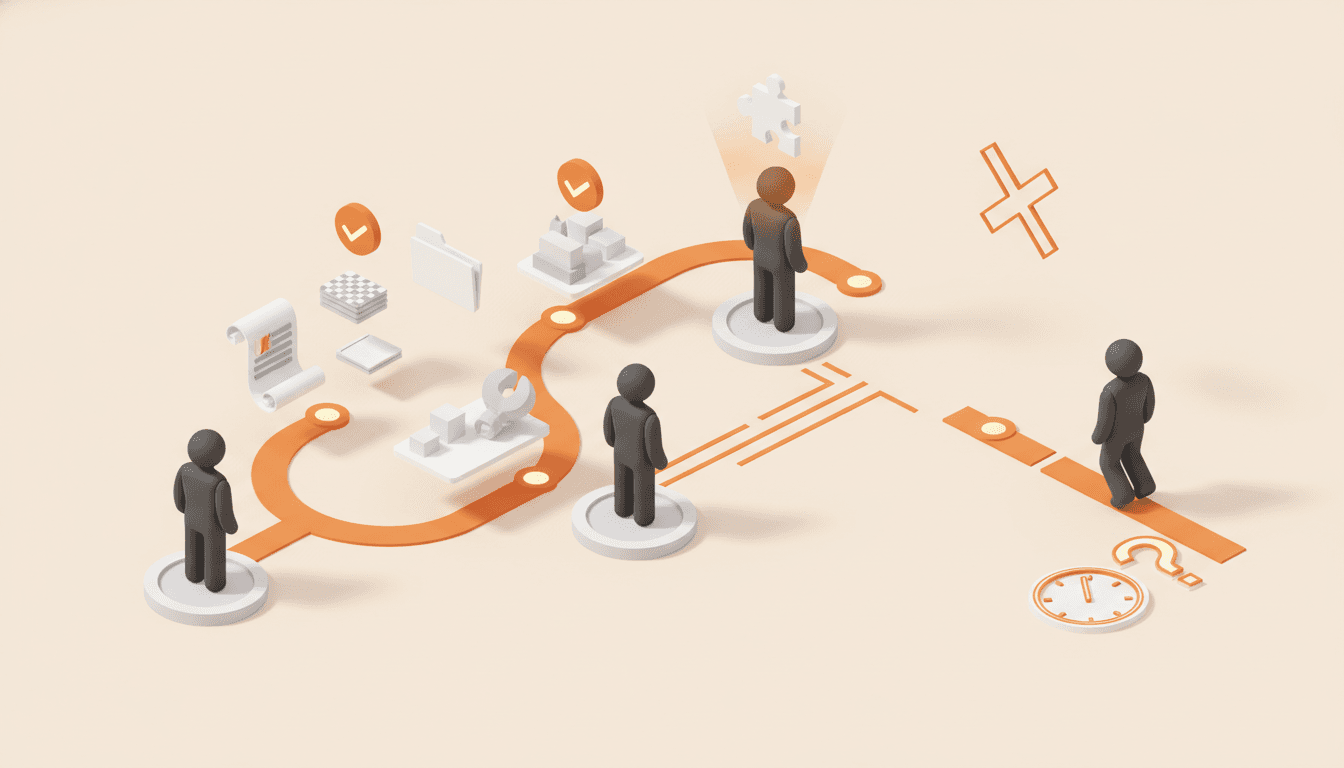
The Best Way to Use Trainual: A Consultant's Guide to Actually Getting ROI

A certified Trainual consultant's playbook for getting real ROI from the platform. It covers pre-build planning, role-based structure, launch accountability, and the quarterly rhythm that keeps Trainual from becoming shelf-ware.

Owner Dependence & Business Value

Your Key Employee Just Resigned. Here's Your 14-Day Knowledge Rescue Plan.

When a key employee resigns, you have roughly 14 days to capture what they know before it walks out the door. Here is the day-by-day plan for recording their decisions, not just their tasks, and handing that knowledge to the people who inherit the work.