AI SOP Generators: What They Get Right and What They Miss
By Derek Coffey · August 29, 2026
An AI SOP generator is genuinely useful for the mechanical half of documentation and dangerous for the other half. Point one at a screen recording of a simple, repeatable task and you get a usable first draft in minutes. Point one at the process only your best person can run and it produces something efficient and incorrect, which is the worst kind of wrong, because a document that reads well rarely gets checked. The tools are real, and what they cannot do is know what nobody ever told them.
Can AI write your SOPs? The short answer
Yes, for a narrow band of work, and no for the processes that actually put your business at risk. An AI tool can watch a screen and describe what it saw. It cannot sit in the room where teammates discover, mid-interview, that they have each been running the same process a different way. That happened in a documentation wave we ran with a nonprofit team, and the discovery was the whole finding.
Left unsupervised, AI tools tend to run about 60 to 70 percent accurate. That is high enough to save real hours and far too low to publish from. Someone who understands both the process and the tooling has to steer, test, and correct. The honest question is not whether AI can write an SOP, but how much work it removes from the person who still has to do the rest.
Use AI for the parts of documentation that are mechanical, and never for the parts that require knowing why. The rule that governs automation governs drafting too: AI will not fix a broken process, and it will not discover one either. It will document the broken version faster, in a nicer font.
What do AI SOP generators actually do?
An AI SOP generator is software that turns a source, usually a screen recording, a transcript, or a prompt, into a formatted standard operating procedure without a person writing the steps by hand. The category is broader than it looks, and its three families fail in different ways.
The first family is capture. You perform the task, the tool watches your clicks, and it writes the steps with a screenshot at each one. The second is the platform drafter: an AI writer built into a training or SOP system that turns a title and a paragraph of context into a structured document filed in the right folder. The third is the general model, where you paste a transcript or describe the job and ask for an SOP back.
The difference that decides everything is the source. A capture tool is grounded in something that actually happened. A model working from a prompt is grounded in nothing but what your prompt happened to contain, and it will never flag which parts it invented to fill the gaps.
The AI SOP generator tools worth knowing
None of these is a bad purchase. What separates them is the input, because the input decides how much truth reaches the finished document. Feature sets move quickly here, so confirm the current specifics with each vendor before you commit.
| Tool | What it generates | Best input | Where it breaks |
|---|---|---|---|
| Scribe | Click-by-click steps with screenshots | You performing the task | Anything that happens off screen |
| Guidde | Narrated video walkthroughs with AI voiceover | A recorded capture | Judgment calls and exceptions |
| Trainual | Drafts inside a role-based training system | A title plus your context | Still needs a real expert to correct it |
| Whale or Waybook | Suggested SOP drafts in an SOP library | Prompts and existing docs | Volume nobody has agreed to |
| ChatGPT or Claude | A structured SOP from raw material | An interview transcript | Confident filler when the source is thin |
| Notion AI | Cleanup and structure in place | A messy draft you already wrote | No capture layer at all |
Read the third column before the first. Anything grounded in a recording of real work, a capture tool or a model handed an actual interview transcript, starts from what happened. Anything grounded in a prompt starts from what somebody remembered, and memory is where the fiction gets in. It is also why a capture tool and a training platform are not competitors, which is the real distinction behind choosing between a capture tool and a training system.
What AI gets right
Quite a lot, and it is worth being specific, because the case against AI documentation gets overstated by people selling the alternative.
Transcription and formatting are solved. A long screen-share walkthrough becomes a clean transcript and a set of action headers before the recording finishes uploading. Screenshot capture and annotation, the part that used to eat an afternoon per document, is mostly mechanical. Rewriting a finished SOP at a lower reading level, or into Spanish for crews where English speakers are scarce, is a real win: in home services the helpers doing the work often read Spanish while the document was written in English.
Currency is the underrated one. Most SOPs die because a vendor moved a button and the screenshots went stale. One cleaning company had process instructions and software how-tos fused into one giant document, so every interface change rotted the whole thing. Regenerating a capture costs minutes, and that is the difference between a living document and a binder from 2019.
If a competent stranger could do the task by watching a screen recording, an AI draft will get you most of the way there. Those same processes are the ones worth automating outright once they are written down, because a documented process is the spec an automation runs on.
Efficient and incorrect: what AI misses
The coach who trained us in wisdom capture has a phrase for what AI does to deep knowledge transfer: efficient and incorrect, which is treacherous. Speed is not the problem. Speed plus plausibility is, because a wrong SOP that reads like a right one goes into the library and nobody argues with it.
Here is what that looks like in the field. A bookkeeper at a home services company spent 85 minutes walking us through her weekly commission run. An AI generator handed the job title and a paragraph of context would write three steps: pull the report, verify totals, submit for payment.
What she actually did was merge two exports because one of them strips the job IDs, rebuild those IDs with a VLOOKUP, screenshot group chat threads to work out who the helper was on each job, and hunt receipts through a vendor login she did not have credentials for. Three full days, every week. None of that happens on a screen a tool could watch, and none of it would have appeared in a prompt, because the owner did not know it was happening either.
AI does not know what it was never told, and it will not tell you that it is guessing.
Our own SOP rules carry a grounding clause for this reason: a question that is covered but unanswered is not an answer, and if the source never said it, the document cannot pretend. A generator has no such rule: it fills the gap and moves on.
Then there is ownership, which is where the real money goes. People do not own what they did not build. One company paid five figures to have its whole operation documented and loaded into a platform, and the team never opened it. The owner called unused documentation his worst nightmare, and when he restarted the work years later his one condition was that it begin with interviews, because being interviewed is what made his people care.
The last gap never closes. Two people follow the same SOP: one gets it right every time, one cannot get it right to save his life. The difference is never in the steps. It is ten or twelve principles running unconsciously in the good one's head, formed by a first boss or a mistake that became a law, and no model can extract those from a document that never contained them.
The human-first workflow that actually works
The house rule is one line: AI accelerates production, your team validates accuracy. Here is the order that makes that true instead of aspirational.
- Pick one process, not a library. Start where knowledge sits with the fewest people and the most damage happens when it breaks. Generating 40 SOPs over a weekend feels like progress and produces a library nobody has agreed to.
- Map it before you generate anything. Draw where the work actually goes, who touches it, where it changes hands, and which steps only one person knows. Half an hour on a wall or in process mapping software you already pay for puts the handoffs and the single points of failure on one page, and those are the spots a generated draft skates straight past.
- Record the practitioner, not the manager. The person doing the work knows things the person managing it has forgotten or never knew. Book 2 to 4 hours of their time per process and have them do the real job while narrating, rather than describing it from memory.
- Let AI take the transcript and the first draft. Transcript, segment mapping, action headers, frames pulled and annotated. Hand it the structure you want, because the skeleton of a usable SOP is a fixed shape and a model choosing its own will pick a different one on every document.
- Interrogate the gaps, then hand the document to a stranger. Where the draft turns generic, the source was thin, so those spots become the opening questions of the next session instead of something to smooth over. Then someone who has never run the process runs it from the page, and every place they stop is an edit.
Five steps, and AI touches part of one of them. Start it from an SOP template you can copy and the draft comes back in a shape your team already reads. Nothing in the sequence asks a model to know anything; it asks a model to shape what a person already said.
The bottleneck was never the writing. It was getting the truth out of the person who holds it.
Who should skip AI SOP tools entirely
Four situations, and most owners will recognize at least one of them.
The first is the wisdom-heavy process: the one your best person runs on judgment, where the steps are public and the results are not. Documenting that takes two interviews and a week between them, not a prompt.
The second is safety and compliance work. One operations leader described training that only happened after something went wrong: wait until there is a fire, then send someone back through that part of the playbook. The rules that stick are attached to the story of the incident behind them, and a generator writes the rule without the story.
The third is the team whose problem is adoption, not production. A COO running a 55-person cleaning company described her playbook as bloated, with three redundant versions of the same process and nobody able to find anything, and called it cognitive overload. Adding machine-generated documents to that is not documentation. It is fuel.
The fourth is having no reviewer. If nobody with the authority to say "that is not how we do it" will read the draft, do not generate it. At The Systems Effect we interview the people holding a business's undocumented knowledge and turn what they say into SOPs, maps, and training, with AI on the transcript and the formatting while a person decides what is true.
Calibrate this for yourself this week. Take one process you know cold, generate an SOP for it with any tool in the table, and mark every line that is wrong or missing. That count is exactly how much steering the tool will need on the processes you do not know cold.
Frequently Asked Questions
Can AI write SOPs?
AI can write an SOP for anything it can observe and cannot write one for anything it was never told. Feed a tool a screen recording of a repeatable, software-based task and the draft will land close to usable. Ask it to document the process your most experienced person runs on judgment and you get a confident document with the hard parts missing. The steps are the easy half; the purpose and the decision points are the half that makes people follow it.
Are AI generated SOPs accurate?
Left unsupervised, expect roughly 60 to 70 percent accuracy: enough to save real hours, not enough to publish from. The errors are rarely obvious typos. They are plausible-sounding steps filling gaps the source never covered, which is exactly what makes them hard to catch on a read-through. The structural fix is that someone who does the work reviews every draft, and no document reaches the team unreviewed.
What is the best way to use AI for process documentation?
Human first, AI second. Get the knowledge from the practitioner by recording them doing the real work, then let AI handle transcription, structure, screenshots, and formatting. Validate the draft with the person you recorded, and turn every vague line into a question for the next session rather than smoothing it over. AI accelerates production; your team validates accuracy.
Will AI replace SOP writers?
It has already replaced most of the typing and none of the interviewing. The scarce skill was never putting steps in order, it was getting an expert to say what they actually do, including the exceptions they stopped noticing years ago. Expect the work to shift toward interviewing, mapping, and validation, and expect the volume of documentation nobody uses to rise sharply now that producing it is cheap.
Keep reading
The Best Knowledge Base Software for Small Business (2026)
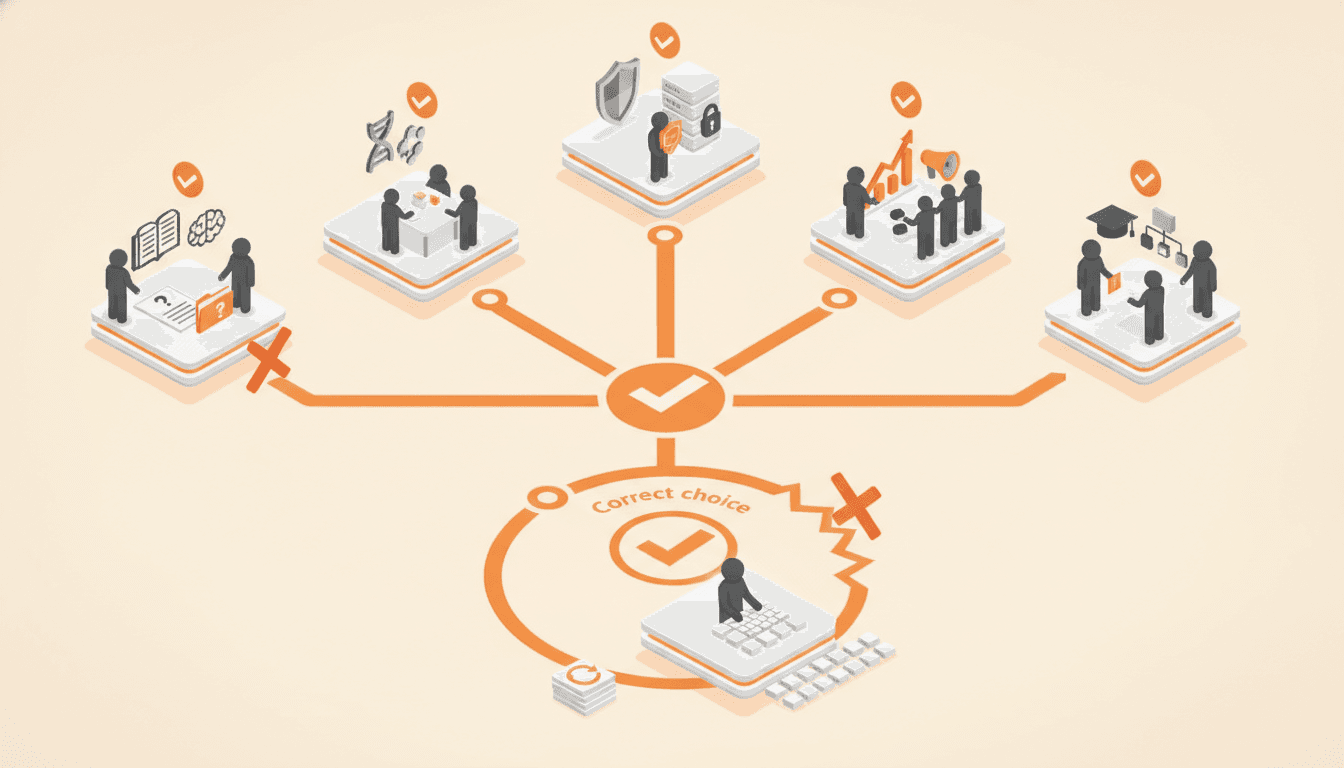
Notion, Confluence, SharePoint, Guru and Trainual do five different jobs, and picking the wrong one costs you re-keying, not subscription dollars. Here is what each is genuinely for, and the rule that decides it.
The Best Process Mapping Software for Small Business (2026)
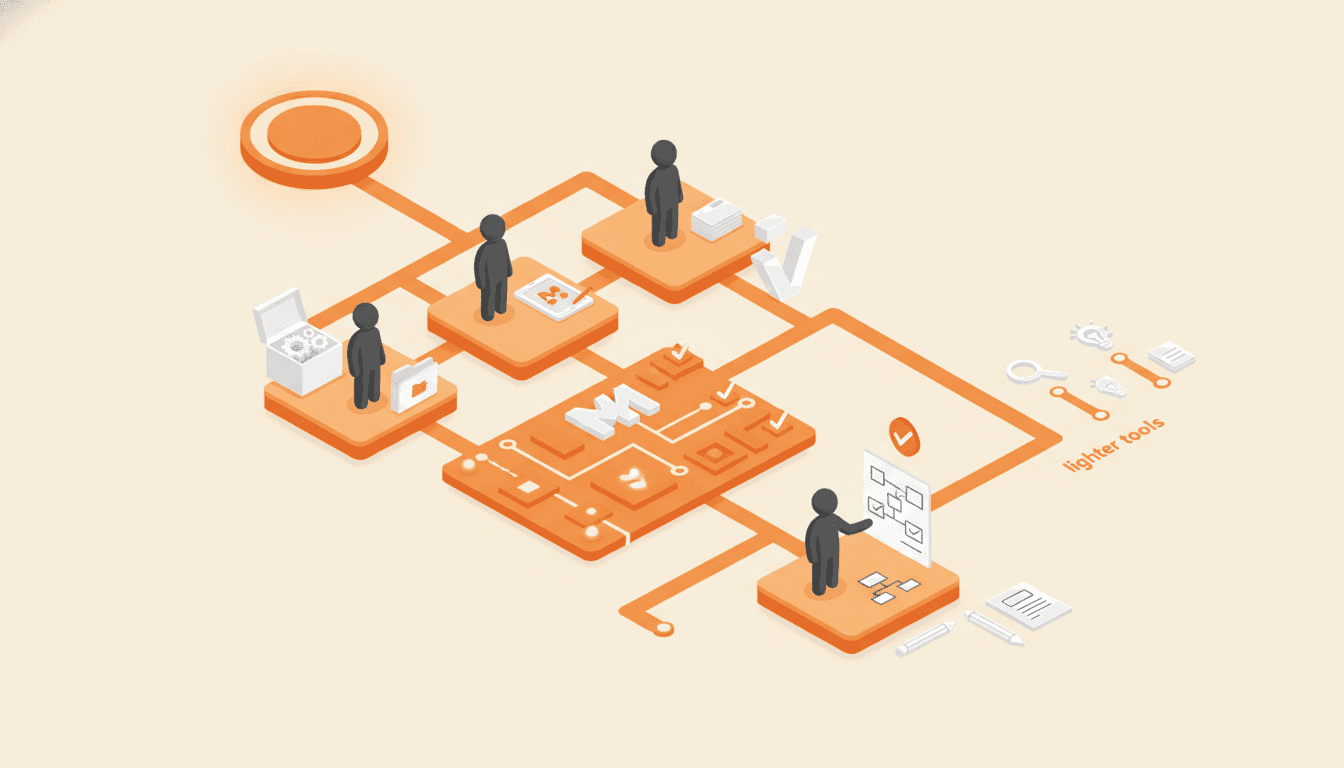
Lucidchart, Miro, Visio, and a handful of lighter tools all draw the same boxes and arrows. Here is what actually separates them for a small team, and why your first map may not need software at all.

Free SOP Software: What You Get Free and Where It Stops
Free tiers cover more of the SOP job than most owners expect, and they all stop at the same place. Here is the free stack that works under 10 people, and the trigger that tells you it is time to pay.
Choosing a tool? Plan it with us first.
A working call, not a pitch. We learn how your business runs, show you where a tool will help and where it will not, and plan the next steps with you.