Articles
Scribe and Tango both turn one real run of a task into a numbered guide with screenshots. Here is what actually separates them, what each costs, and the work neither one does for you.
An AI SOP generator will draft a simple screen-based task in minutes and get your hardest process confidently wrong. Here is what these tools actually do, which ones are worth using, and the workflow that keeps them honest.
Guidde turns a screen recording into a narrated step-by-step guide in minutes. Here is what it captures well, where it goes blind, what it really costs, and the documentation work no capture tool does for you.
Lucidchart, Miro, Visio, and a handful of lighter tools all draw the same boxes and arrows. Here is what actually separates them for a small team, and why your first map may not need software at all.
Free tiers cover more of the SOP job than most owners expect, and they all stop at the same place. Here is the free stack that works under 10 people, and the trigger that tells you it is time to pay.
Guidde captures screen workflows while Trainual assigns them by role and tracks completion. Here is what each one really does, which to buy first, and the job neither one performs.
Notion is cheaper and more flexible, but Trainual assigns training by role and proves who finished it. The right answer depends on headcount, turnover, and whether anybody owns the structure.
Both formats work, and neither one is what fails. Here is what Google Docs and Word each do well for procedures, and the folder problem that sinks libraries in either.
PlaybookBuilder is a training and playbook platform with video hosting, SMS delivery, and reporting on who is engaged. Here is what it does well, where it falls short, and what it really costs.
Process Street runs recurring work and records that it happened, while Trainual teaches the job and reports who learned it. Buying the wrong one is how teams end up paying for both.
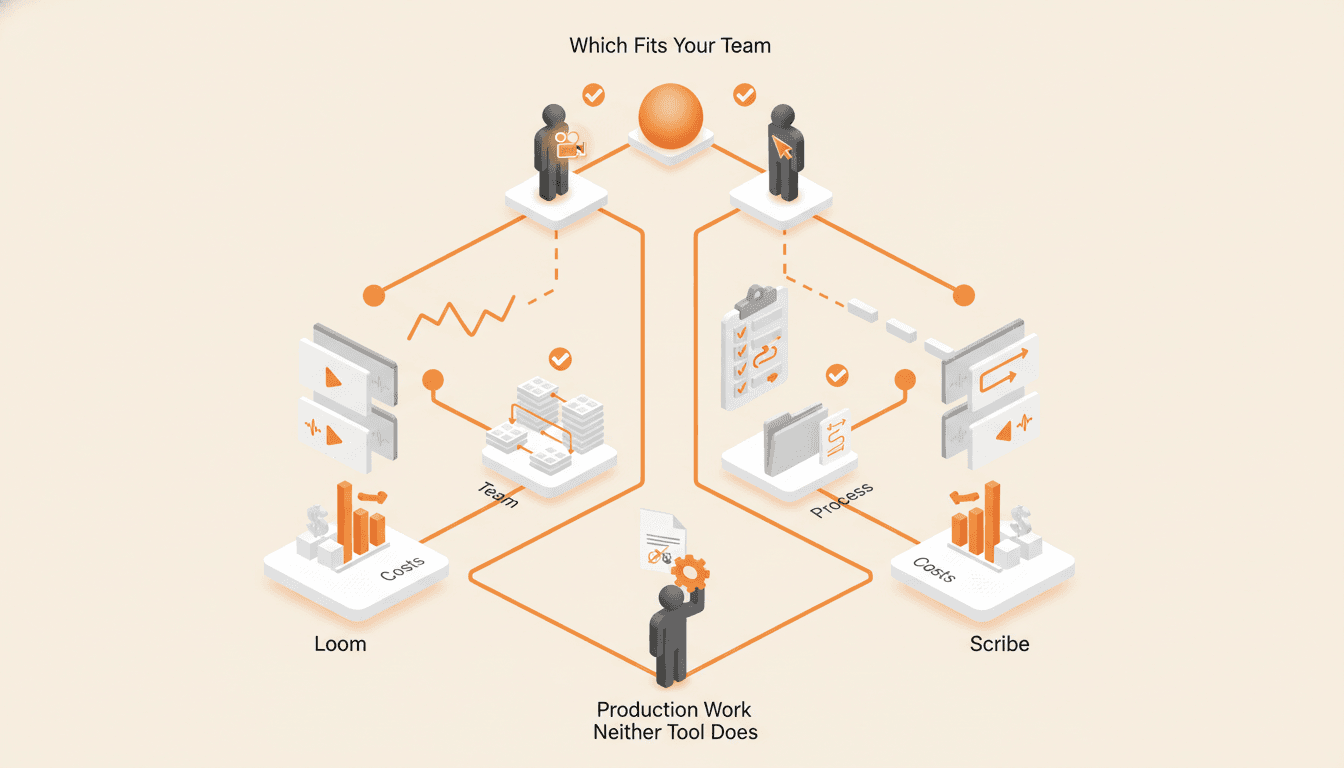
Loom records a narrated video and Scribe records your clicks. Here is which one fits which process, what each costs, and the production work neither tool does for you.
Whale documents your SOPs, routes them to the roles that need them, and tracks who finished the training. Here is what it does well, where it falls short, what it really costs, and the one problem no platform on the market solves.
Notion, Confluence, SharePoint, Guru and Trainual do five different jobs, and picking the wrong one costs you re-keying, not subscription dollars. Here is what each is genuinely for, and the rule that decides it.
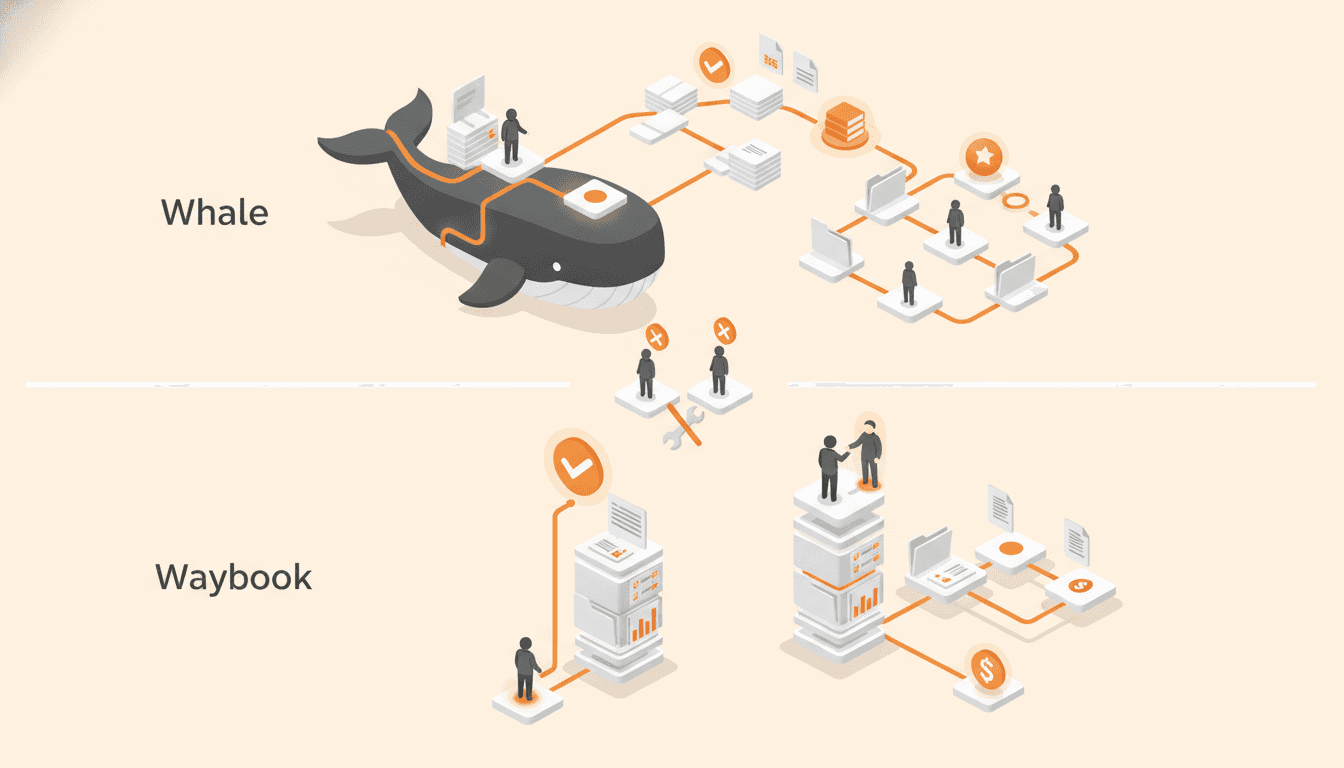
Whale keeps a documentation library alive and Waybook gets a new hire through their first month. Here is what each one really does, how they price, and the work neither platform performs.
Scribe turns a click path into a written guide with a screenshot at every step. Here is what it captures well, where it goes blind, what it really costs, and the two thirds of a process it cannot see.
Waybook groups your processes into books, assigns them by role, and proves who finished them. Here is what it does well, where it falls short, what it costs, and why an empty account is the real risk.
An honest comparison of five process documentation platforms for EOS companies: PlaybookBuilder, Whale, Waybook, Trainual, and Strety. No software fixes an empty shelf, so extraction has to happen before you buy the tool.
A business playbook template is the eight-part outline for documenting how your company runs. Here is the whole thing, free to copy, plus how to fill each section and where to host it so the team uses it.
Business playbook software is only worth buying if your team opens it. Here is the seven-job scorecard and the six-step trial we use to pick one.
Trainual is a genuinely strong tool for documenting SOPs, assigning training to roles, and tracking completion. The catch is that adoption, not the software, decides whether the subscription was worth the money.
Spreadsheets feel free, but the labor they eat and the errors they hide quietly cost you margin as you grow. Here are the three signs you have outgrown spreadsheets, and the order to graduate out of them.
A single source of truth is not software you buy. It is a decision to give each kind of answer exactly one official home, so your team stops routing every question through you.
A comparison of the top screen recording tools for building SOPs, arguing that the tool matters far less than the workflow that turns a raw recording into a finished, human-reviewed procedure.
SOP software is really three jobs wearing one coat: training delivery, process documentation, and fast capture. Here are six Trainual alternatives compared by the job each does best, and why adoption rather than features decides whether any of them sticks.
DIY SOP software looks cheap until you count the leadership hours it eats. Here is when doing it yourself works, when hiring a pro is faster, and why starting DIY and switching later usually costs more.
A certified Trainual consultant's playbook for getting real ROI from the platform. It covers pre-build planning, role-based structure, launch accountability, and the quarterly rhythm that keeps Trainual from becoming shelf-ware.