You have the SOPs. They are written, they are mostly accurate, and nobody has been through them in any particular order. To turn your SOPs into a training program, you add the four things a library does not have: role grouping, a sequence with a finish line, the reason each process exists, and completion tracking someone actually checks, then you publish it at 80 percent. That is a reorganizing job, not a writing job.
How Do You Turn SOPs into a Training Program? (A Library Is Not One)
One home services owner had already paid five figures for this. A firm documented his operation, built the maps, loaded a training platform, and his team never opened it. Two years later he hired help again with one condition: he did not want to do work that does not get used. Unused documentation, he says, is his worst nightmare.
That was not a content failure. The documents were accurate. What was missing was structure: who each one was for, what order to read them in, and any sign that someone finished.
A library is a place, a program is a path, and nobody was ever trained by a place.
Content in a shared drive folder does not get used, and content in a good platform with no structure on top fails the same way. If your team already has logins and nothing changed, you have the adoption problem underneath the platform, not a documentation gap.
| SOP library | Training program | |
|---|---|---|
| Organized by | Process or department | Role |
| Order | None, searchable | Week one to day 90 |
| Proof it worked | The file exists | A name and a date per module |
Nothing in the right column asks you to write another SOP. Every row is a structural decision, available this month.
One exception: if the SOPs are wrong rather than merely unsorted, do not sequence them yet. A path built on a bad process just teaches it faster.
Step 1: Group SOPs by Role, Not by Department
Departments are how you draw an org chart. Roles are how a person learns a job. Group by the seat someone sits in and the path almost writes itself; group by department and every new hire gets a folder full of work that belongs to somebody else.
In one 55-person cleaning company, the whole office was a single bucket labeled anyone-who-answers-the-phone: scheduler, dispatcher, sales, finance, and HR blurred together under an org chart that kept changing. The COO asked whether we even needed that chart, since the work was not built the way it was drawn. Build from the work.
What makes this survive contact is tagging. Organize by role, tag each SOP by process, and one document can appear in three role paths without three copies existing. That same playbook had grown three versions of one process, which the COO called cognitive overload: what copying instead of tagging produces.
One SOP, one owner, one canonical version, tagged into every role path that runs it.
Start with the role you hire most often, not the most complicated one. If the honest answer to how a new person learns that role today is "shadow someone," fix that first, because shadowing teaches three versions of the process instead of one.
Step 2: Sequence Them into a Path with a Finish Line
Order the role's SOPs by when a person needs them, not by how important they are. Importance is why the SOP exists. Sequence is what makes it trainable.
A workable default for most roles looks like this.
- Load the must-know week. Safety, the tools they will log into, and the three tasks they will actually perform in week one.
- Assign the core role SOPs. Days 8 to 30, the daily job, one module at a time, each ending in a real task.
- Save the judgment work for last. Days 31 to 90, the decision-heavy work: exceptions, escalations, and the calls that depend on context.
Gate the depth. Put the must-read content up front and link the detail behind it, because a person handed everything at once absorbs none of it. When we roll out a platform we teach only the primary functions and hide the rest.
Every module needs a finish line, and the finish line is a task, not a page view. A new hire needs the ordered path; a veteran needs search. The full 90 day version is laid out in the new hire onboarding checklist.
Step 3: Add the Why Layer to Every Module
Open every module with why the process exists, what outcome it serves, and who it affects. This is the layer almost every SOP library skips, and it is why so many get ignored. If the team does not understand why a process matters, they will not follow it.
Then name the decision points: the forks where the right answer depends on context and nobody wrote down what the right call looks like.
Numbers make a why concrete. One owner took payables back for a few weeks after a key person left and found 500 to 800 dollars leaking every week from skipped audits, missed part deductions, and overpayments. His own arithmetic: up to 10,000 dollars a month, not from theft, from a process nobody followed. Put that figure in the first line of the module that teaches the audit step.
A step with no reason attached is the first step your team drops on a busy Tuesday.
Stories do the same work for rules people resent. Telling someone to follow a safety step is one thing; walking them through what happened to the last person who skipped it is what sticks. Purpose plus decision points closes most of the gap between the SOPs teams follow and the ones they ignore.
Step 4: Set Completion Tracking Someone Actually Checks
Completion tracking only means something if a named person reviews it on a set day. Your platform will happily record percentages nobody looks at.
The deploy standard we use with clients does not change: organized by role, tagged by process, with completion tracking, so you can answer who is trained without asking around.
Treat completion as a signal, not proof. A click means the page was opened. Competence shows up when someone does the work and it gets graded against a rubric written in advance, which is why sales and service teams pair the module with scored practice calls before a real customer is on the line.
At one staffing firm, the training content the owner kept asking for already existed in their platform: a middle manager had quietly avoided showing it to her. Months of "we need training content" came down to one unshown login.
Put the completion report in a meeting that already exists, or nobody will read it.
Step 5: Launch at 80 Percent and Improve in Public
Publish the path when it is 80 percent right and let the team finish it. Perfect arrives long after everyone has stopped waiting.
Do not start with a committee. Pick one subject matter expert who wants to participate, will schedule the time, has influence, and sets a good example. Title does not equal fit, so pick the galvanizer. Race that person to 80 percent, then let the peer group tear it apart.
That teardown is the adoption strategy, not a delay. One tax advisory firm started with its single best advisor out of roughly 200, let the next twenty tune the result, and ended with twenty advocates instead of one author.
People support what they helped build. An outside board advisor warned one electrical contractor that a beautifully designed operating system can land like Moses coming down from the mountain, and his fix was a sticky pad: everyone writes the behaviors they admire in their best peers, then keep, kill, combine. Fingerprints beat polish.
Publishing early also surfaces disagreement you need. One nonprofit department learned mid-rollout that colleagues had been running the same process in different ways, which is what finally got them to agree on one documented way. Nobody discovers that in private, which is why training your team actually finishes is a design decision rather than a content one.
How Do You Keep Training Current When Processes Change?
Separate the process from the software click path, and give every module an owner with a review date. Those two moves handle most of it.
The most common cause of stale training is a formatting decision made early. Process steps, policy, and software how-to go into one long document, so the day a vendor moves a button the whole thing reads as wrong and the team stops trusting any of it. The process underneath changes far less often than the screens do, so keep them apart.
Set a cadence you can hold: one role reviewed per quarter, the person who runs the process proposing changes, the manager approving, and a dated note saying what moved.
Clients ask this directly: "How do we keep using it without needing you forever?" The Systems Effect builds these programs with clients, and the condition we push hardest is that the upkeep loop belongs to the role owner, not to us. A program you cannot maintain without a consultant is a binder with better fonts.
Pick the role you hire most this month. Group its SOPs, sequence them across six weeks, write one why line at the top of each module, and hand it to the next person you onboard.
Frequently Asked Questions
How do you build a training program from existing SOPs?
Group the SOPs by role, sequence them into a path with a clear finish line, add a why line to every module, and turn on completion tracking someone reviews weekly. The first version needs no new documents, only structure. Most owners can convert an existing library for one role inside a week.
What is the difference between SOPs and training?
An SOP tells someone how to run a process; training builds the ability to run it without the document open. SOPs are reference material, sorted by process and used at the moment of work. Training is sequenced, has a beginning and an end, and carries the reasons and judgment calls a reference document leaves out.
How do you track training completion?
Use whatever platform holds your content (Trainual, PlaybookBuilder, or an LMS you already pay for) and assign modules by role so completion reports run per person. Then name one existing meeting where that report gets read out loud. Completion tells you the material was opened, not that the person can do the work, so pair it with one graded task per role.
How often should training content be updated?
Review one role per quarter, and update any module the day its underlying process changes instead of waiting for the cycle. Software how-tos age fastest, which is the argument for keeping them in their own module rather than buried in the process SOP. The person who runs the process proposes the change and the manager approves it.
Keep reading
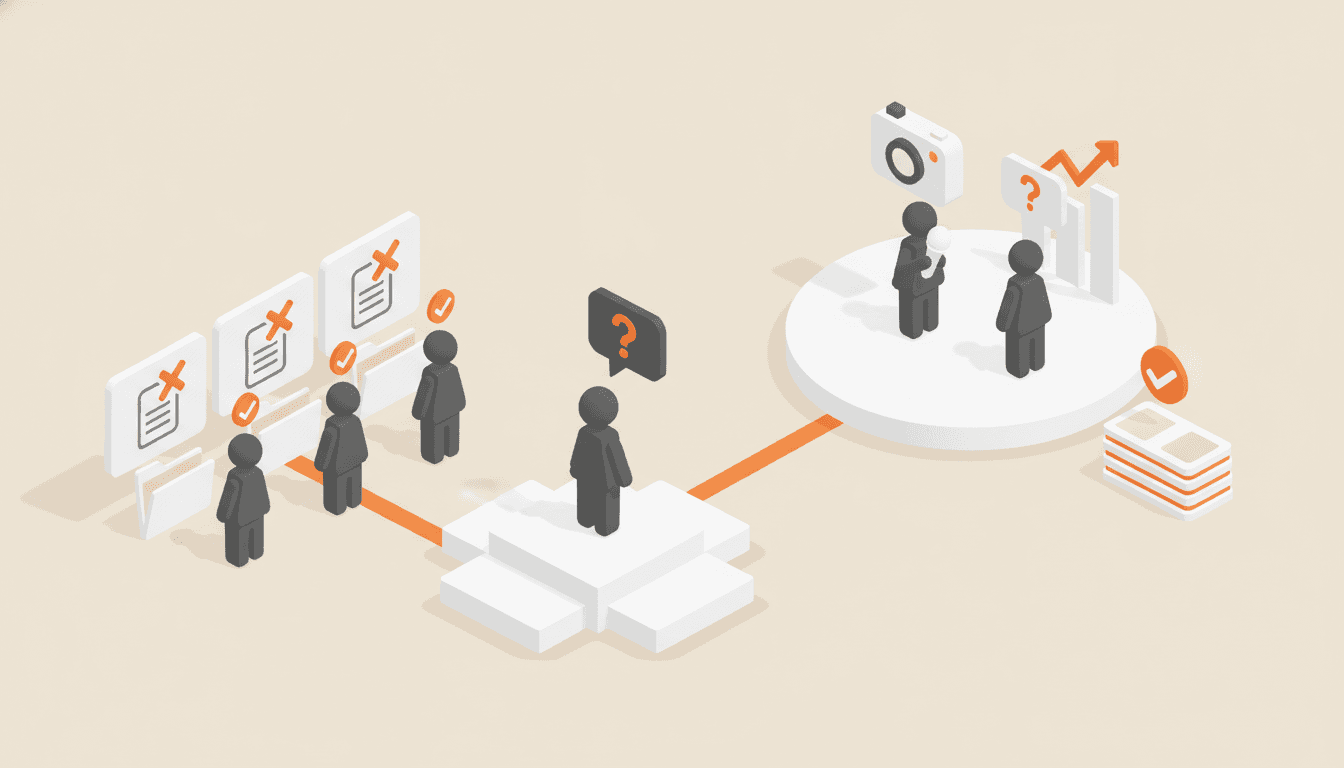
Stop Scripting Your Training Videos. Answer Questions Instead.
A trainer rejected three usable takes of her own script in a row, then named the fix herself: turn the camera on and ask questions. Here is the recording format that gets a fluent expert on tape in one sitting.
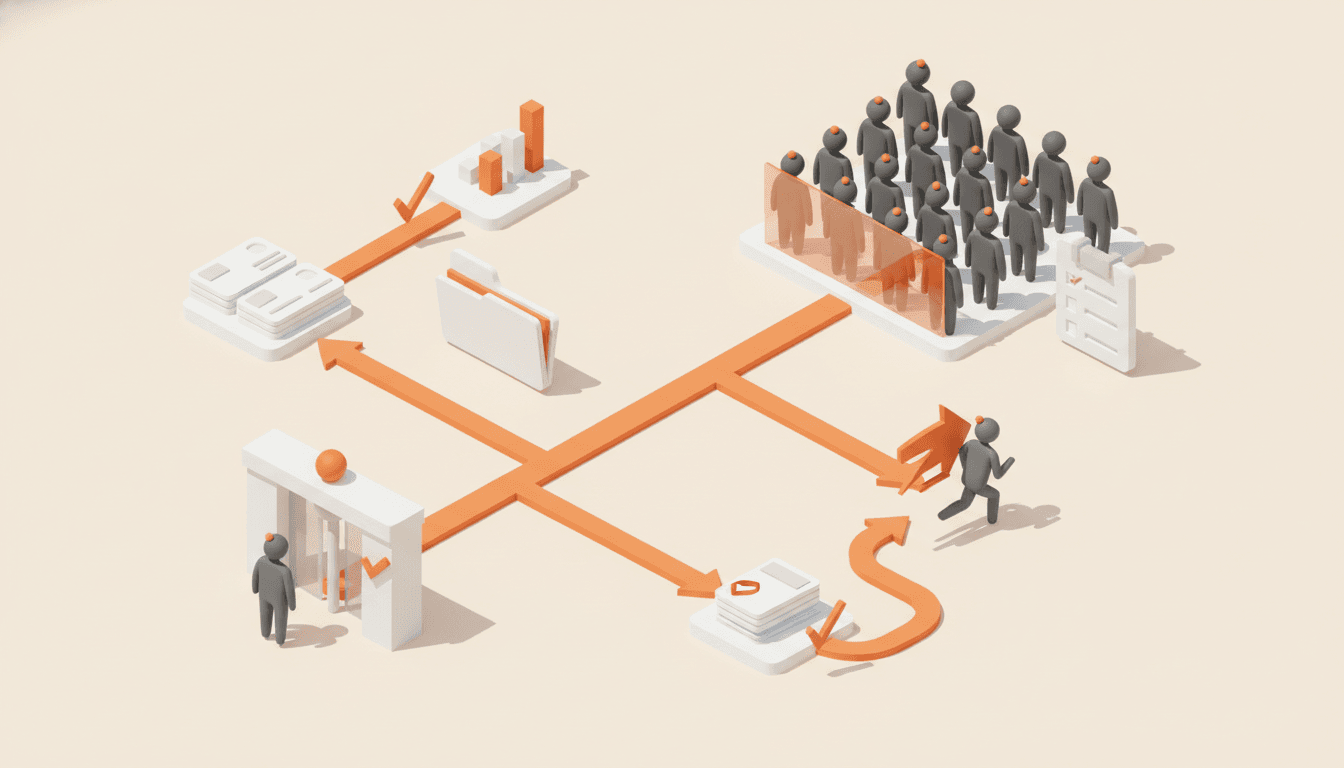
Nobody Activated Their License: Why Training Seats Go Unused
Finished training sits unlaunched because most of the company was never added to the platform. Here is how to gate, send, and chase every seat you buy.
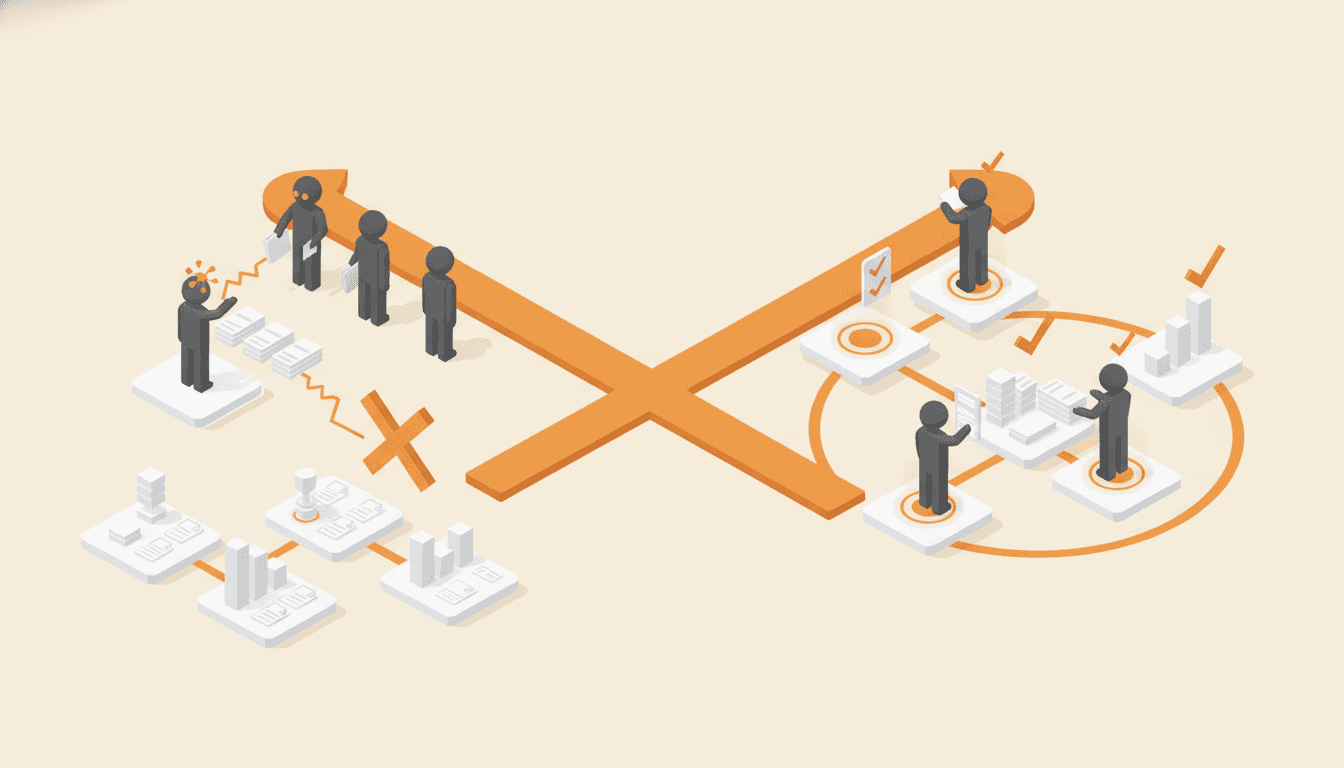
Why "Shadow Someone" Training Fails (And What to Build Instead)
Watching someone do the job is not training, it is proximity. Here is why shadowing produces three versions of every process, and what to build in its place.
Get one role out of one person's head in 14 days.
The interview guide, knowledge map and SOP templates we use on paid engagements. Free as Google Docs and Sheets.