Mock Call Training: How to Coach Reps Before Real Customers Do
By Derek Coffey · August 29, 2026
Mock call training is a scheduled practice call: a rep works a real scenario against a coworker playing the customer, scored on a written rubric before ever dialing a live account. It is not a confidence exercise. The alternative is never "no training," it is your customers absorbing the practice one call at a time.
Why Your Reps Are Learning on Your Customers
The sequence is always the same. Seats get filled faster than planned, and the new hire gets a headset, a login, and instructions to listen to whoever sits closest.
We watched a staffing branch cut its customer service team to two people overnight. The firing was not the emergency. Needing a training system for hires who had not been posted yet was, with nothing between them and customers but a coworker's spare attention.
Reps are also not calling a generic customer. They are calling into an operation they have never seen, which is why salespeople in staffing take ASAP orders without having met the crew who fills them at 4:45 in the morning. One manager walks every new rep into a restaurant powwow with those dispatchers first.
Sitting the rep beside a veteran instead fails for the same reasons shadow someone training fails everywhere else.
Every rep learns on somebody, and the only question is whether it is a coworker at 9am or a customer at 4:45am.
The first live call a rep makes should be the tenth call they have made.
What Is Mock Call Training?
Mock call training is structured role play with three seats: one person runs the call as the rep, one plays the customer from a written scenario, and one scores it against a rubric everybody agreed on beforehand. The scoring is what separates it from practice.
The scenarios come from cases your business already names. In staffing that taxonomy is written down: injury, physical altercation, theft, damage, intoxication, plus do-not-return requests. If you sell rather than support, use the calls that decide revenue: the pricing pushback, the unfillable order.
Mock calls are the wrong first move if nobody has written those case types down yet. You will rehearse a guess and score it as though it were real, and that costs two people an hour a week to get wrong.
There is a side effect worth planning for. When two trainers grade the same scenario differently, you have not found a coaching problem, you have found an undocumented process. If training is already not landing, work out why employee training fails before you add another session.
Build the Rubric Before the First Mock Call
Build the rubric first, and check whether you already own one. The staffing branch running mock calls was already grading job interviews against a written rubric. Nobody had pointed the same instrument at a phone call.
A usable rubric is 6 to 10 observable behaviors, each either done or not done. Not "showed empathy." Something a stranger listening to the recording would mark the same way you would, weighted toward the moments where the call can go two ways.
| Behavior | Fail sounds like | Pass sounds like |
|---|---|---|
| Opening | Rambles, no stated reason | Name, company, reason |
| Qualifying | Takes the order as given | Asks shift, site, start time |
| Judgment call | Promises whatever was asked | States what is possible today |
| Escalation | "Let me call you back" | Names the case type and next step |
Only one of those rows is about talking well. For every process we document we capture three things: why it exists, where the judgment calls happen and what the right call looks like, and the step by step from the practitioner. A call rubric is that middle layer as a scoring sheet.
Strategy sits above it in the sales playbook that says what you sell and to whom, procedure beside it in the sales SOPs holding your call scripts. The rubric replaces neither. It tells you whether either is used.
If a line on the rubric cannot be observed on a recording, it does not belong on the rubric.
Run the Session: Short Calls, Instant Scoring
Format matters more than content, because a session people dread stops happening by week three.
- Pick one scenario. One case type per session, from the list you already wrote. Five in an hour teaches nothing.
- Cap it at five minutes. Real calls of this type are short. A ten minute practice call is rehearsing how to stall.
- Score before you speak. The observer fills the rubric, done or not done, with no discussion until it is finished.
- Debrief on two lines. One behavior that landed, one to change. Six corrections and they apply none.
- Rerun the scenario. Same rep, same case, immediately. The second run is where the learning happens, and everyone skips it.
That loop is the method in miniature: practice, a number, one correction, practice again. It is why the habit survives a busy week, and the same reason every honest answer to how to make training engaging comes back to short scored pieces. Do not build the scenario library by committee either: one good rep takes it to a rough 80 percent, then the group tears it apart.
A mock call session that runs past 30 minutes has quietly become a meeting.
Grade Real Recorded Calls Against the Same Rubric
Mock calls only pay off if the rubric follows the rep onto the floor. Your dialer is already recording, so pull two or three live calls per rep each week and score them on the identical sheet.
Comparing the two scores is the diagnosis. A rep who passes in practice and fails live has a nerve problem, and more reps fix it. A rep who fails the same line in both was never taught that step. When everyone misses it, that is a process problem in a training costume.
Without a rubric, call coaching is one person's opinion delivered louder than the others.
Check what you already have first. At one staffing company the training lead found the content his boss had demanded for months already sitting in their own platform, unshown.
Everyone gets graded on the same sheet, or the sheet proves nothing.
Can AI Run Your Mock Calls?
Partly, and the useful part is real. A staffing client runs an AI voice sandbox where reps practice against a synthetic customer that scores them, which solves the hardest problem here: finding a second human at 7am.
The sharper question came up in one of our client interviews. How far is the tool from letting somebody drop a real recording in and have it graded against the rubric? Transcription and a first pass score are close. Judging whether the rep made the right call is not.
That is the boundary we hold in this work: AI accelerates production and your team validates accuracy, because AI cannot capture what it has never seen. The coach this method came from named the risk in three words. Efficient and incorrect.
Let AI supply the practice volume and the first score, and keep a person on the calibration.
Make It a Rhythm, Not an Event
Twenty minutes, weekly, same slot, standing on the calendar so nobody has to organize it. A quarterly training day produces a good afternoon and no habit.
For new hires, mock calls belong in the first two weeks, before live customers and before scored shadowing, which lands better in days 31 to 60 of a new hire onboarding checklist for the first 90 days. Practice, then verify. Never the reverse.
Here is what the rhythm buys. At one staffing branch two brand new sales reps started outproducing the veterans within weeks, and one put 22 workers out the door in her first ten days, more than colleagues managed in two months. The team calls it the sleeper build. It was a pipeline, not luck.
Turning what your best people know into scored, repeatable training is the work we do at The Systems Effect, starting with the person who is good at the call rather than the one who manages them.
So take one call type this week, write six observable lines, and run one scored mock call before the next new hire dials anybody real.
Frequently Asked Questions
What is mock call training?
Mock call training is a practice call where a rep works a written scenario against a colleague playing the customer and is scored on a rubric agreed on beforehand. The scoring is what makes it training rather than rehearsal, because it produces a number instead of an impression. A session runs 20 to 30 minutes.
How do you grade a mock sales call?
Grade against 6 to 10 observable behaviors, each scored done or not done, worded so a stranger listening to the recording would mark them the same way you would. Weight the sheet toward decision points: the qualifying question, the moment the rep promises the impossible or states what is possible, and the close. Fill it in before anyone talks.
How often should teams run mock calls?
Weekly, in a standing 20 to 30 minute slot, one scenario per session. For new hires, run them in the first two weeks before any live customer contact, then keep the rubric going as a weekly habit. A rhythm survives a busy week and an event does not.
Can AI grade sales calls against a rubric?
AI can transcribe a recorded call and score it against a written rubric today, and AI voice tools can play the customer so reps practice without a second person. What it cannot judge is whether the right call was made, because it knows only what the rubric told it. Use it for volume, and keep a person on calibration.
Keep reading
The New Hire Onboarding Checklist for Small Business (First 90 Days)
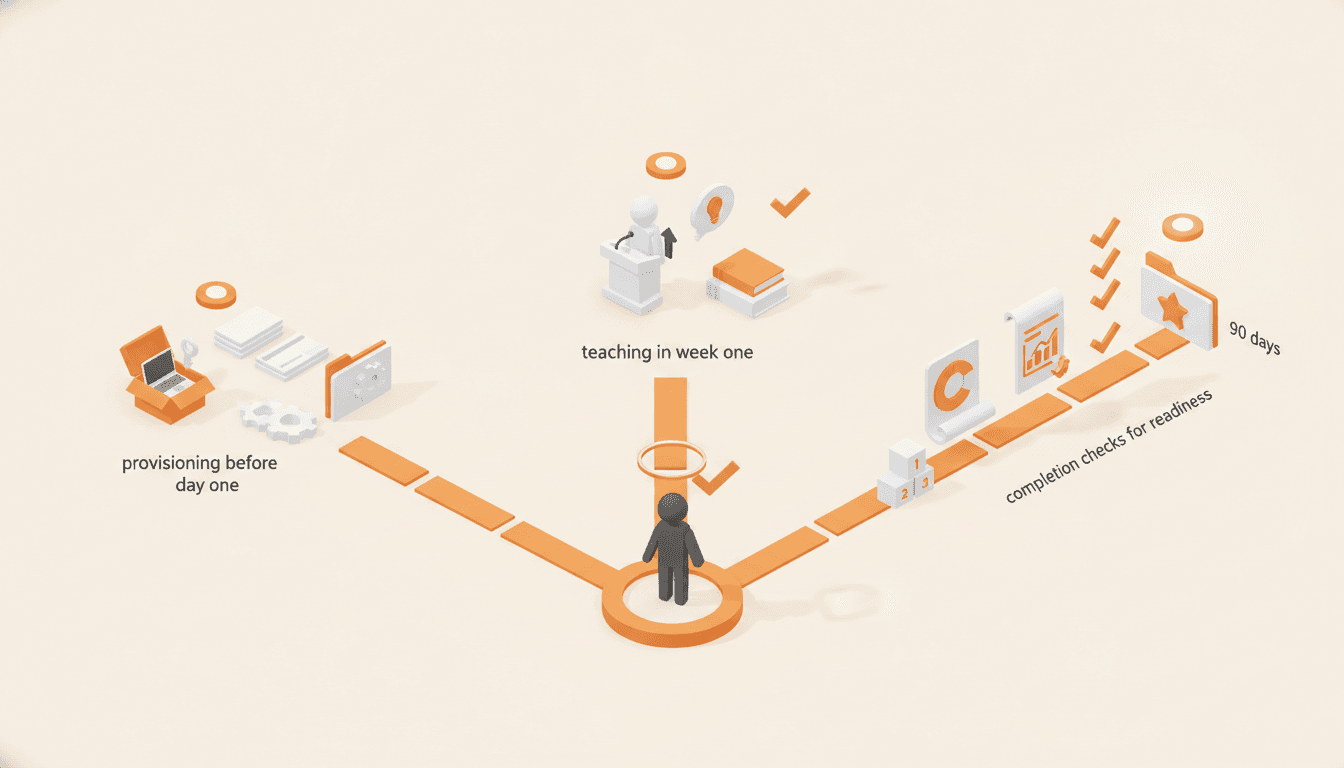
A 90-day onboarding checklist for small businesses: what to provision before day one, what to teach in week one, and the completion checks that prove a new hire is ready.
The Queue Is Not a Curriculum: Build a Training Caseload
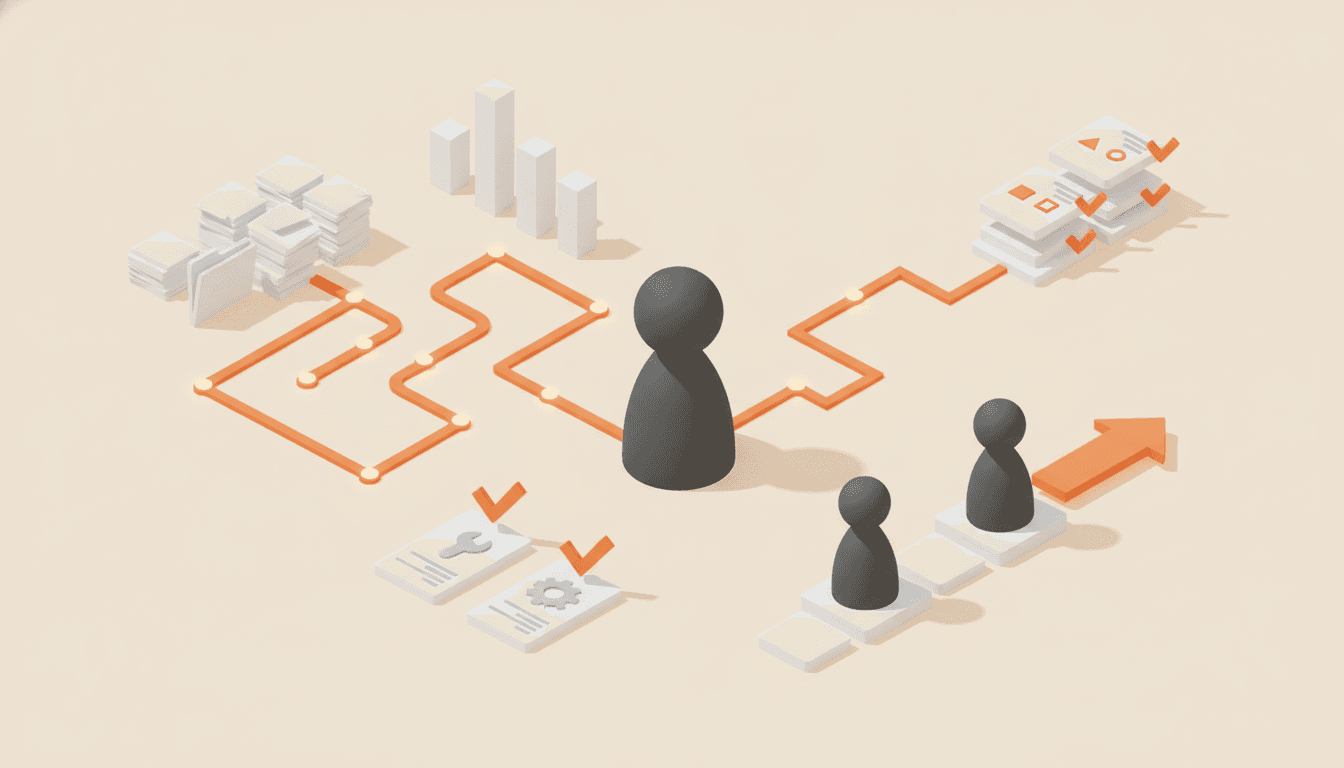
New hires learn whatever the queue sends them, which is how someone ends up two weeks in, confident on two case types, and lost on the third. A training caseload fixes the order.

Ask What the Last New Hire Got Wrong (Then Blame the Onboarding)
One question finds more onboarding gaps than any survey, because of how it is phrased. Here is the question, the four follow-ups that keep the answers coming, and what to build from each one.
Get one role out of one person's head in 14 days.
The interview guide, knowledge map and SOP templates we use on paid engagements. Free as Google Docs and Sheets.