
How to Scope a Custom Software Build (What to Hand a Developer)
By Derek Coffey · August 29, 2026 · Updated October 6, 2026
A developer will build exactly what you describe, which is the problem. Here is how to scope a custom software project so version one is worth using: write down the process as it runs today, name every record and where it lives, write the decision rules your best person makes by feel, and define done in one paragraph. Hand that over, not a feature wish list.
None of it is technical. It is a description of your business, precise enough to build from.
Scope the process before you scope the software
Software amplifies whatever it sits on. Point it at a clean process and it multiplies clarity. Point it at chaos and it multiplies chaos, faster, on a subscription.
A membership organization we watched had staff adding 700 people to lists by hand, and somebody there ran a report out of one part of the platform purely to tell another part what to do. The replacement quote came back at $61,000.
Neither habit was visible from a conference room. Someone had to watch the work, which is also what moves the price of a custom build.
Do not hand a developer a process you have never watched end to end. Mapping one costs your team 2 to 4 hours, the cheapest time in the project.
How to scope a custom software project: the document a developer needs
The document a developer needs is your process in three layers: the purpose, the decision points, and the step by step. We write it that way for people; a scope document says the same to a machine, with judgment calls turned into rules.
Written out, it has five parts.
- State the purpose. Why the process exists and who feels it when it breaks.
- Draw the current path. Every step in order, with its tool and its minutes.
- Mark the decision points. Every judgment call, and what the right call looks like.
- List the records. What your business counts, where it is created, what identifier follows it.
- Name the owner. One person who answers a developer's question the same day.
Notice what is missing: screens, buttons, colors, the word dashboard. Those are answers. A developer who understands what process documentation covers will design better ones than you will.
Name every record and where it lives today
A record is anything your business counts: a lead, a job, an invoice, a customer, a member. Each needs three answers before anybody builds: where it is created, who may create it, and what identifier follows it for life.
That last one is where builds go sideways. One field services CRM exports unique job codes as plain numbers, so a manual merge exists purely to undo what the software broke. It also regenerates the record ID when a lead becomes a job, so the ops leader invented his own match key and re-audits six weeks of data whenever it breaks.
His phrase for it is one we hear in every industry: the numbers do not tie out.
A developer can build around a bad export, but nobody can build around a record that changes its name halfway through its life.
Every record gets one identifier that survives its whole life, and one system that owns it. Choosing which system is the source of truth is a scoping decision, not a technical one.
Write the decision rules the software has to enforce
One owner asked us the question that justifies most custom builds: how do we get people to stop having to remember to follow a process? A decision rule is that judgment call written clearly enough for the software to hold the line.
Skipping it is expensive. Covering payables himself after a key employee left, one owner found $500 to $800 leaking every week from skipped audits, missed deductions, and overpayments. His math: up to $10,000 a month from a process nobody followed.
In that same business, anyone can mark a job paid in cash with nothing in the bank. As scope, the fix is one line: no job moves to paid until a matching deposit exists, and only the controller can override.
Give every rule that shape: when this happens, the system does that, and here is who can override. A rule that lives only in your best person's head cannot be enforced, and the build will not fix that.
Define done for version one, in one paragraph
Done is one paragraph of plain English somebody could read on a Friday and check. No bullets, no percentage complete.
The shape: version one is done when the dispatcher builds next week's routes inside the app, every job carries its identifier from intake through invoice, and nobody opens a spreadsheet to finish the week. That settles arguments no feature list can.
Keep version one to a single workflow, end to end. A build that touches nine processes halfway is how you get an app nobody opens: one real estate investment client built a homegrown SOP platform on a low-code tool, then abandoned it. Settle whether a no-code tool can carry version one first.
Price the phases, not the dream
Do not price the finished vision. Price the first phase, the only part anyone can describe honestly.
The pattern that works is a phase scoped around one role or department, with the deliverable and the price written down before money moves. One client agreed on scope, took the work for two roles, then balked at the invoice: no expectation email went out and the pricing was never anchored.
Build the case out of minutes. Time every step, multiply by frequency and headcount, and the argument writes itself: shave three minutes off a process 70 people run and you pay for it in 90 days instead of a year. It also decides whether to build at all or rent something proven.
A phase nobody can describe in one paragraph is not a phase. It is a wish with a due date.
Why does scope creep always show up?
Because building software teaches you what you actually do. One client named it better than any consultant: scope creep is the devil that always shows up. The mistake is treating that devil as a discipline problem.
Almost every mid-build request is one of two things. A discovery is a real requirement the map missed, surfaced the second somebody sees a working screen. A drift is a new idea the working app made possible.
Scope creep is usually the build teaching you something your process document did not know.
Discoveries belong in the current phase, because version one is wrong without them. Drifts belong on the roadmap with a date attached. Nothing gets refused. It gets sequenced.
Run the build off a roadmap your team can see
A visible roadmap is the cheapest scope control you have. Two numbers sit on it, features shipped and features requested, and both should climb. We open build reviews with that board, and a growing request count is good news: people use it enough to want more.
Teams notice fast. On one franchise walkthrough the question came back within minutes: can everyone see the roadmap, or read-only for other departments? That is adoption asking to be let in.
The same call found scope nobody had written down. A salesperson asked to see her own numbers, because every night she did the math on a phone calculator to work out her pay. It cost almost nothing to add, one reason a custom app for your business is finally realistic.
What should you test before you sign off?
Test a normal week. Not a demo and not the happy path: one ordinary week of real work, run by the people who do the job, while you stay out of it. Five checks earn a signature.
- Run the ugly record. The customer with three addresses, the job rescheduled twice.
- Walk the exceptions. Take every decision rule and try to break it.
- Cross the handoffs. Follow one item as it leaves one person and lands on another.
- Check the exports. Open them in a spreadsheet and confirm the identifiers survived.
- Watch the skeptic. Hand it to the person least excited about the change and say nothing.
Test harder than you would have five years ago, because AI wrote much of the code. Left unsupervised, AI tools run about 60 to 70 percent accurate, and 70 percent accurate software is a liability with a login screen.
The sign-off question is the one we use to measure owner dependence: can the app carry a normal week without you touching it? If the answer is no, the phase is not finished, no matter what shipped.
At The Systems Effect we fix the process first, then build the tool to fit it. Start smaller: sit with whoever runs your most expensive manual process, watch them do it once, and write down every decision nobody has written down.
Frequently Asked Questions
What should a software scope document include?
A scope document includes the purpose, the step by step as it runs today, the decision points where a person uses judgment, every record with the system that owns it, and one paragraph defining done for version one. It leaves out screen designs and feature wish lists: those are answers, and the document is the question.
How do you prevent scope creep on a software project?
You do not prevent it, you sequence it. Sort every mid-build request into a discovery, a real requirement the map missed, or a drift, a new idea the app made possible. Discoveries go in the current phase, drifts on the roadmap with a date.
How much detail does a developer need before building?
Enough that nobody has to guess what the right call is. That means every decision point written as a rule (when this happens, the system does that, and who can override) and every record traced from creation to death. Screens can be designed by somebody else; judgment cannot be invented.
Should you document your process before building software?
Yes, and it is the step almost everyone skips. A developer cannot invent the judgment calls your team makes, so anything undocumented gets guessed at and baked into the app. One membership organization only got a scopeable build after someone watched staff add 700 people to lists by hand, a habit nobody would have mentioned in a meeting.
How long should version one take?
Weeks rather than quarters, as long as version one covers a single workflow end to end and each phase is scoped around one role or department. If a first version will take six months, it is the whole dream priced as a phase.
Keep reading
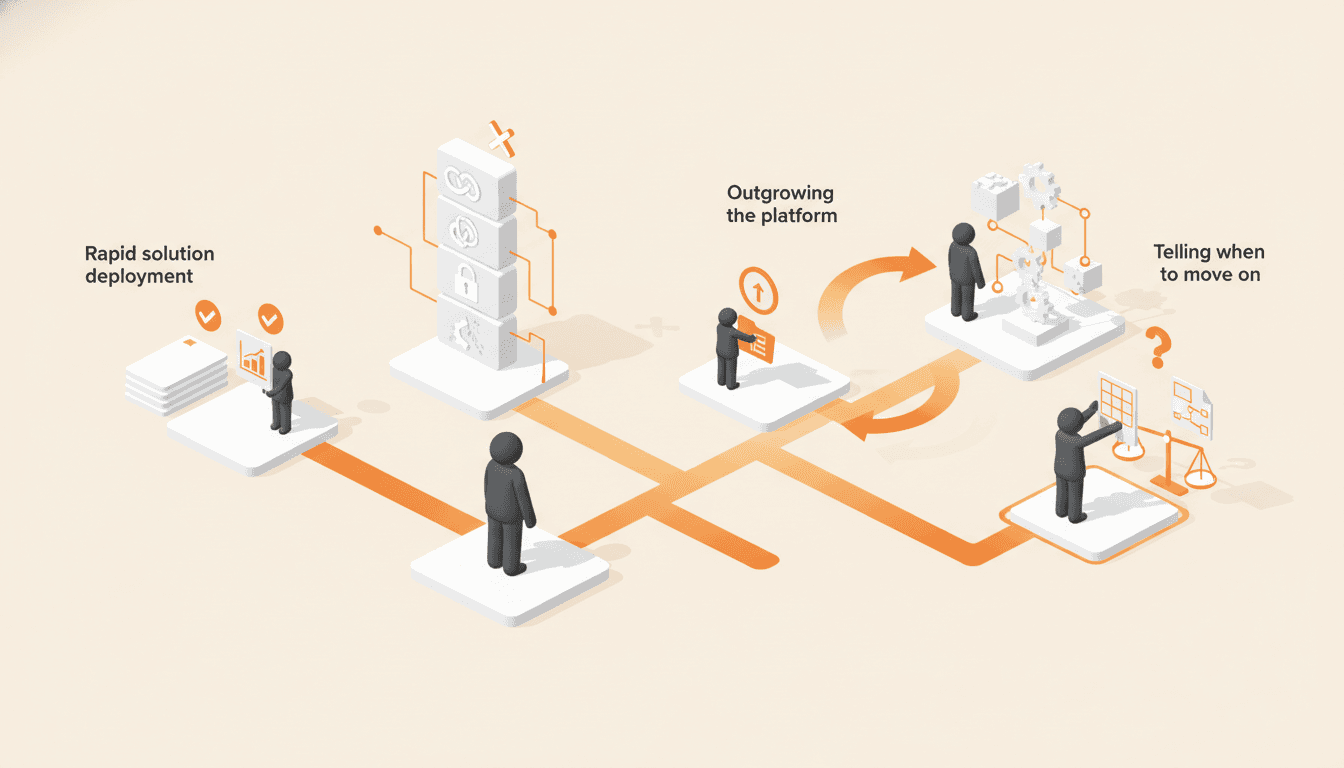
No-Code vs Custom Software: When the Low-Code App Stops Being Enough
No-code tools put a working internal app in an operator's hands in days. Here is what they genuinely solve, the four walls every low-code build eventually hits, and how to tell when a workflow has outgrown the platform it lives on.
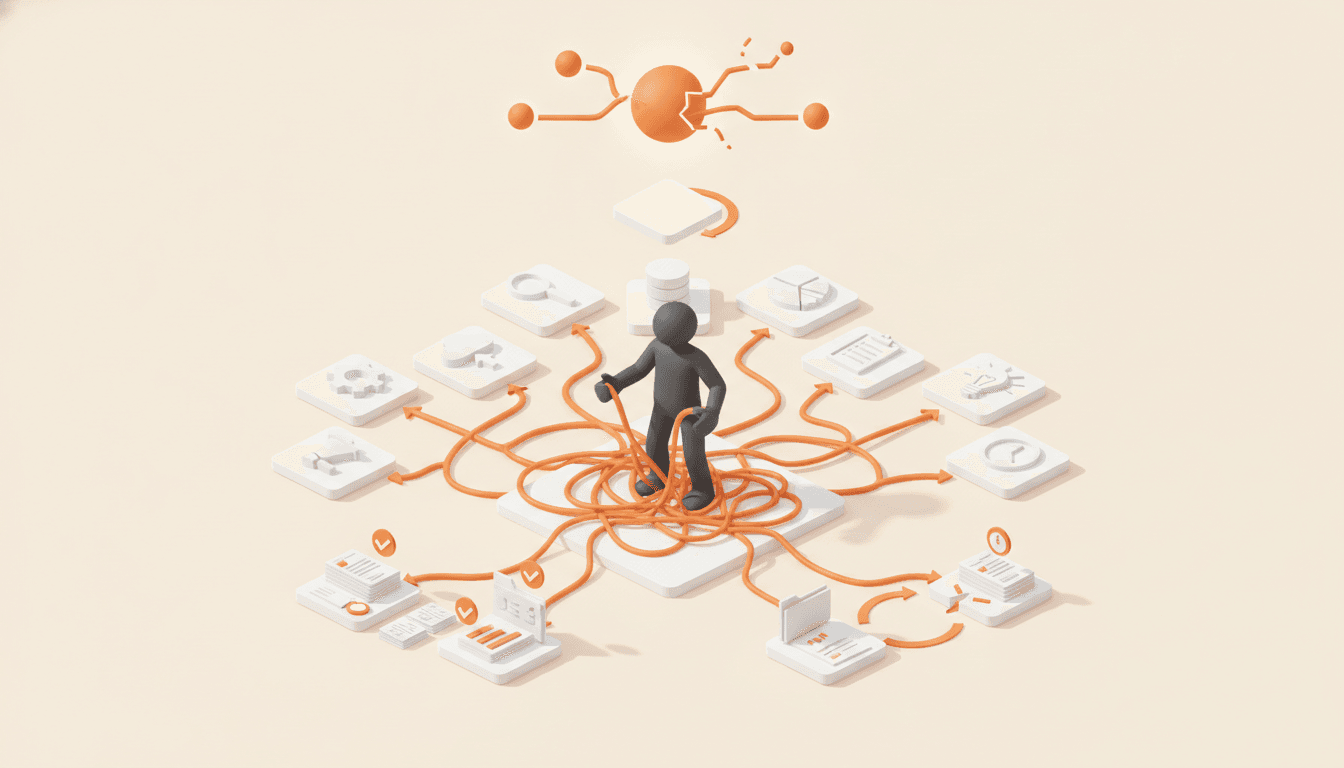
SaaS Sprawl: When Your Tool Stack Becomes the Bottleneck
A dozen subscriptions, each bought for a good reason, and nobody owning the seams between them. The subscription total is not what SaaS sprawl costs you: the re-keying is.
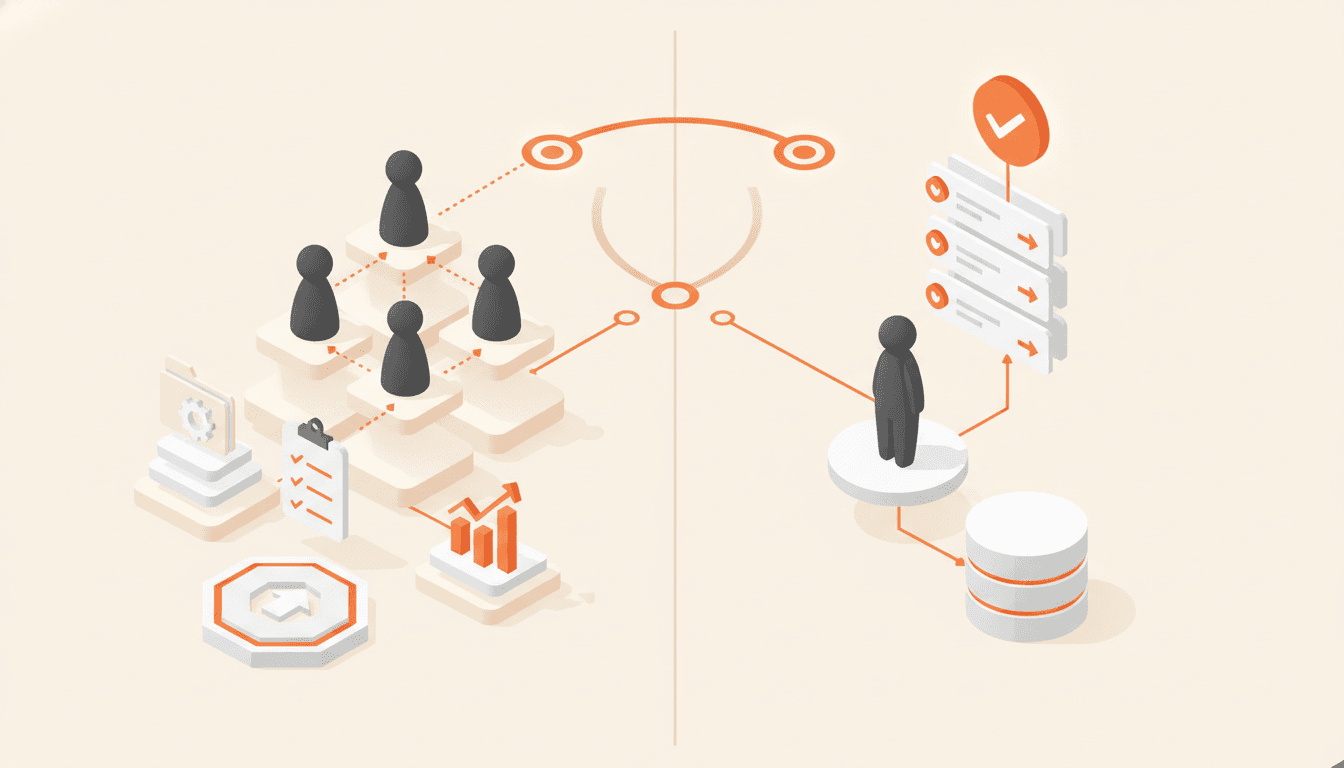
What Is a Business Operating System? (Not the EOS Kind)
Two different things share the name. One is a management framework like EOS, and the other is one app, on one database, where every step can see the step before it.
How much of your business runs on you?
Twelve questions, about three minutes. You get a score across six areas, the one carrying the most risk, and the first thing to fix.