
How Much Does Custom Software Cost for a Small Business?
By Derek Coffey · August 29, 2026
How much does custom software cost for a small business? Scope decides it. A single app that replaces one manual workflow is a modest project, while a platform meant to run the whole operation is a capital decision. One membership organization we watched make that call was quoted $61,000, after its staff described adding 700 people to lists by hand.
The number that settles it is never the quote. It is what your current process already costs you every week.
How much does custom software cost? The honest range
Custom software is an application built for one company's specific workflow, so its price tracks the size of that workflow rather than a per-seat rate card. Nobody can price a build honestly before watching your team work, and anyone who does is quoting a template. At one end of the range sits a narrow app: one workflow, one data source, a handful of screens, replacing what your people run out of spreadsheets and group chats. At the other end sits a system replacement, where the app becomes the place the work happens.
The gap between them is not a pricing mystery. It is a scoping decision, usually made before you talk to anybody who writes code.
Treat any price quoted before someone has watched your process run as a placeholder, not a bid.
The alternative is not free either. Every seat you add to a subscription bills again next month and every month after that, which is why whether you rent your software or own it reads differently at 8 employees than it did at 3.
What moved: AI dropped the cost of building
AI dropped the cost of building, which is the only reason this question belongs in a small business conversation. The production work that used to eat the budget, the scaffolding and the wiring and most of the boring code, got much faster. First working software now arrives weeks after kickoff, which is why a custom app for your business is finally realistic at revenue levels where it used to be laughable.
What did not get cheaper is supervision. Left unsupervised, AI tools tend to run about 60 to 70 percent accurate, and 70 percent accurate software is not software, it is a liability with a login screen. Someone who understands both the process and the technology has to steer, test, and correct the build. It is the same failure mode people hit when they hand SOP drafting to AI tools: efficient and incorrect, and work that reads well rarely gets checked.
Budget in two parts, and expect the second to be where the money goes.
The build got cheaper, but the judgment that keeps it correct did not.
A real quote: what $61,000 bought and why
A membership organization sat with a platform so broken that staff were manually adding 700-plus people to lists to make the thing work. Worse, they were running reports out of one part of the platform purely to tell another part of the same platform what to do. The quote to replace it with a custom build came back at $61,000, and the council approved it contingent on a grant.
Read that number against the work it deleted, not against a software budget. The organization was not buying features. It was buying back the hours paid staff spent re-keying data between two halves of a system that could not talk to itself.
That pattern shows up everywhere. One 16-store retail franchise re-keys animal records out of supplier PDFs across a stack of disconnected tools, at a cost of roughly 50 staff hours a week. Nobody had put a dollar figure on those hours, so the fragmented stack looked free and the build looked expensive.
Price a build against what the current process costs per week, not against what you think software should cost.
What drives custom software cost up or down?
Six factors move the number more than anything on a vendor's rate card.
| Driver | Pushes the price down | Pushes the price up |
|---|---|---|
| Scope | one workflow, end to end | the whole operation at once |
| Process clarity | one agreed way to do it | 3 versions and no owner |
| Data | one clean, portable source | exports that mangle IDs |
| Integrations | standalone, or one connection | several systems kept in sync |
| Judgment | rules anyone can state out loud | calls only your best person can make |
| Decisions | one person who can say yes | committee sign-off |
Only one of those rows is about software. The rest describe how clear the work is before anyone writes code, which is why two companies of identical size never get the same quote.
The data row is not hypothetical. In one field services company, the CRM export strips the unique job codes and turns them into plain numbers, so a second report and a manual merge exist purely to undo what the software broke. Any build touching that data has to carry the repair, and you pay for it.
The five questions that decide build vs buy
Before the price matters, settle whether you should build at all. Five questions do it.
- How core is it? Does this workflow touch how you actually make money, or is it a standard back-office job every company in your industry runs the same way?
- How well does off-the-shelf fit? A tool you fight every week, with three spreadsheets bolted on to cover the gaps, has already answered this.
- How do you scale? Per-seat pricing punishes growth. Renting turns headcount into a recurring software bill.
- How sensitive is your data? The more regulated or proprietary the records, the more the location and portability of that data matter.
- How much has to integrate? Every system that must stay in sync adds cost on the build side and re-keying labor on the rent side.
The honest default is renting. For accounting, email, payroll, or scheduling, a proven subscription is cheaper, safer, and better than anything you would build, and the vendor absorbs maintenance you would otherwise own forever.
Rent the commodity, own the core. That line resolves most of these decisions, and the longer version, including the cases where a build genuinely wins, sits in when custom software finally makes sense.
The cost that is not on the invoice: process clarity first
The most expensive line item never appears on the quote. It is the broken process you paid to encode. One field services company spent five figures having its operation documented and loaded into a platform, and the team never opened it. The owner called unused work like that "my worst nightmare," and two years later he was paying to start over.
Point software at a clean process and it multiplies clarity; point it at chaos and it multiplies chaos.
There is a quieter cost too: not deciding. An operations lead at a growing field services company described the trap: "We are always in that space where you start to outgrow something, but you are not quite big enough for the next thing." With no time data there was no ROI case, so the decision sat in limbo for a year while the manual work continued.
Time is the argument that breaks the tie. Assign minutes to every step, multiply by frequency and headcount, and the case writes itself. Shave three or four minutes off a process that 70 people run and the thing pays for itself in 90 days instead of a year. If the arithmetic keeps pointing at one place where all the work should live rather than at another app to add, you are asking what a business operating system is.
Map the process first, then build the tool to fit it.
When custom software is ego, not strategy
Building custom software you could have bought is ego, not strategy, and the tells are easy to spot. You cannot name the weekly hours the build deletes. You are rebuilding a commodity because you dislike the vendor's interface. Nobody inside the company has been named to own the thing once it ships.
Any one of those is a reason to keep renting for another year. A tool you resent is cheaper than an asset nobody maintains, and no build survives contact with a company that has not decided who owns it.
The test on the other side is simple: when the app carries a normal week without you touching it, you have proof the business can too.
Before you request a quote, take the process that eats the most hours and write down every manual step with the minutes attached. That page is the specification, and it is also the price. It is where we start at The Systems Effect, because we map and fix the process before anyone writes a line of code, and it is worth doing whether you build anything or not.
Frequently Asked Questions
How much does custom software cost for a small business?
There is no market average worth quoting, because the price tracks scope and process clarity rather than industry rates. A single app that replaces one manual workflow is a modest project, while a full platform replacement is a capital decision: one membership organization was quoted $61,000 for exactly that after its staff described adding 700 people to lists by hand. Compare any quote to what your current process costs per week in labor, not to what you assume software should cost.
Why did custom software get cheaper?
AI dropped the cost of building, so owning software is finally realistic for small businesses, not only the enterprise. The production work got much faster, so first working software now arrives weeks after kickoff instead of quarters later. What did not get cheaper is supervision: unsupervised AI tools run about 60 to 70 percent accurate, and someone who understands both the process and the technology has to steer, test, and correct the result.
Is it cheaper to build or buy business software?
Buying is cheaper for anything standard, and renting should be your default for accounting, payroll, email, and scheduling. Building wins when the workflow is core to how you make money, off-the-shelf fits badly, per-seat pricing punishes growth, or several tools force staff to re-key the same records. The rule that decides it is to rent the commodity and own the core.
What should you fix before building custom software?
The process, every time. Software amplifies whatever it sits on, so a build placed on a workflow that three people run three different ways multiplies the confusion at speed. Map the workflow end to end, agree on one way to run it, and put minutes against each manual step before you scope anything. That map is the specification, and the exercise usually pays for itself even if you never build.
Keep reading

How to Clean Up Your Business Data (Before You Automate Anything)
Nobody trusts the reports, so everybody keeps a private spreadsheet. Cleaning the file is not the fix: the fix is repairing the four things that break the data in the first place.
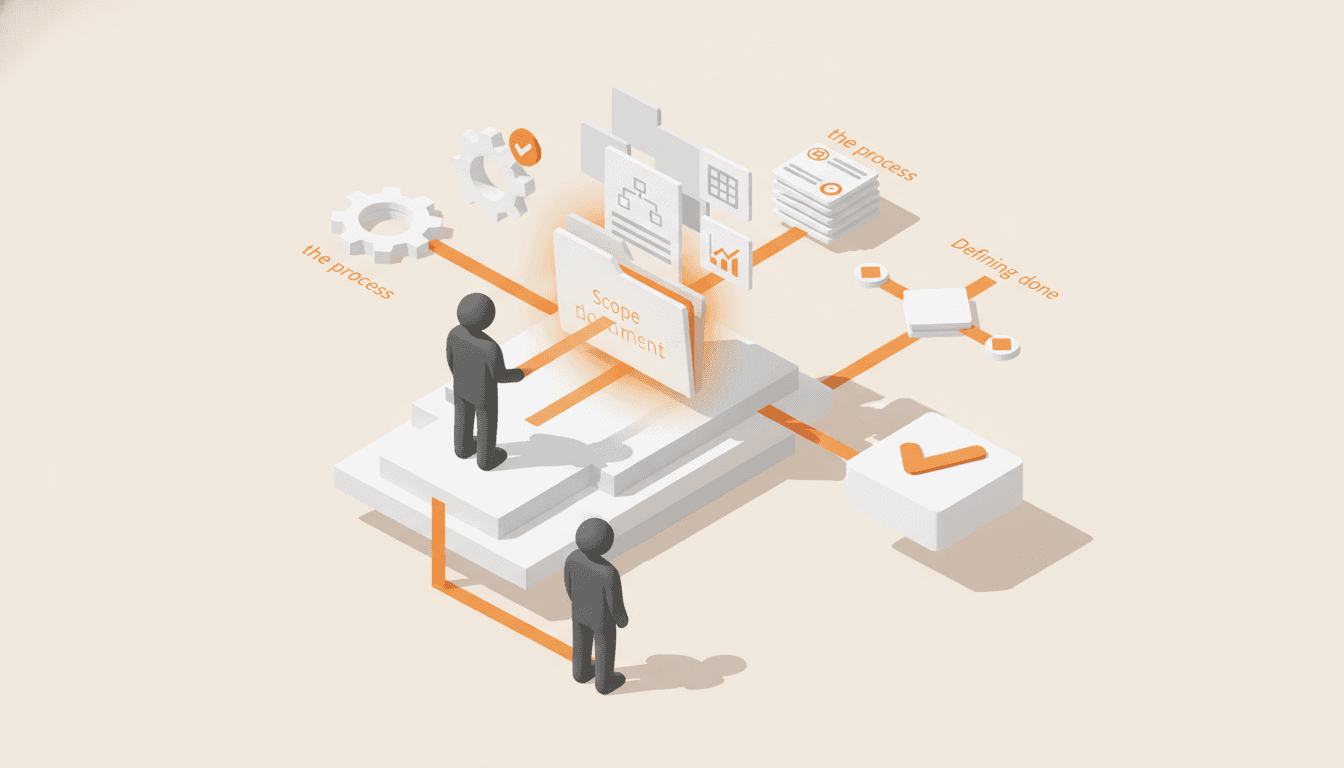
How to Scope a Custom Software Build (What to Hand a Developer)
A developer builds exactly what you describe, so the scope document is the whole game. Here is what belongs in it: the process as it really runs, every record, the decision rules, and one paragraph defining done.
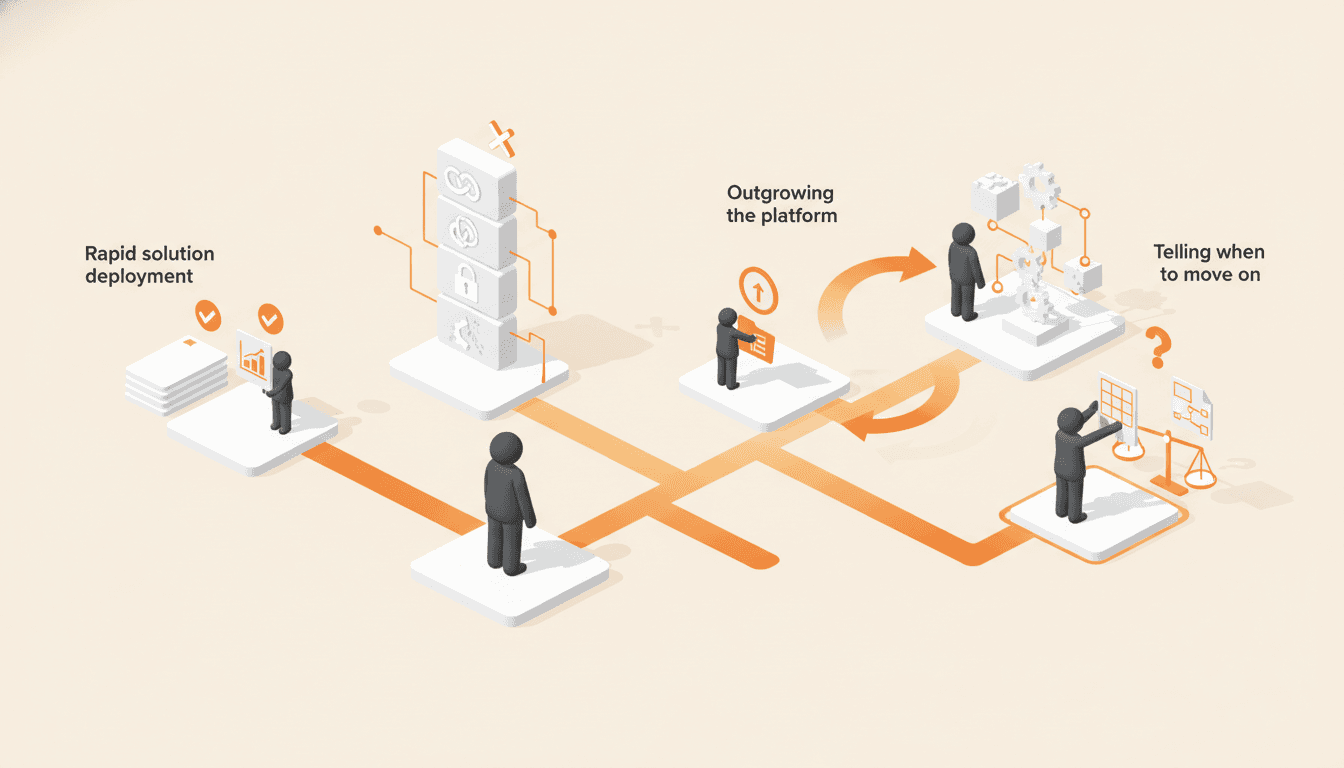
No-Code vs Custom Software: When the Low-Code App Stops Being Enough
No-code tools put a working internal app in an operator's hands in days. Here is what they genuinely solve, the four walls every low-code build eventually hits, and how to tell when a workflow has outgrown the platform it lives on.
How much of your business runs on you?
Twelve questions, about three minutes. You get a score across six areas, the one carrying the most risk, and the first thing to fix.