Process & Systems Fundamentals
How to Systemize a Cleaning Business (Without Bloating the Playbook)
By Derek Coffey · August 29, 2026
To systemize a cleaning business, document the short list of processes that run your day (scheduling, cancellations, customer calls, quality checks, safety, hiring), capture each one from the person who actually does the work, and rebuild one playbook at a time. Notice what is missing: write more documents. Most established cleaning companies do not suffer from too little documentation. They suffer from too much, in too many versions, organized so badly the team stopped looking.
Key Takeaway: A cleaning business is systemized when every daily process exists in one current version, split into process, training, and software layers, each with a named owner. If nobody uses the playbook you have, do not add to it. Rebuild one playbook at a time, starting closest to working, and let field leads capture the physical work on video.
Why Cleaning Companies Drown in Their Own Documentation
There is a specific irony here. You sell order: you walk into cluttered houses and leave them clean, to a standard. Yet the playbook is usually the one closet nobody ever cleans.
We interviewed the COO of a 55-person residential cleaning company serving 900 recurring customers, 85 homes a day. Her playbook platform was two years old and full: 3 redundant versions of the same process, and nobody able to find anything. Her diagnosis: cognitive overload.
A playbook where nobody can find anything is clutter with a login.
Nobody builds that on purpose. The documentation writer is also running operations: she starts a document, gets pulled into a scheduling fire, and returns weeks later to start a fresh version rather than find the old one. The team is not lazy, which is the real reason SOPs collect dust in most companies: the library makes them work to find the work.
Field service companies fail in one of two directions: a company running on 20 group chat threads has nothing written down, so the fix when you systemize an HVAC business is capture. A cleaning company has everything written down 3 times, so the fix is subtraction.
Separate Process, Training, and Software How-Tos
The most common structural mistake in cleaning playbooks is fusion: process, training, and CRM instructions welded into one giant document. In one cleaning company we interviewed, screenshots were baked into every process doc, so every time the vendor changed a screen, the whole SOP went stale. Every stale page cost a little more trust.
Three kinds of document, three aging speeds.
| Layer | What it answers | It goes stale when |
|---|---|---|
| Process | Why this exists, who it affects, the judgment calls | The business changes |
| Training | How we do the work to our standard | The standard changes |
| Software how-to | Which screens, which clicks | The vendor ships an update |
Software how-tos die on the vendor's schedule; the reasons behind your cancellation policy can hold for years. Fuse the layers and the fastest-aging one drags the rest down. If a screenshot appears inside a process document, cut it out and link to it instead.
The split maps to what we capture for every process: purpose and decision points live in the process layer and rarely change; the practitioner's click-by-click sits quarantined in its own file. A CRM update then means re-shooting one how-to, not auditing a library.
What SOPs Does a Cleaning Business Need First?
A cleaning business needs SOPs for the 6 processes that touch every single day, and almost nothing else at the start.
- Scheduling and dispatch: the engine of the whole operation
- Cancellations and skip-a-clean checks: where recurring revenue quietly leaks
- Customer request calls: whoever answers the phone commits the company
- Quality checks by field leads: the standard only exists if someone inspects it
- Safety: trained before the incident, not after
- Hiring cleaning technicians: at this volume, a weekly process, not an event
The point of the list is what it excludes: if your playbook holds 60 documents, this is the keep list, and the rest is a merge-or-delete candidate. The general version of this call is in the first 5 SOPs every small business should document.
In a 55-person cleaning company, safety was trained only after something went wrong, so put it on a calendar instead of waiting for the fire. And a business cleaning 85 homes a day hires constantly; these HR SOP examples give that pipeline its skeleton.
How to Systemize a Cleaning Business One Playbook at a Time
One cleaning company COO had a reason to distrust the whole project: years earlier she paid a consulting firm a lot of money, a couple of processes came back, and she spent a year cleaning up the mess. Her condition the second time was structural: one playbook at a time, one invoice at a time, prove it, then continue.
That condition is the correct rebuild method, not just self-protection. It follows the same spine as how to systemize a service business, with one difference: you are not starting from zero, you are starting from clutter.
- Start closest to working. Pick the area nearest to done, not the biggest mess. The first win must be fast and low-risk; you are rebuilding trust in documentation itself.
- Audit before you write. Pull every version of the process into one pile. Three versions is not three assets; it is one process and two traps.
- Map it live. The person who does the work walks the real thing while someone else maps it, using the format in how to run a process mapping session.
- Rebuild in three layers. One process doc, its training, its how-tos, cross-linked. Delete the old versions the same day.
- Prove it, then move. Launch at 80 percent, let the team run on it for 2 weeks, fix what they flag, then start playbook two. Hiring outside help? Same structure: one playbook per invoice.
The pace feels slow for a month, until the first rebuilt playbook starts getting used, which reorganizing the old library never achieved.
Use Field Leads to Capture the Work on Video
The office can write about scheduling. It cannot write about resetting a kitchen or running a quality walk; the standard for physical work lives in the hands of the people doing it. Those people are your field leads, who already train new technicians crew by crew. Give them the capture job.
The method is the one we use on every engagement: record the practitioner, not the manager. A field lead with a phone films short clips on real jobs, one task per clip, narrating as she goes. One two-year-old cleaning playbook we reviewed held plenty of text and not a single video, in a business whose product is physical work.
Keep the clips small. A practitioner's time runs about 2 to 4 hours per process, and 3-minute task clips are what a new technician will actually watch; a 40-minute walkthrough is an archive. Editing and filing happen in the office, after.
Keep the Org Chart Out of the Way
A COO we interviewed asked a question worth repeating: do you need my org chart, since that is what I am building the playbook around? Her 7 office staff were one blurred bucket: whoever answered the phone was at that moment the scheduler, dispatcher, sales, and HR. And the chart kept changing.
Organize the playbook around the work, not the chart. Cancellation processing runs the same way no matter whose seat holds it this quarter. Attach one owner to each playbook; when people change seats, you update a name, not a library.
How Do You Keep the Playbook Current at 85 Homes a Day?
The honest obstacle is time. A cleaning company COO sits in half the seats in the building, and the one we interviewed traced the bloat straight back to her own interrupted starts. The fix is not more discipline. It is a structure that does not route through her.
Nobody is coming to save the documentation.
Three habits keep it clean. Every playbook gets a named owner who is not the COO; a document owned by everyone is owned by no one. Changes get captured the moment they happen: the field lead re-films a clip, and a vendor update means re-shooting one how-to. And the team adopts the rule your crews already work by: leave it cleaner than you found it, merging or deleting duplicates on sight.
This staged rebuild, interviews first, one playbook at a time, is how we run cleaning company engagements at The Systems Effect. This week, take the process that lives in 3 versions, merge them into one current document, delete the other two, and name an owner at the top. That is what it means to systemize a cleaning business: one closet at a time, left cleaner than you found it.
Frequently Asked Questions
What SOPs does a cleaning business need?
A cleaning business needs 6 core SOPs first: scheduling and dispatch, cancellation and skip-a-clean handling, customer request calls, quality checks by field leads, safety, and technician hiring. Each should exist in one current version, separated from training videos and software instructions. Build beyond the six only after those are used weekly.
How do I organize a bloated playbook?
Do not reorganize everything at once, and do not buy a better tool to hold the same clutter. Pick one process area, pull every version into one pile, merge them into one current document, and delete the rest. Repeat one playbook at a time, starting closest to working. Bloat is cured by deletion and ownership, not by a new folder structure.
Should process docs include software instructions?
No. Keep software how-tos in their own short documents and link to them from the process doc. Screenshots baked into a process document go stale every time the vendor changes a screen, and one CRM update can quietly expire a whole playbook. Kept separate, that update means re-shooting one small how-to.
How does a COO with no time build systems?
By refusing to be the documentation department. Field leads film the physical work in short clips, office staff walk their processes in mapping sessions, and every playbook gets a named owner who is not the COO. The COO sets the order, protects the rhythm, and makes the keep-or-delete calls.
Keep reading
How to Systemize a Coaching Business (So Clients Actually Implement)
Coaching businesses rarely fail at delivery, they fail at the client's install. Here is how to systemize the offer, the packaging, and the video so what you sell actually gets used.
How to Systemize a Construction Business (One Role at a Time)
Construction knowledge lives on the jobsite, not in the office. Systemize one role at a time, from the first five SOPs to the monthly rhythm that keeps them alive.
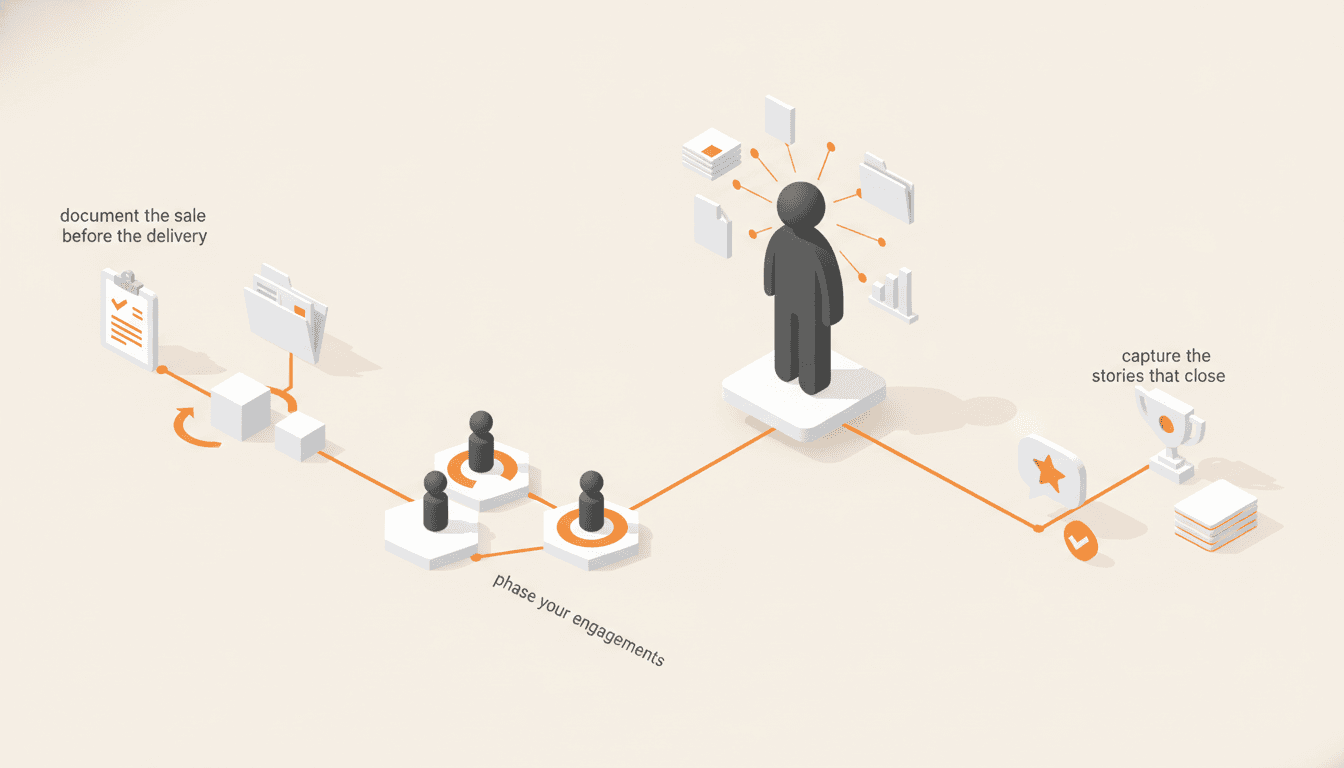
How to Systemize a Consulting Firm (When You Are the Product)
Consulting firms stay founder-dependent because the founder is the product. Here is the order that works: document the sale before the delivery, phase your engagements, and capture the stories that close.
Which processes should you write down first?
Rank the work that keeps your business running. You get the five to capture first and a 90-day order to capture them and get your team using them.