
Process & Systems Fundamentals
How to Systemize a Consulting Firm (When You Are the Product)
By Derek Coffey · August 29, 2026 · Updated August 30, 2026
Here is how to systemize a consulting firm, in the order that actually works: document how the work is sold before how it is delivered, cut retainers into phased engagements with visible ends, run every delivery through one repeatable arc, and capture the judgment and stories that exist only in your head. The order matters because a consulting firm has a problem most businesses do not. The product is you.
The founder-as-product trap
Clients do not buy your firm. They buy you: your judgment, your stories, your presence in the room. That is what built the firm, and it is also the ceiling, because the product goes home at night.
We sat with a founder who runs three companies and a nonprofit. His AI product has held 100,000 conversations with users in 100 countries, his ten-person team is senior, and he still cannot leave for a week. His people keep telling him that if something happens to him, it all goes right down the tube.
His own words: "There are a lot of things that I know that nobody knows but me, and I do not even know what I have told people and what I have not." Health issues made that sentence stop being hypothetical.
A founder who closes every deal is not a sales process: he is a single point of failure with a strong close rate.
The trap tightens with success. Every deal you close personally deepens the client's attachment to you, not the firm. And the dependence runs both ways. The firm needs you to function, and you need it for identity, a pattern of owner co-dependence worth its own hard look.
What breaks first if you step away?
For almost every consulting firm, the sale breaks first. In discovery we ask founders one question that does most of the work: without you in it, what part of the business fails first? One founder of three companies answered in an order worth memorizing. Customer acquisition dies first, then culture, then the technical work only he understands.
Notice what is not first: delivery. His team could run the engagements already on the books; nobody else could open the next door, because he is the sole storyteller who closes every large contract.
That one question is a knowledge risk assessment in miniature, run on yourself. Whatever fails first when you step away is the first thing you document. For most consultants, that is not the methodology binder. It is the sale.
How to systemize a consulting firm: document the sale before the delivery
Treat your sales motion as a process with rules, not a performance with a gifted lead. Three things belong in writing before you document a single delivery step.
First, the qualification rules. Write down your dead-deal signals and act on them in the room. We watched one team end a pursuit on the spot when the owner skipped every call and sent two managers to receive the proposal: no decision maker, no sale. One more documented signal is the prospect who demands line-by-line pricing, shopping for parts instead of buying an outcome.
Second, the discovery questions. The ones that surface the real problem are assets, down to the phrasing: what would have to happen in the next three years for you to be happy? On paper, they let someone who is not you run a first call that sounds like you.
Third, the stories. Large contracts close on storytelling, not slides, and the stories live in the founder. Until they are captured, the sale is not a process. It is a dependency with a pipeline.
This is the same principle behind the systemization roadmap: start where the dependence is deepest, not where the documentation is easiest.
Phase your engagements so clients always know what the money bought
Open-ended retainers make founder dependence worse, and clients resent them. We have heard the objection in the buyer's own words: monthly retainers feel like they serve you, not me. The fix is structural. Scope each phase around one role or one department, roughly 45 days, with a named deliverable at the end.
Charge for the diagnosis too. One consulting coach multiplied his average engagement size with a single change: putting a paid discovery deep dive in front of every proposal. His reasoning was that the prospect either self-selects out or takes it seriously, and if he still kicks the can, he was never a client. Quote the phase as a range per project rather than by the hour. The doctor does not prescribe until he has done the exam.
The alternative fills our notes: 90-minute sales calls that go nowhere because nothing was charged, and meetings that collapse into per-role arithmetic.
Phasing is not just packaging. A phase with a fixed scope, a fixed window, and a defined deliverable is a unit someone other than you can sell, run, and finish.
The tradeoff is real. Phased work trades predictable monthly revenue for a sale you have to win again at every phase end, and it only pays off if you can finish inside the window you promised. If you still sit on every delivery call yourself, phasing will not fix founder dependence. It will only make the ceiling visible sooner.
Turn your delivery into a repeatable arc
Your clients differ. Your arc should not. Here is the arc we run, and it repeats across engagements:
- Diagnose before you prescribe. A short, structured discovery names the highest-risk knowledge and where to start. Thirty minutes is enough when the questions are fixed.
- Map the current state. Weeks 1 to 3: the critical processes end to end, usually the first time the client sees the whole picture.
- Record the practitioners. Weeks 2 to 6: the people who do the work show it while you capture it, about six hours of a person's time to cover their whole role.
- Build and review. Weeks 4 to 8: SOPs, video, and documentation drafted from the recordings, then corrected by the people who were recorded.
- Deploy and train. Weeks 6 to 10: everything organized by role, with completion tracking so adoption is visible.
The content inside the arc changes every time. The arc does not. Once the sequence and the communication rhythm are fixed (weekly updates, a phase-end summary, the next call booked before this one ends), you can place another consultant inside it, and the client experience stops depending on who shows up.
That is what a business that runs without you looks like inside a consulting firm. The client buys the arc, not the founder.
Capture the storytelling, not just the steps
Most systemization projects miss this part, and in consulting it matters most. A consultant who spent years capturing expert knowledge described the pattern: two people follow the same SOP; one gets it right every time, one cannot get it right to save his life. The difference is never in the steps. It is ten or twelve principles running unconsciously in the good one's head, formed by a grandmother in a kitchen, a first boss, a mistake that became a law.
When he surfaced those principles and mirrored them back, clients looked at him like he was a psychic. That reaction is the tell: the real product was never written down anywhere.
You can hand someone your checklist and still not hand them your judgment.
For every process we capture three things: the purpose, the decision points, and the step-by-step. In a consulting firm the decision points carry most of the value, and emotion is the metal detector for finding them. When there is feeling behind something the expert says, it has transmuted into a law, and a story sits underneath. Record the telling, not a summary of it.
This is also why a folder of SOPs will not save a consulting firm. Capturing tribal knowledge means capturing why the calls get made the way they do, in the voice of the person who makes them.
The knowledge transfer project you keep postponing
The founder with three companies had knowledge transfer on the someday list for years. Then a 40 million dollar contract landed on the table, the hiring plan jumped from 10 people to 80, and his health forced the issue. The optional project became mandatory on a deadline he did not choose.
Do not wait for your forcing event. Two questions tell you whether you are ready. Can your leadership team actually receive the transfer, and what fails first without you?
Build the knowledge transfer plan while it is still a calm project on a calendar you control.
This is the work we do at The Systems Effect: interviewing the people who hold the knowledge, recording the work as it actually happens, and turning it into systems the rest of the team can run.
Start smaller than a project. This week, pick the one story you tell in every closing call, record yourself telling it once, and put the recording where your team can find it. That is the first piece of the product that no longer goes home at night.
Frequently Asked Questions
How do you systemize a consulting business?
Work in this order: document the sale first (qualification rules, discovery questions, and the closing stories), replace open-ended retainers with phased engagements of roughly 45 days, run delivery through one repeatable arc, then capture the decision points behind the founder's judgment. Most firms document delivery first. That leaves the deepest dependence, the sale, exactly where it was.
What should a consultant document first?
Document the sales motion first: how deals are qualified, the questions asked in discovery, and the stories told at each stage. Delivery usually survives longer because the team already shares more of it. A quick test: whatever failed first the last time you were away for a week is the first thing to document.
How do you productize professional services?
Replace open-ended retainers with fixed phases scoped around one role or one department, each with a set window and a named deliverable, so the client always knows what the money bought. Price the phase as a range per project rather than by the hour, and put a paid diagnostic at the front: one consulting coach grew his average engagement several times over once discovery stopped being free. A phase with fixed scope and a defined deliverable is a unit someone other than the founder can run.
What happens to a consulting firm if the founder leaves?
In most consulting firms, customer acquisition fails first, because the founder is the storyteller who closes the large contracts. Culture erodes next, then the technical judgment only the founder holds. Without a deliberate transfer plan, that knowledge leaves with the founder, and so does most of the firm's value.
Keep reading

How to Systemize a Membership Association (When Officers Change Every Year)
An association repeats the same year forever while the people running it rotate out. Document the membership lifecycle, chapter events, certificates, and the officer handoff, in that order, and the calendar stops depending on memory.
How to Systemize a Nonprofit: SOPs in Waves, Not All at Once
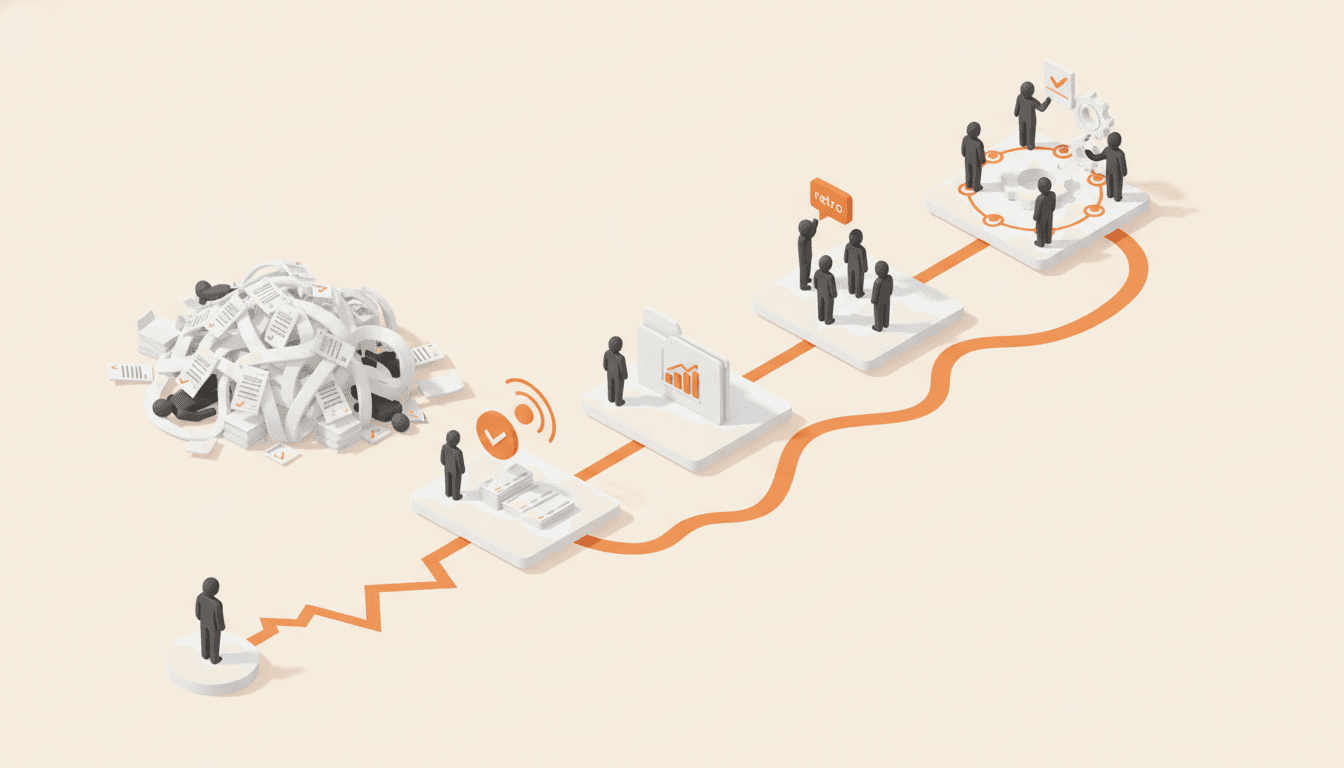
Nonprofits stall when they document everything at once. The wave method takes one department at a time, closes each wave with a retro, and leaves a team that keeps the system alive.

How to Systemize a Staffing Agency: Dispatch, Sales, and Service
Staffing agencies run on a 4:45am dispatch, an escalated case taxonomy, and knowledge held in one or two heads. Here is the documentation order that protects you fastest.
Which processes should you write down first?
Rank the work that keeps your business running. You get the five to capture first and a 90-day order to capture them and get your team using them.