Knowledge Risk Assessment: Find Your Single Points of Failure
By Derek Coffey · August 29, 2026
A knowledge risk assessment is a structured audit of where critical knowledge in your business lives in one person's head, what breaks when that person is unavailable, and how fast. You score every process on three things: how many people can actually run it, whether it exists anywhere in writing, and what it costs when it stalls. The output is a ranked list of your single points of failure and a documentation order that starts with the riskiest process, not the easiest one.
Most owners do not need a spreadsheet to name their scariest dependency. "If she leaves, we are in trouble" is a sentence we hear, in some form, on almost every discovery call. But a feeling is not something you can schedule work against. A ranked list is.
What is a knowledge risk assessment?
A knowledge risk assessment maps where knowledge is concentrated in the fewest people and where the most damage happens when something breaks. The deliverable answers one question about every role: who holds what, and how replaceable is it. It is not a skills matrix or a performance review: you are measuring the structure, not the people standing in it.
The concentration is worse than most owners guess. When we measured 16 small businesses across 68 roles and 461 process areas, 27% of the work was documented on average, and half the role areas had nothing at all. Everything undocumented is held in somebody's head, which is why capturing tribal knowledge is a discipline of its own. The assessment tells you where to start.
Without this person, what fails first?
This is the audit's opening question, asked about every name on the org chart, starting with your own. The answer is never "everything." It is a sequence, and the sequence is the finding.
We put the question to a founder who had built three companies. His answer came in an order: customer acquisition dies first, because he is the storyteller who closes every large contract, then culture, then the technology only he understands. His team had already said it more plainly: if something happens to you, this goes right down the tube. Health issues had made that literal.
He also named the part that turns a feeling into an audit. "There are a lot of things that I know that nobody knows but me, and I do not even know what I have told people and what I have not."
You do not find out which walls are load-bearing by knocking one down.
Ask it about your dispatcher, your controller, your senior tech. What fails in week one, and what fails quietly, a quarter later? The one-person problem usually announces itself on a sick day nobody planned, so ask now, while the answer is free.
Score every role: who holds what, and how replaceable is it
The full exercise takes a spreadsheet and one honest afternoon. Here is the sequence we run with clients.
- List processes by role. Write down every process each role touches in a normal month. Each row is a process, not a person.
- Count the holders. Name everyone who could run that row today without help. Not "could figure it out." Could run it.
- Score replaceability. Could a competent replacement pick this up from what exists in writing? Score what is findable today, not what someone wrote in 2019.
- Score the damage. Name what stops when this stalls, and how fast: payroll, cash, customers, compliance.
- Multiply and rank. The top of the list is your documentation order.
Score on a 1, 3, 5 scale so results spread instead of clustering in the middle.
| Score | Holders | Documentation | Damage if it stalls |
|---|---|---|---|
| 1 | 3 or more people run it | Current and findable | Annoyance, caught within days |
| 3 | 2 people, but one does it all | Exists, stale or scattered | Money or customers within a month |
| 5 | 1 person, no backup | Nothing written | Payroll, revenue, or compliance within a week |
Any process with one holder and nothing written is a single point of failure, whatever its damage score. The multiplication only decides which you capture first.
One weakness to correct for: the scores are self-reported, and holders rate their own documentation generously. Ask each one to show you the document rather than describe it.
Watch for the rows nobody volunteers. At one field services client, the ops lead had invented his own match key to follow customers through the CRM, and rebuilt the reporting pipeline every six weeks when a marketing change snapped it. The owner had no idea until an interview surfaced it.
The most dangerous knowledge is rarely hoarded. It is invisible, absorbed by whoever was competent enough to cope.
The scariest row on the grid is the one the owner cannot fill in.
You get rows too, and in most small businesses the owner is the biggest one on the sheet. The owner dependency audit scores you; this assessment scores everyone else.
Skip the grid if your whole team is three people. Every row scores a 5, and you already know which process would hurt most next month. Record that one and move on.
The six symptoms of concentrated knowledge
Concentrated knowledge announces itself long before you build a grid. Six symptoms come up on call after call:
- Your best employee quits and 10 years of knowledge walks out the same door
- New hires take 6 months to be useful because training is "shadow someone"
- 3 people do the same process 3 different ways
- SOPs exist, dated 2019, and nobody can find them
- Growth brings more fires, not more capacity
- You paid for process maps that sit in a drawer
Each one is the same condition in a different costume: the knowledge lives in people, not in systems. Two or more, and you need the grid, not convincing.
The loss rarely announces itself on resignation day. At one staffing company, a single manager owned how escalated cases were handled: injuries, altercations, theft, damage. After he left, the handling survived only as fragments, each rep remembering a different version, and gaps surfaced case by case for months. That is the key employee bottleneck in its final form: the person leaves, and the capability turns out to have been the person.
Turn the assessment into a documentation order
Document in order of damage, not in order of convenience. Most documentation projects start with whatever was easiest to write and run out of steam before touching anything that matters.
Take your top 5 rows and treat them as the whole project. Do not ask the holders to write anything. Budget 2 to 4 hours per process and record the person doing the work while they narrate it. Interviewing your subject matter experts is a skill worth learning, but the floor is low: a screen recording with honest narration beats a template filled in from memory.
The damage scores are rarely theoretical. One owner covered payables himself after the key person left and found 500 to 800 dollars leaking every week, up to 10,000 dollars a month, not from theft, from a process nobody else knew well enough to follow.
Then check the sheet against the calendar. At another company the highest-scoring row had already given notice: a bookkeeper training her replacement over screen shares, three weeks from the door, nothing written down. An exit date on a top-scoring holder means you are past assessment and into emergency capture. No exit date means runway, and runway is exactly when to build a knowledge transfer plan.
How often should you rerun the assessment?
Rerun the full assessment once a year, and rescore a single row whenever something touches it: a resignation, a new hire in a critical seat, a new tool, a new location. The first pass builds the grid. A rerun is an hour, not an afternoon.
Risk scores age. One real estate client knew that the one woman who knows everything planned to retire in three years. That is a gift, but only while the score stays visible, because a runway you stop looking at quietly becomes a deadline. The Systems Effect delivers a knowledge risk assessment alongside every process map for that reason: a map that does not show where a business is most vulnerable to someone leaving is only a diagram.
You do not need the full grid to start. Tonight, write down the 5 processes that would hurt most if they stalled, and next to each, every name that could run it tomorrow. Any row with one name is where you begin.
Frequently Asked Questions
What is a knowledge risk assessment?
A knowledge risk assessment is an audit of where business knowledge is concentrated in the fewest people and what breaks when those people are unavailable. It scores every process on three factors: how many people can run it, whether usable documentation exists, and how much damage a stall causes. The output is a ranked list of single points of failure and a documentation plan that starts with the highest-risk processes.
How do you identify single points of failure in a team?
List every process each role touches, then count how many people could run it today without help. Any process with exactly one capable holder is a single point of failure until the knowledge is documented or a backup is trained. Watch for invisible dependencies too, like homegrown spreadsheets and workarounds one person quietly maintains, because those never appear on an org chart.
What should you document first after a knowledge audit?
Document the processes with the highest combined risk score first: one holder, nothing written, and fast, expensive damage when they stall. Ignore how easy a process would be to write up, because convenience ordering is why most documentation projects die early. Capturing one high-risk process takes about 2 to 4 hours of the expert's time when you record them doing the work instead of asking them to write it down.
How do you measure key person risk?
Score each key person's processes on a 1, 3, 5 scale across three factors: concentration (how many people can run the work), replaceability (whether a competent new hire could pick it up from what exists in writing), and consequence (what stops, and how fast). Multiply the scores and compare rows across the team. High key person risk is structural, not a judgment of the person: it means the business is under-built around them.
Keep reading

How to Build a Knowledge Transfer Plan (Before You Need One)
Most knowledge transfer plans get written in the two weeks after a resignation letter. Here is the version you build while you still have runway: ranked by damage, recorded from the real work, proven by a solo run.
Marketing SOP Examples: 5 Procedures That Keep Campaigns Running
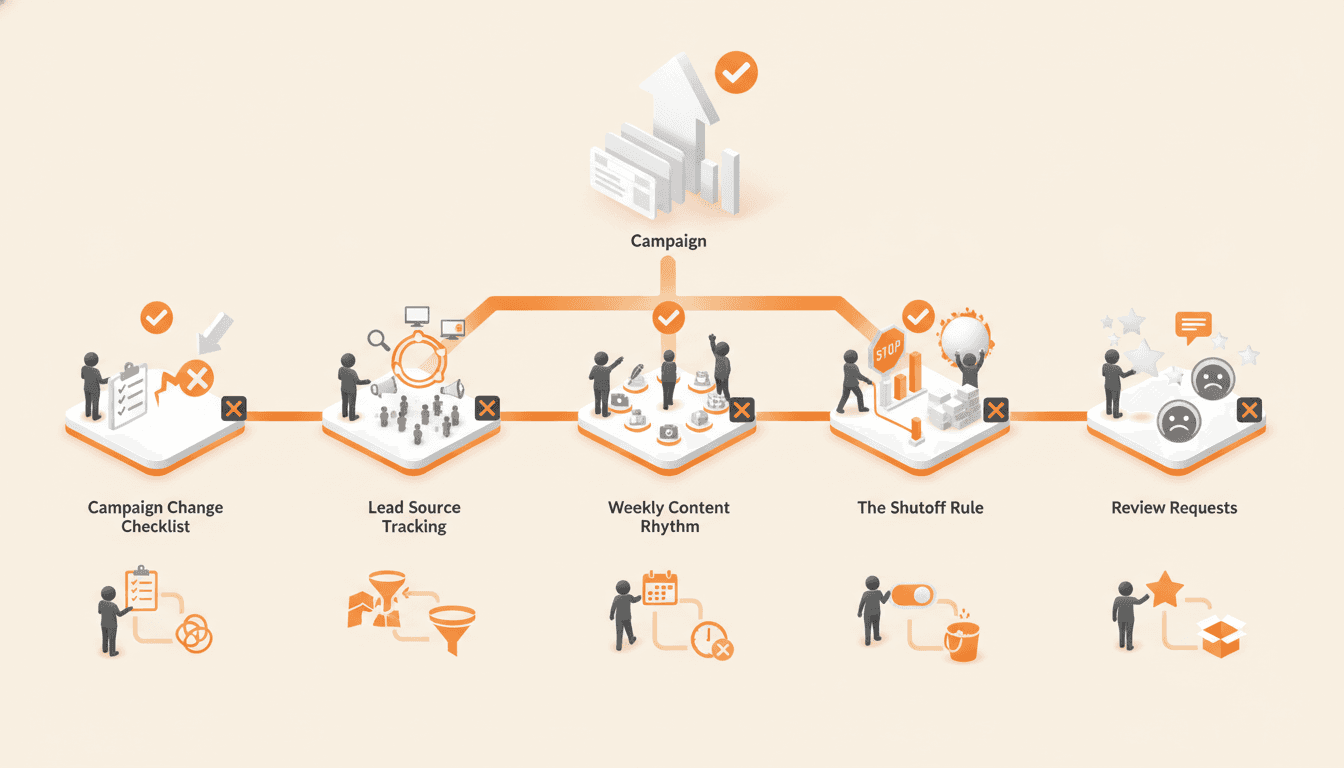
Five marketing SOP examples you can copy: the campaign change checklist, lead source tracking, a weekly content rhythm, the shutoff rule, and review requests. Each one comes with a skeleton and the failure it prevents.
Payroll SOP Examples: 5 Procedures That Get Everyone Paid Right
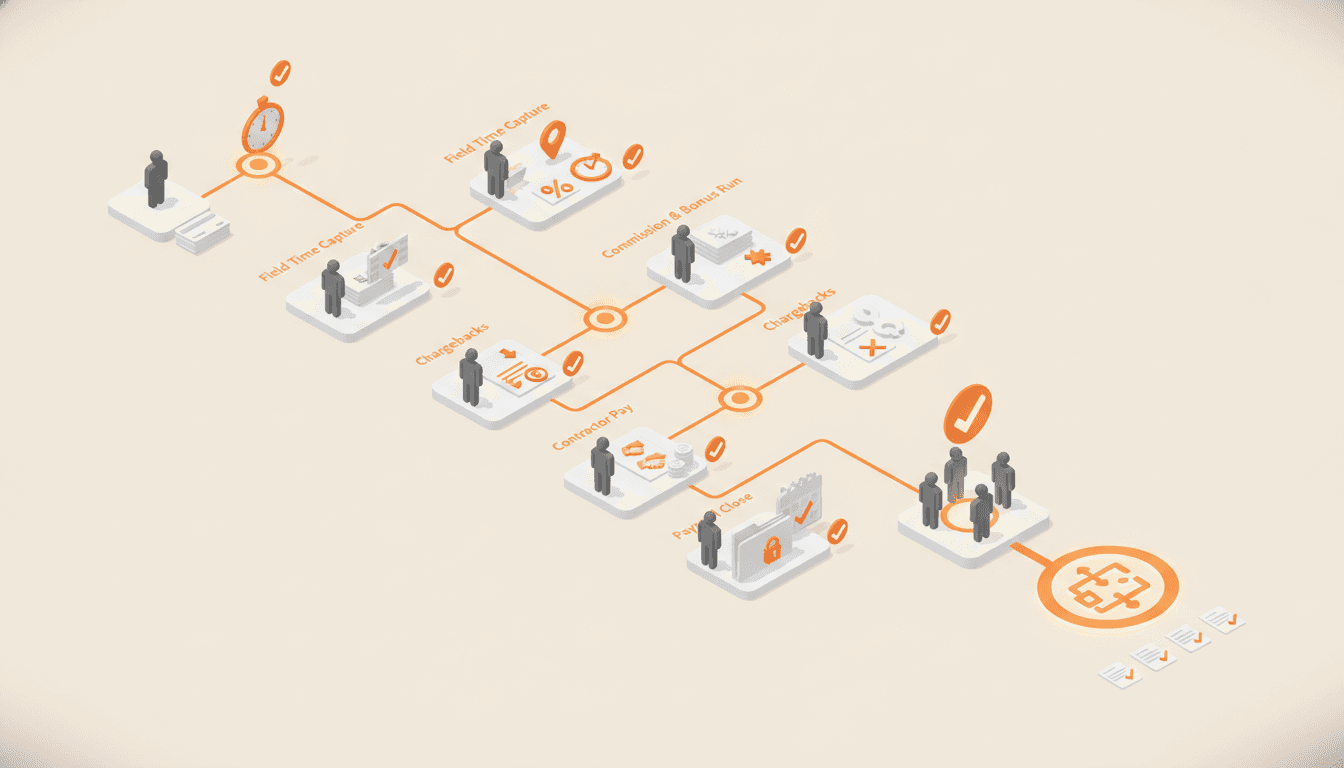
Five payroll SOP examples from real documentation work: field time capture, the commission and bonus run, chargebacks, contractor pay, and the payroll close.
Get one role out of one person's head in 14 days.
The interview guide, knowledge map and SOP templates we use on paid engagements. Free as Google Docs and Sheets.