
Key Takeaway
Growing pains in business are not a sign that your people got worse. They are the sound of human checks failing. At 10 people, a business runs on checks nobody designed: the owner sees almost every job, everyone overhears everything, the veteran catches mistakes before they leave the building, and memory is the system. Those checks work because of proximity and a few people's attention, and neither grows with headcount. Somewhere between 10 and 50 people, each one quietly stops working. The fix is not to work harder or buy a bigger platform. It is to document the human checks before they disappear, diagnose which ones are already failing, replace each with a defined system, and add tools only where volume demands it.
What Growing Pains in Business Actually Are
Search for growing pains and you will find long lists: cash gets tight, communication suffers, culture shifts. All true, and none of it explains why, so none of it tells you what to fix.
Here is what we see underneath almost every case. A small business does not run on processes. It runs on people noticing things. The owner notices a quote went out with the wrong price. The veteran notices the new hire is about to order the wrong part. Nobody wrote these checks down because nobody thought of them as checks. But they are real quality control, and they depend on two things growth takes away: being close enough to see the work, and having attention to spare. The operations problems that appear as a company scales are rarely new. They are old problems a person used to catch, at a size where nobody is positioned to catch them.
At 10 People, the Business Runs on Human Checks
Four checks do most of the work in a 10-person business.
The owner sees everything. Every quote, complaint, hire, and unusual job crosses the owner's desk or passes within earshot. Owners at this stage often say some version of "every decision has to come through me," and at 10 people that is not yet a problem. It is how the business stays consistent.
Everyone overhears everything. Information travels by proximity. Nobody needs a status update because they heard the phone call. Nobody needs a handoff note because the person handing off sits six feet away.
The veteran catches mistakes. One or two long-tenured people spot the order that looks wrong, the customer who needs special handling, the step the new person skipped. Their attention is an unwritten inspection layer.
Memory is the system. The customer who always pays late, the supplier who needs a call first, the job type that always runs long. "It all lives in my head" is a sentence owners say with a half laugh, and at 10 people it is mostly accurate and mostly fine.
None of this is bad management. These checks are fast, cheap, and flexible. The trouble is that every one of them is tied to a person being in the right place with time to notice.
Why Human Checks Stop Working as You Grow
Every pair of people in a business is a possible line of communication. The number of pairs in a group of n people is n(n-1)/2. Run the numbers:
| Headcount | Possible communication paths |
|---|---|
| 10 | 45 |
| 20 | 190 |
| 30 | 435 |
| 50 | 1,225 |
Going from 10 people to 50 is five times the headcount but more than 27 times the possible paths. Not every pair needs to talk, but the informal network that let everyone overhear everything at 10 people cannot cover a group of 50. Information that used to travel by accident now has to travel on purpose, and if nobody built the route, it does not travel.
Attention has the opposite problem. It does not multiply at all. One owner can watch the work of 10 people reasonably well, but not 50. The veteran's attention is the same fixed quantity, spread across five times as many people. The load on the human checks grows faster than headcount, and the capacity of the people doing the checking does not grow at all.
At 10 people, quality control is a person paying attention. At 50, it has to be a system, because no person has that much attention to give.
Six Things That Break Between 10 and 50 People
The mechanism shows up as six specific breaks. Most growing businesses are living with several at once.
1. Communication paths multiply
Decisions get made in one conversation and never reach the people they affect. Sales promises a date operations never heard about. A customer's special instruction reaches one person and not the three others who touch the job. Meetings multiply to compensate and still miss people.
2. The owner stops seeing the work
The owner no longer sees every quote or job, and the quality that depended on that oversight starts to drift. The usual reaction is to see more: more approvals, more CCs, more check-ins. That turns the owner into a queue. Decisions stack up, the team waits, and the owner works longer to keep it moving. This is the owner dependency trap, and it is a growth problem before it is a personal one.
3. Handoffs between friends become handoffs between strangers
At 10 people, a handoff is a conversation between two people who have worked together for years. They fill each other's gaps, and if something drops they fix it over lunch. At 50, the same handoff happens between people who barely know each other, often across teams or shifts. The receiver does not know what to expect, the sender does not know what the receiver needs, and nobody owns the gap. This is where most "things keep slipping" complaints come from, and it is the subject of why things keep falling through the cracks.
4. New hires learn by shadowing whoever is free
At 10 people, a new hire sits next to the owner or the veteran. At 50, the business hires several people at once and the best people have no time to train them all, so new hires shadow whoever is free that week. Each learns a slightly different version of the job, plus the shortcuts of whoever they shadowed. Soon there are three or four ways to do the same task. We cover the hiring side in how to hire fast without breaking the systems you just built.
5. Exceptions handled by memory multiply
At 10 people there are a handful of exceptions, like the customer with special terms or the job that needs an extra step, and the people who need to know them do. Every new customer, service, and hire adds more, and memory does not grow with them. Exceptions start getting missed, not from carelessness, but because there are more of them than anyone can hold, spread across more people than anyone can tell.
6. The veteran becomes a bottleneck
The long-tenured employee who used to catch mistakes becomes the person everyone asks about everything, and their own work slows. Then the owner realizes something worse: "if she left, we'd have nobody else." The inspection layer that made the small business reliable has become a single point of failure. That is the key employee bottleneck, and you can put a number on the risk with the bus factor.
What Held It Together at 10, and What Replaces It at 50
| What held it together at 10 | Why it breaks at 50 | The symptom you notice | The system that replaces it |
|---|---|---|---|
| Everyone overhears everything | Communication paths grow from 45 to 1,225 | Decisions never reach the people affected | Defined channels for each kind of update, and one place the current status lives |
| The owner sees every job | One person's attention does not grow with headcount | Every decision has to come through the owner | Written decision rules, so routine calls get made without the owner |
| Handoffs between people who know each other | Work now passes between strangers, teams, and shifts | Things slip through the cracks | A written handoff with one named receiver and a clear trigger |
| New hires shadow the owner or the veteran | Too many hires, too few experienced people with time | Several versions of the same job | Role-based training built from documented processes |
| Exceptions remembered by the people who need them | Exceptions multiply faster than anyone can remember them | Special cases get missed and customers notice | Exceptions written into the process at the step where they apply |
| The veteran catches mistakes | One person cannot inspect the work of 50 | The veteran is buried in questions and the work slows | Defined quality checks, a written definition of done, and a second trained person |
None of the replacements in the last column is a software product. Each is a decision about how the work gets done, written down so it no longer depends on proximity or attention.
Why It Feels Sudden When It Is Not
Owners almost always describe growing pains as arriving out of nowhere. On one discovery call, an owner described a manual process that "worked day one through year six" until growth exposed it. On another, an owner called their manual process "workable, it works," then admitted in the same breath that things can slip through the cracks. Both were describing a human check that held right up until the load passed what the people could carry.
It feels sudden because human checks fail quietly. One missed quote out of fifty goes unseen. One missed exception looks like bad luck. The misses grow with every hire until they pile up into a complaint, a margin problem, or a key person close to burning out.
Nobody could watch the checks weaken, either, because they were never written down. Across 16 businesses we gap-analyzed, covering 68 roles and 461 process areas, the average business had documented just 27% of its work. In 50.3% of role areas there was no documentation at all, and 82% of teams were below 50% coverage. That is what a business running on human checks looks like on paper: the work gets done, but the rules live in people, so nobody can see which checks are about to fail.
What to Do: The Four Stages Applied to Growth
The fix follows the four stages in our guide to business process improvement: document, diagnose, improve, and solve. Applied to growing pains, each stage has a specific job.
Stage 1: Document the human checks before they disappear
For growing pains, start with the checks, not the process. Ask the owner and each long-tenured employee: what do you catch that nobody else would, and how do you know to catch it? The owner who glances at every quote before it goes out. The veteran who double-checks the parts list on one kind of job. Write each down with what it catches and the judgment behind it.
Capture beats writing. Record the person doing the work while they narrate their decisions, so the check gets out of the head while the head is still in the building. If the owner holds most of the checks, the vacation test shows fast which ones only work when the owner is present.
Stage 2: Diagnose which checks are already failing
Not every check fails at the same size. Some break early, and some hold for years. Look for the symptoms in the table: decisions waiting on the owner, handoffs dropping work, new hires doing the job differently, the veteran buried in questions. Pick the three to five checks causing the most pain right now. For a structured way to find the one that matters most, start with how to find the bottleneck in your business.
A useful rule of thumb: if the same mistake has happened with two different people, the check that used to catch it is gone. That is a structure problem, not a people problem, and retraining will not fix it.
Stage 3: Replace each check with a defined system
Design each replacement on paper before you touch any software.
- The owner's oversight becomes written decision rules. Document how the owner decides on pricing, exceptions, and escalations, then hand the routine calls to the team.
- Overheard information becomes a defined channel. Decide where each kind of update goes, who needs it, and where a job's current status lives.
- Handoffs between friends become written handoffs. Each one gets a named receiver, a clear trigger, and a definition of complete.
- Shadowing becomes role-based training. Build onboarding from the documented process, organized by role, so every new hire learns the same version.
- Remembered exceptions become part of the process. Write each one into the step where it applies.
- The veteran's inspection becomes a defined quality check. Write the definition of done, schedule the check, and train a second person to do what the veteran does.
Run each replacement for a few weeks. If the symptom fades, it works. If not, revisit what the check was really catching. Our business process improvement guide covers how to measure whether a change worked. And if decisions still queue on you every day after the rules are written, read when to hire an operations manager before you post the role.
Stage 4: Add tools only where volume demands it
Some replacements work on paper or in a shared document for years. Others reach a volume where manual tracking stops being reliable: hundreds of jobs a week, handoffs across several locations, exceptions too numerous to check by hand. That is where a tool earns its place, and because the system is already defined, you know exactly what the tool needs to do.
A tool bought to replace a check nobody wrote down automates whatever version the person setting it up remembers. Add the software when the volume, not the frustration, says it is time.
Fix It Before the Next Wave of Hires
The worst time to replace human checks is mid-hiring push, when the people holding them are also training new hires and covering extra load. The best time is before the next wave tests them. The systems you need before you can scale covers what has to be in place first, and the six systems every business needs to grow lays out the full stack and the order to build it.
You do not need to replace every check at once. Pick the one failing loudest this month, usually where the owner or the veteran has become the bottleneck, take it through the four stages, then do the next. The business that worked at 10 people was not luck. It was human checks doing real work, and growing past them means handing that work to systems, one check at a time.
Frequently Asked Questions
What are growing pains in business?
Growing pains are the problems that appear when a company adds people, customers, or locations faster than its systems can absorb them. Most share one source: a small business runs on human checks, like the owner seeing every job and a veteran catching mistakes, and those checks depend on proximity and attention that do not grow with headcount. Dropped handoffs, decisions stuck on the owner, and inconsistent training are the usual symptoms.
Why do processes break as a company grows?
Because most small business processes are really people noticing things. Those informal checks work at 10 people because everyone is close to the work. As headcount grows, possible communication paths grow much faster than the number of people, from 45 at 10 people to 1,225 at 50, while the owner's and the veteran's attention stays fixed. The checks fail quietly, and the process breaks with them.
What are some business growing pains examples?
Every decision routing through the owner, work slipping through the cracks between teams, new hires each learning a different version of the job, special cases getting missed, and one long-tenured employee becoming the person everyone depends on. Each traces back to a human check that worked at a smaller size and stopped working as the business grew.
At what size do scaling operations problems start?
There is no single number. Some checks fail early and others hold for years, depending on how the work is organized. The pattern is more reliable than the threshold: problems appear when the load on a check grows past what the people doing the checking can carry. Diagnosing which checks are already failing tells you more than any headcount rule.
How do you fix growing pains in a business?
Run the four stages of process improvement on the failing checks. Document the human checks before the people holding them leave or get buried. Diagnose which are already failing. Replace each with a defined system, such as written decision rules, named handoffs, and role-based training. Add tools only where volume makes manual tracking unreliable. Work one check at a time.
Keep reading
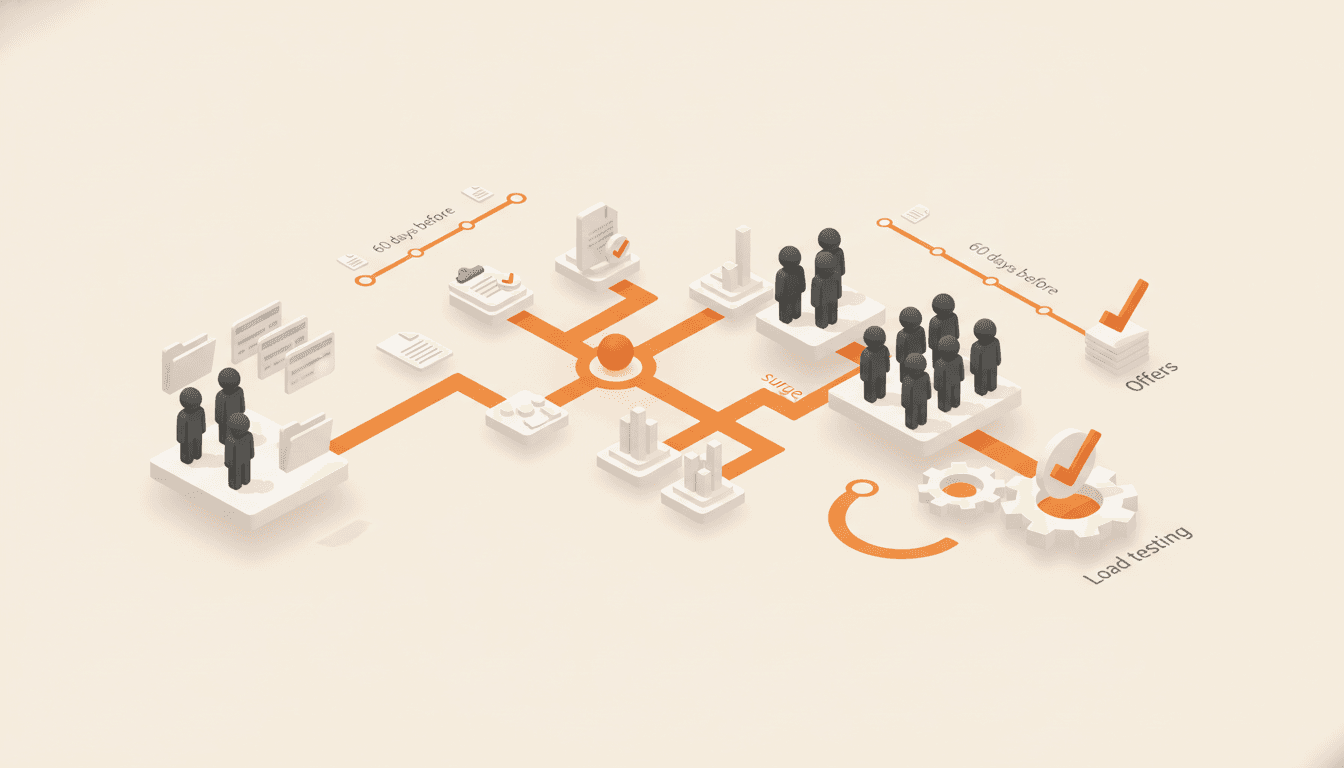
How to Hire Fast Without Breaking the Systems You Just Built
A hiring surge does not create process, it load tests the process you already have. Here is what to document in the 60 days before the offers go out, and the sequencing rule that keeps fast hiring from undoing a year of work.
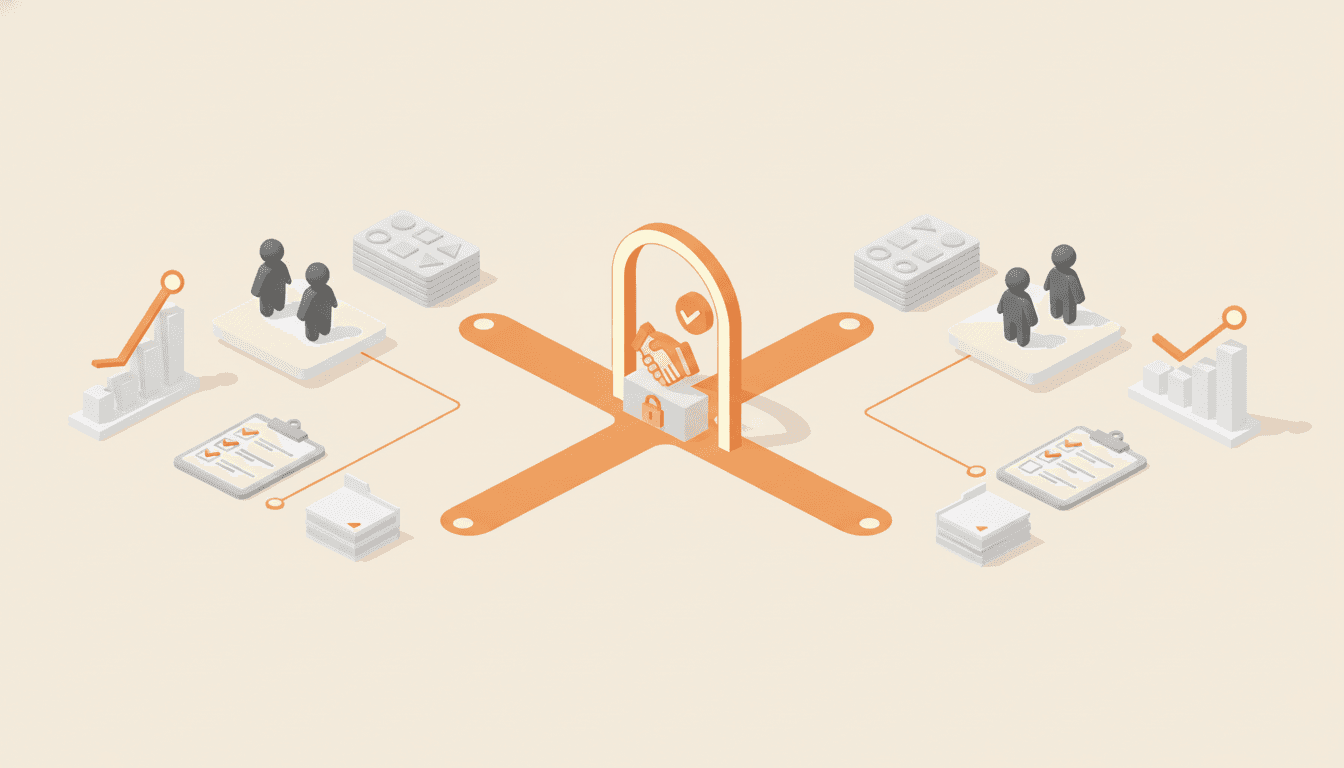
Opening a Second Location: What to Document Before You Sign the Lease
A second location does not fix a weak process, it runs a second copy of it. Here is what to document, who to train, and which numbers to check before you sign anything.
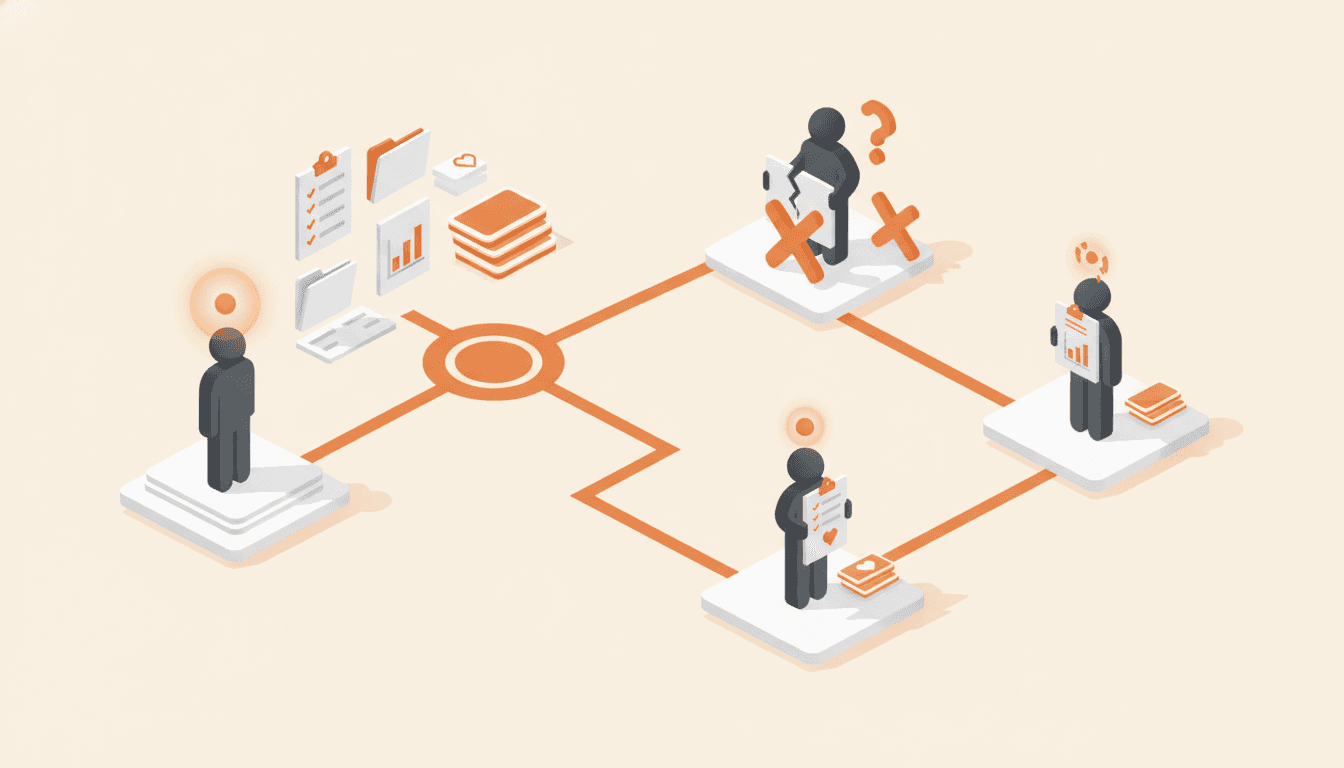
How to Standardize Operations Across Franchise Locations
Every franchise location drifts into its own way of working. Here is how to standardize from a model store without killing the details your teams love.
How much of your business runs on you?
Twelve questions, about three minutes. You get a score across six areas, the one carrying the most risk, and the first thing to fix.