Train the Trainer: How to Build People Who Can Teach the Process
By Derek Coffey · August 29, 2026
A train the trainer program makes teaching a named job instead of a favor you ask your busiest person. In a small business it is four moves: pick the trainer, hand them a script and a scoring rubric, run two supervised sessions, then measure them on what the new hire can do alone. Selection decides the other three. Get it wrong and you have one more person doing the work in front of an audience.
Why your best operator is not automatically your best trainer
Your top performer is the obvious pick and the most common mistake. After enough years the reasoning goes quiet: two people can follow the same SOP, one getting it right every time and one never, and the difference is not in the steps. It is ten or twelve principles running unconsciously in the good one's head.
We watched this land on an owner who had spent two full days beside a dispatcher walking the job. Days later the man missed a meeting because he took a break without checking his calendar. How do you hand over two days of steps to someone who cannot check a calendar?
Your best operator is fluent in a language they have never had to translate.
Seating a new hire beside whoever is closest is why shadow training fails as a teaching method.
Pick the galvanizer, not the highest title
Score candidates on four things, and being best at the job is not one. These are the criteria we use to pick which expert to interview when documenting a process.
| What you score | What it looks like | What missing it costs |
|---|---|---|
| Wants the job | Volunteers, asks for the plan | Sessions rescheduled forever |
| Will schedule time | Blocks two hours, keeps them | Training only in emergencies |
| Influence with peers | Gets everyone out for a beer Friday | Training nobody adopts |
| Sets a good example | Habits you would clone | New hires learning shortcuts |
None of the four measures skill. The third is the one people skip and the one that decides adoption, because it reads whose version of the process a room will accept. Title does not equal trainer fit.
The same logic governs choosing which subject matter expert to interview: someone who has done the work a long time, still does it, and wants to. Skip that last one and you get a calendar of cancellations.
What does a train the trainer program actually teach?
Three things, and only one is the process itself. Handing over the SOP and calling it preparation is how you get a read-along.
- Teach the purpose. Why the process exists and who downstream feels it when it goes wrong. A trainer who cannot answer that gets asked once and loses the room.
- Teach the decision points. Every process has forks where the right answer depends on context. Steps are the easy half; the fork is where work breaks, and the trainer says what the right call is.
- Teach the stories behind the rules. Telling someone to do something is one thing. Walking them through the incident that created the rule is what survives the first busy week.
The third separates training from a recital. One cleaning company ran safety training only after something went wrong: wait until there is a fire, then send someone back through the playbook. Those incidents were the reason each step exists, and stories are the cheapest route to training your team actually finishes.
Give the trainer a script and a rubric, not a topic
"Go train the new guy on intake" is an assignment nobody can pass or fail. Two artifacts turn it into a job.
The script is the SOP written the way a person says it out loud: action headers, spoken phrasing, exact words for the parts that get muddled. Your trainer can deviate from it, but cannot start from a blank page, which is where a session becomes a conversation.
The rubric is the half everyone skips. A staffing branch we worked with grades its people twice: an interview rubric at hiring, then mock calls scored on a written sheet before a rep ever dials a live account.
Keep it to three or four criteria, each an observable behavior rather than an impression. "Confident on the phone" is not a criterion. "Stated the callback window without being prompted" is. If two trainers would score the same session differently, the rubric is not finished.
Score on the levels your skills matrix uses, so a passing session updates a cell in a grid instead of a feeling in somebody's head.
Run the first session with the trainer watching, the second with you watching
Two supervised sessions, in that order, and then they are live. The cost is senior time, and the script and rubric take longer to write than either session takes to run. On a process nobody has written down yet, skip all of this and go document it first.
In session one you run the training, or whoever owns the process does, while the trainer notes the questions the learner asks. The questions are the curriculum.
In session two, a week later, the trainer runs it while you sit at the back with the rubric you handed them, scoring the session rather than the learner. Then you leave.
Record it. Edited down it becomes a training asset you did not have. One 55-technician cleaning company we assessed had a two-year-old SOP platform account with no video in it.
Let the trainer own the corrections
The program becomes real the first time you let a wrong answer stand until after the session. Until then your trainer has an audience of one, and that one is you.
One turnaround CEO typed a long late-night message telling a subordinate exactly how to handle something, read it back, deleted it, and typed three words: whatever you think. That was the week the man started owning the work.
A trainer you overrule in the room is a spectator you handed a title to.
Corrections run the other way too. A trainer teaching a process finds the wrong parts of a document faster than any audit, so give them edit rights.
Advocacy comes from the same place. Our first draft is narrow on purpose: one expert, not a committee, racing to a first 80% before the peer group tears it apart. A national tax practice harvested its strongest advisor out of roughly 200, let the next twenty correct the draft, and finished with twenty advocates instead of one.
Every correction is a peer with fingerprints on the training, which is why retraining veteran employees without pushback starts by asking what is wrong with the document.
How many trainers does a 50-person company need?
Three to five. Not one, and not fifteen.
Count process families rather than people. A 50-person company usually runs five to eight: intake, scheduling, the work itself, quality, billing, hiring. One trainer per family, with a second name behind each. No process should have exactly one person who can teach it.
In most companies those trainers already exist and nobody has said so out loud. A residential cleaning company running 55 technicians across 85 homes a day already had field leads who trained new cleaners and ran quality checks. Naming that as a role, with a script and a rubric, was most of the work.
The failure at the other end is one trainer for everything, usually a COO in six seats. That is how the same playbook grew three versions of one process with nobody able to find anything, a result she called cognitive overload. The ratio matters more with every hire, which is the real problem with training a department of 30-plus people.
Measure the trainer by what the new hire can do alone
The measure is not the session. It is what the new hire can do on a real job two weeks later without asking anyone.
Completion percentages measure attendance. Put the check on a date and watch one real run against the rubric the trainer used, because what a person can describe and what they can do come apart quietly.
The number that funds the program is time to first solo run. The pattern we hear constantly is new hires taking six months to be useful because training is shadow someone. Put minutes against each step, multiply by frequency and headcount, and the case writes itself.
At The Systems Effect we interview the people who hold a process and turn what they say into the script and the rubric a named trainer runs. Pick one process this week and one name. Then ask whether they want it. Their answer is the selection test in miniature.
Frequently Asked Questions
What is a train the trainer program?
A train the trainer program makes one of your own people responsible for teaching a process, rather than leaving it to whoever is free that day. It has four parts: selection against written criteria, a script and a scoring rubric, two supervised sessions, and a measure based on what the learner can do alone.
Who should train new employees in a small business?
The person who wants the job, will schedule the time, has real influence with peers, and sets an example worth copying. That is often not the highest title and not the top performer. We call the influence criterion the galvanizer test: the person who can get everyone out for a beer on Friday is the one whose version of the process the team adopts.
How do you turn a top performer into a trainer?
Make the unconscious part conscious first. Top performers run on principles they have never said out loud, so have them do a real run while somebody records it and asks why at every fork. Turn that into a script and a rubric, then have them teach from it rather than from memory.
How long does it take to build an internal trainer?
Plan on two supervised sessions about a week apart, plus the time to write the script and the rubric, which is the longer half. Most teams get a trainer running solo on one process family inside a month, and the next goes faster.
How do you know if the training worked?
Watch one real run two weeks later and score it on the same rubric the trainer used. If the new hire completes the process alone, without asking, and handles each decision point correctly, the training worked. If two learners stall at the same step, that step is a script problem, not a hiring problem.
Keep reading
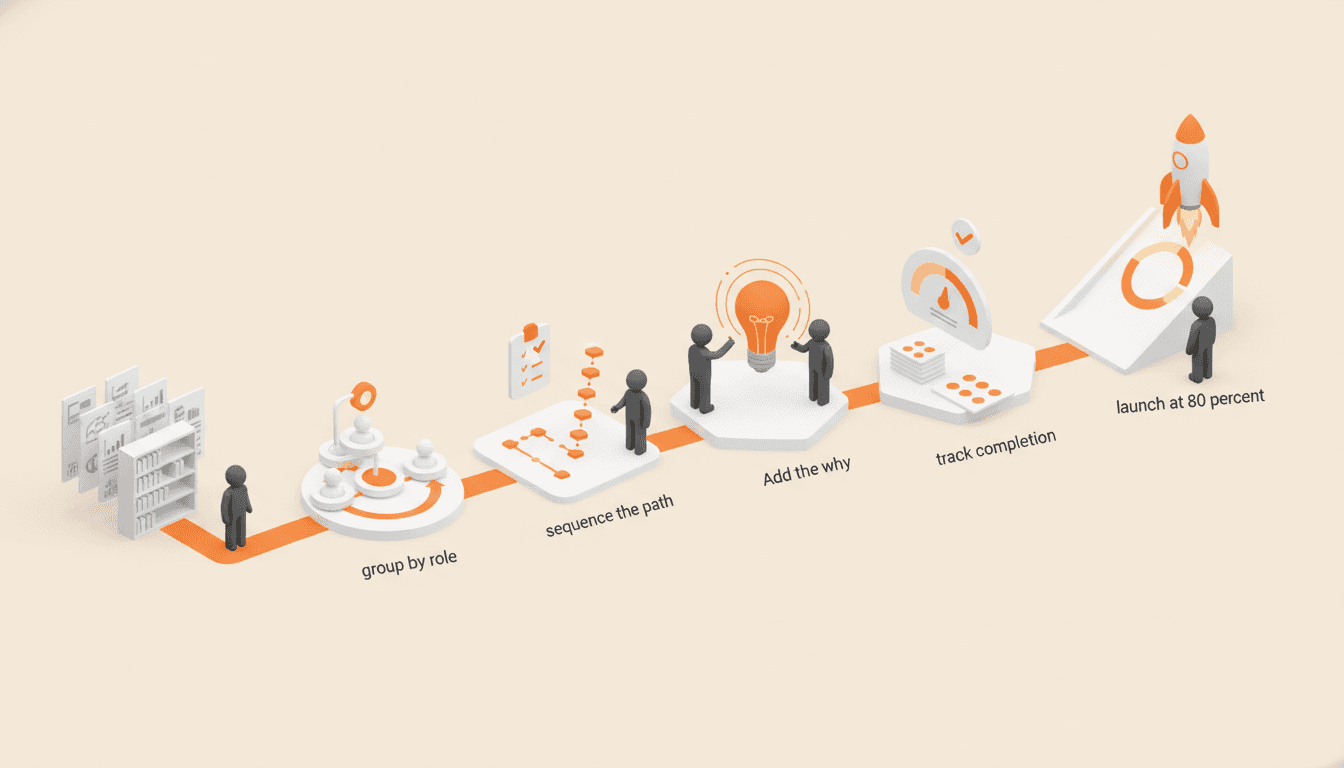
How to Turn Your SOPs into a Training Program
Your SOP library is not a training program yet. Here is the five step conversion: group by role, sequence the path, add the why, track completion, and launch at 80 percent.

Stop Scripting Your Training Videos. Answer Questions Instead.
A trainer rejected three usable takes of her own script in a row, then named the fix herself: turn the camera on and ask questions. Here is the recording format that gets a fluent expert on tape in one sitting.
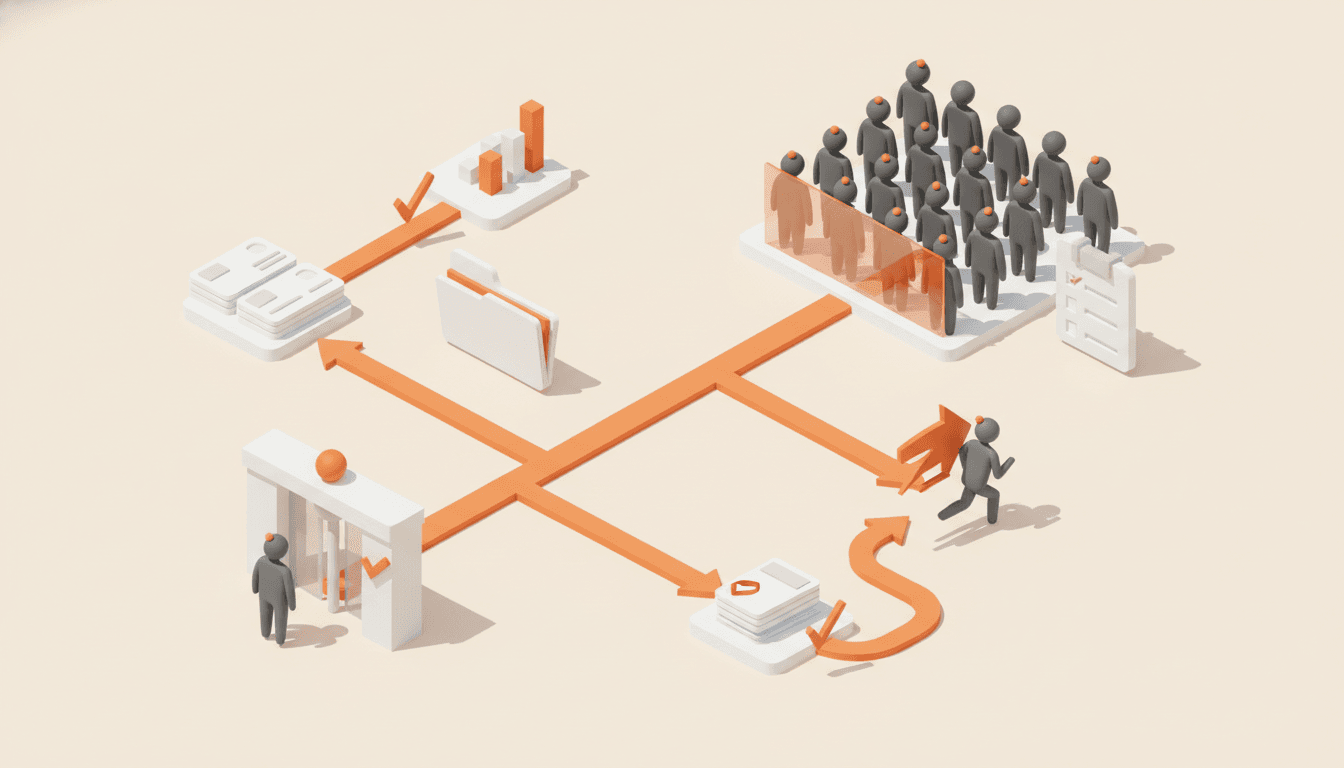
Nobody Activated Their License: Why Training Seats Go Unused
Finished training sits unlaunched because most of the company was never added to the platform. Here is how to gate, send, and chase every seat you buy.
Get one role out of one person's head in 14 days.
The interview guide, knowledge map and SOP templates we use on paid engagements. Free as Google Docs and Sheets.