Custom CRM vs Off the Shelf: When to Stop Fighting Your CRM
By Derek Coffey · August 29, 2026
Custom CRM vs off the shelf comes down to one question: is the CRM doing a commodity job, or is it standing in the way of the workflow you actually make money on? Rent the commodity, own the core. For most small businesses the subscription is the right call and stays right for years, because a tool you can cancel beats an asset you have to maintain. You stop fighting it when the work required to keep the software honest has grown its own owner, its own schedule, and its own spreadsheet.
The short answer: rent the commodity, own the core
One owner asked us this in the plainest words anybody has used for it: "When should we transition off this software? What is going to be the trigger, and how do we justify it?" The trigger is almost never a missing feature. It is recurring, unbillable labor, the hours your team spends every week making the CRM's version of reality match the real one.
Rent the commodity, own the core is the whole framework in five words. Contact records, email sequences, calendars, invoicing, and standard pipeline stages are commodities, and a vendor spreads that cost across thousands of companies and sells it for far less than you could build it. Your core is the workflow that makes you different, and different is precisely what off the shelf software is designed not to accommodate.
Rent anything a competitor could buy the identical version of. Own only the workflow you would not hand a competitor.
That is the same test that decides whether you own your software or rent it across the whole stack, applied here to the one system most small businesses touch every hour of the day.
What are off the shelf CRMs genuinely good at?
More than a frustrated owner will admit at the end of a bad week. An off the shelf CRM is live in days, carries its own security and compliance work, ships a mobile app your field crew will actually open, and arrives with an integration catalog nobody had to negotiate. You can also cancel it, which is a real feature and the one people forget to price.
Even inside the messiest operation we have mapped, the CRM was doing genuine work. In one field services company running 4 markets, card payments hit the CRM the same second they are taken, technicians raise estimates and invoices from a phone in a customer's driveway, and the job record itself holds what happened.
For standard jobs, a proven subscription is cheaper, safer, and better than anything you would build. That is the default answer, and most readers should stop there.
The four fights that mean the CRM no longer fits
There are four specific fights, and each of them showed up in operations we have mapped. Read them as a diagnostic rather than a verdict, because one of the four is not a software problem at all.
Fight 1: the record that changes its identity
In one field services company, the CRM regenerates a record's unique ID the moment a lead becomes a job. A customer therefore cannot be followed from first call to finished work without a homemade match key, which the ops lead had to invent himself. That key snaps about every 6 weeks, usually because marketing renamed a campaign or added a phone number, and every break costs him a rebuild plus a re-audit of 6 weeks of numbers he can no longer trust.
His phrase for it: the numbers do not tie out. That is not a reporting problem, it is a data problem you have to fix before you automate anything, and no dashboard survives it.
Fight 2: the export that breaks what it touches
In the same field services operation, exported reports silently corrupt data on the way out. Unique job codes turn into plain numbers when the report lands in Excel, so a second report and a manual merge exist purely to undo what the software broke. That repair is not a rounding error in somebody's week: the commission run takes one bookkeeper 3 full days, merging two reports by VLOOKUP and hunting receipts through a hardware store login she does not have.
When she walked us through it on a screen share, describing the process out loud took 85 minutes.
Fight 3: the feature that exists and nobody uses
The same field services CRM ships an unsettled-job tracking feature that nobody uses, and jobs never flipped to done leave technicians unpaid until somebody notices. Check this fight first, because a build will not fix it and a configuration afternoon might.
An unused feature is not a software problem, it is a process problem wearing a software costume.
Fight 4: the system you do not own
A 55-person residential cleaning company runs its whole operation on a CRM it does not own. Its process documentation and its CRM how-to instructions were written as one giant document, so every time the vendor moved a screen the entire SOP went stale. That is the rented-stack risk in miniature: you are always one decision away from a crisis you did not make, whether that decision is a price change, a sunset notice, or a redesign nobody asked for.
Fight 3 is a process fix. The other three are the software telling you it was designed for somebody else's business.
When your workaround becomes a second system
Here is the honest test, and it does not require a consultant. Name the five records your business runs on, then ask where the truth about each one actually lives.
In one field services company we mapped, the truth lives in 20-plus linear group chat threads. The routing manager and the bookkeeper each mentally re-process hundreds of messages to work out who worked a job, who the helper was, and whether it closed. Helpers clock in by texting a selfie in front of the house number, and somebody reads timestamps off photos into a spreadsheet. The dispatcher tracks his numbers on a physical whiteboard because there is no live dashboard, and a separate debt spreadsheet carries a tab for a technician who wrecked a van and left owing $7,400.
A workaround with its own owner, its own weekly schedule, and its own file is not a workaround, it is a second system nobody agreed to buy.
None of that is in the CRM. All of it is the business. When the spreadsheets and chat threads hold more truth than the CRM does, the CRM has quietly stopped being the system of record, which is usually the point at which it makes sense to work out when to stop using off the shelf software.
Custom CRM vs off the shelf: side by side
An off the shelf CRM is a subscription product built for many companies and configured by each one, and a custom CRM is a system built around a single company's workflow and owned outright by that company. The real comparison is not features against features, because a mature CRM wins that fight every time. It is a trade in cost shape, risk, and what you hold at the end.
| Decision | Off the shelf CRM | Custom CRM |
|---|---|---|
| Time to live | days to weeks | weeks to months |
| Cost shape | per seat, forever | project now, hosting later |
| Fit | your process bends | built around your process |
| Hiring | every seat raises the bill | headcount does not move it |
| Record IDs | vendor's rules | stable for the record's life |
| Maintenance | vendor absorbs it | you fund it |
| Vendor risk | price changes, sunsets, acquisition | none |
| At exit | a login the buyer re-subscribes to | an asset that conveys |
Read the last two rows together, because they are the ones owners discount and buyers do not. A stack of monthly logins is not an asset on the balance sheet, since a buyer simply re-subscribes to the same tools any competitor can buy. Per seat pricing, which as of this writing is still how most CRMs bill, quietly turns every hire into a recurring software bill.
What does a custom CRM actually cost now?
Less than it did, and still more than a subscription. AI dropped the cost of the production work, which is why owning is finally realistic for a small business and not just the enterprise. The most specific number we can point to is a membership organization quoted $61,000 for a custom platform, after its staff described adding 700-plus people to lists by hand in the system they already had.
What did not get cheaper is supervision. Left unsupervised, AI tools tend to run only about 60 to 70 percent accurate, and 70 percent accurate software is not software, it is a liability with a login screen. Somebody who understands both the process and the technology has to steer, test, and correct the build, and that is where the money goes.
Price a build against what your current process costs every week, not against what you think software should cost.
One owner covered his own payables process for a few weeks after a key employee left and found $500 to $800 leaking weekly from skipped audits and missed deductions, which is up to $10,000 a month out of a process nobody followed. That is the kind of figure to hold a quote against, and the wider picture of what custom software costs a small business starts from the same arithmetic.
The five questions that decide it
Five questions settle build versus buy, and one meeting with the right person in the room answers them.
- Rate the core. How central is this workflow to how you actually make money? Commodity work rents, and the thing customers pay you for is the candidate to own.
- Test the fit before workarounds. How well does off the shelf fit the process as you truly run it, not the tidy version you would describe to a vendor?
- Model the growth. If you add 10 people next year, does the software bill grow with them? Per seat pricing punishes the exact thing you are trying to do.
- Check the data. How sensitive is it, whose IDs govern it, and could you get all of it out cleanly tomorrow?
- Count the integrations. How many systems have to stay in sync, and who reconciles them today by hand?
Only one of those questions is about software. The rest describe how clear and how valuable the work is before anybody writes code. If four of the five point at commodity, stay on the subscription and spend the money on configuration and training instead, which is the practical version of when custom software finally makes sense.
Fix the process before you scope the software
Software amplifies whatever it sits on. Point it at a clean process and it multiplies clarity, point it at chaos and it multiplies chaos, faster and at a higher monthly cost.
A COO in residential cleaning told us her playbook had grown bloated, with 3 redundant versions of the same process and nobody able to find anything. "It is cognitive overload," she said. Now ask the obvious question: if she commissioned a custom CRM tomorrow, which of those 3 versions would the software encode?
Every decision point in your process becomes a rule the software has to enforce, and that is what turns a process map into a specification. It is the substance of what to hand a developer before a build starts, and it is work worth doing whether the answer ends up being a build or a better-configured subscription. At The Systems Effect we map and fix the process first for exactly that reason, then let the tool follow it.
Who should absolutely not build one?
Four kinds of company, and the first is the most common by a distance.
Anyone whose real problem is adoption should not build. One company paid five figures to have its operation documented in a training platform, and the team never opened it; the owner now calls unused documentation "my worst nightmare." A custom CRM nobody logs into fails the same way, with hosting costs attached.
Anyone without a single decision maker should not build either, because a committee scoping software produces the average of everybody's preferences and nobody's actual workflow. Anyone without somebody to steer the build should wait until they have one, given that accuracy number. And anyone whose motivation is that the vendor's interface annoys them should stay put, because building custom software you could have bought is ego, not strategy.
So, the small thing to do this week. Open the spreadsheet your team keeps beside the CRM and write down two facts: who maintains it, and how many hours it eats. That number is your trigger, and it is the only justification you will ever need to show anybody.
Frequently Asked Questions
Should a small business build a custom CRM?
Usually no. For standard sales and service workflows a proven subscription is cheaper, safer, and better than anything you would build, and it is live next week rather than next quarter. Build when the workflow is core to how you make money, when the tool forces a permanent second system of spreadsheets and chat threads around it, and when you have one person who can decide and one person who can steer the build.
How much does a custom CRM cost?
Scope sets the price, not a rate card, so treat any quote given before somebody has watched your team work as a placeholder. The most specific documented number we can point to is a membership organization quoted $61,000 for a custom platform, after staff described adding 700-plus people to lists by hand. Price any quote against what the current process costs weekly: in one field services company, reassembling a commission run the software cannot produce takes 3 full days of a bookkeeper's week.
When is an off the shelf CRM no longer enough?
When the workarounds have grown an owner and a schedule. The specific signs are a CRM that changes a record's ID partway through its life so the customer journey cannot be followed, exports that corrupt the fields you need, built-in features nobody uses because they do not match how the work runs, and the truth about jobs living in group chats and spreadsheets. One or two of those is a configuration project. All four is a fit problem.
What are the risks of building your own CRM?
Three real ones. Maintenance becomes yours forever, so the cost does not stop, it changes shape. Unsupervised AI builds run only about 60 to 70 percent accurate, so a project without technical supervision produces confident, wrong software. And the oldest risk is building something nobody uses, which fails for the same reason unused documentation does: nobody asked the people doing the work.
Can you migrate off a CRM without losing your history?
Usually yes, but plan the migration before you scope the build, not after. Export everything early and test the join, because exports are where data quietly breaks: in one company, unique job codes turn into plain numbers on the way into Excel, and a second report exists purely to repair the first. Map every record type to its new home, give every record an ID that survives the move, and keep the old system readable for a period after cutover.
Keep reading
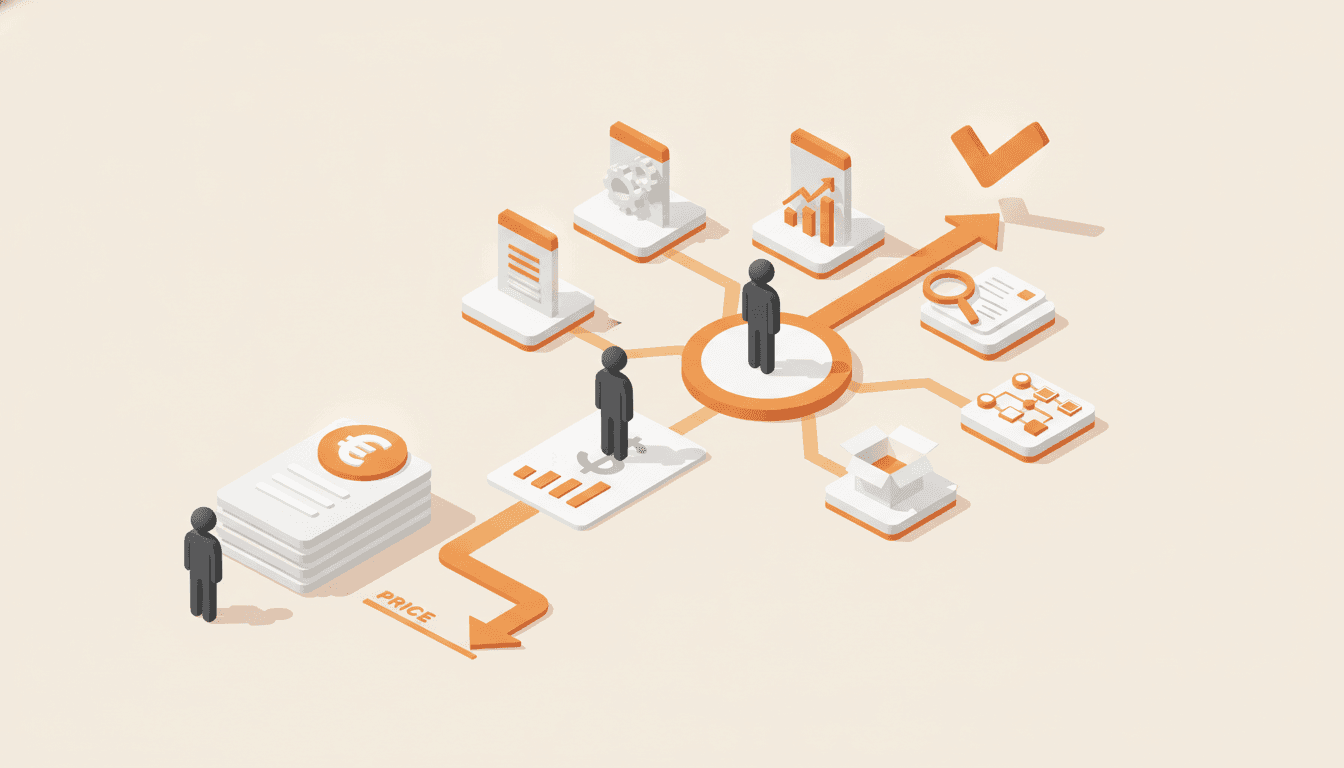
How Much Does Custom Software Cost for a Small Business?
Custom software has fallen far enough in price that small businesses can seriously consider it. Here is what actually sets the number, one real $61,000 quote, and the five questions that decide whether to build at all.

How to Clean Up Your Business Data (Before You Automate Anything)
Nobody trusts the reports, so everybody keeps a private spreadsheet. Cleaning the file is not the fix: the fix is repairing the four things that break the data in the first place.
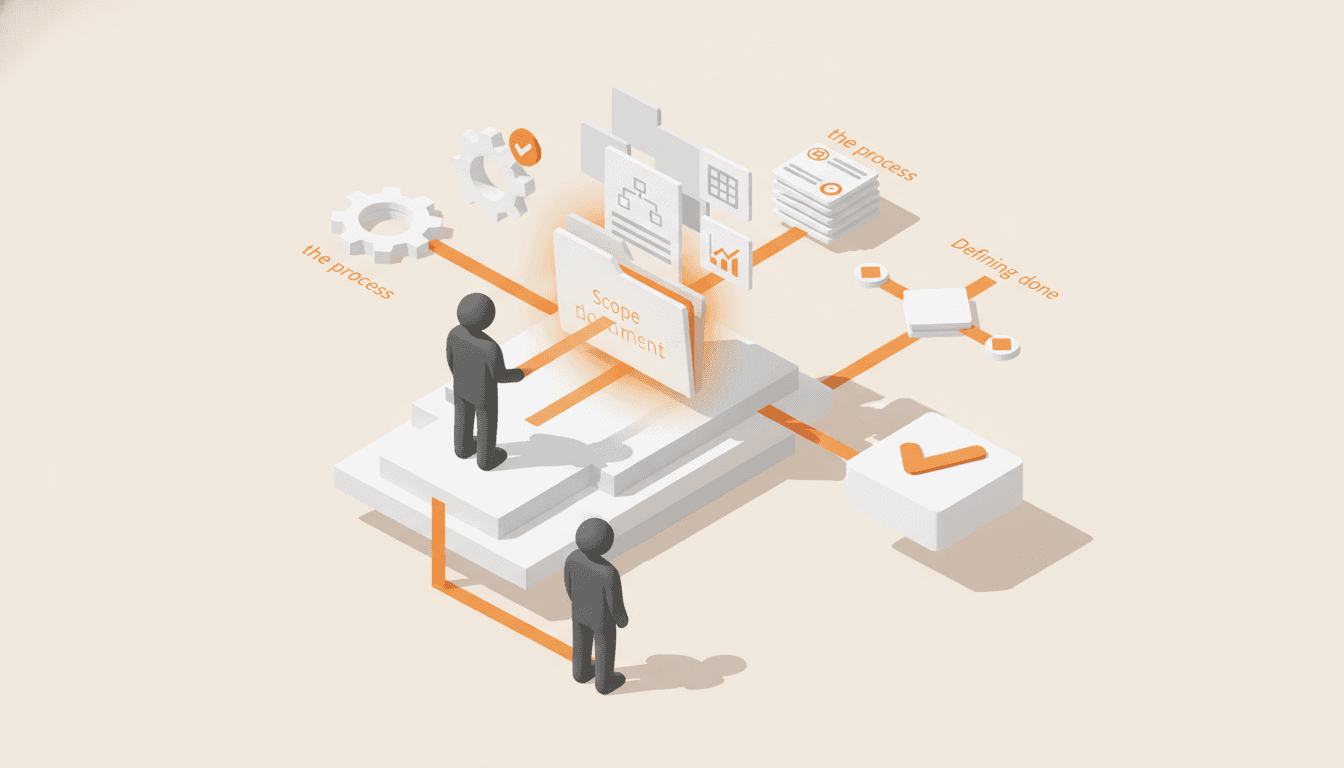
How to Scope a Custom Software Build (What to Hand a Developer)
A developer builds exactly what you describe, so the scope document is the whole game. Here is what belongs in it: the process as it really runs, every record, the decision rules, and one paragraph defining done.
How much of your business runs on you?
Twelve questions, about three minutes. You get a score across six areas, the one carrying the most risk, and the first thing to fix.