
Two US providers publish fractional COO packages from $3,000 to $8,500 per month. What matters for your budget is how much time the COO commits, which decisions they own, and who will turn those decisions into procedures your team can follow. Roll With the Punches pricing and Armistead Gratton pricing
How much does a fractional COO cost per month?
These are individual providers' published US dollar prices, checked November 25, 2026. The offers cover different hours and responsibilities.
| Provider and package | Monthly fee | What the provider commits to |
|---|---|---|
| Roll With the Punches, Focused | $3,000 | Up to 5 hours a week working on one or two priority areas |
| Roll With the Punches, Embedded | $5,000 | Up to 10 hours a week working directly with the leadership team |
| Armistead Gratton, Essential | $3,750 | Up to 24 hours a month, weekly leadership meetings and oversight of one operational priority |
| Armistead Gratton, Executive | $8,500 | Up to 56 hours a month overseeing multiple areas of the business |
Compare the offers against your calendar. Five hours a week might cover a leadership meeting, a decision about staffing, and follow-up with two managers. If you also expect the COO to watch your dispatcher work, write the instructions and train the backup, ask where those hours fit. Roll With the Punches packages and Armistead Gratton packages
How do hourly rates, day rates and contract terms change the bill?
RecruitFractional lists $200 to $450 an hour and quotes day rates of $1,500 to $3,000. A booked day can make sense for watching dispatch, talking to supervisors and deciding how to fix a handoff. Ask for a separate estimate for the work that follows that day. Hourly rates and day rates
Put the minimum commitment beside the monthly fee. Operex Groundworks starts at $4,000 a month with a three-month minimum, so the starting commitment is $12,000. Its handoff includes documented procedures. Ask to see a sample so you can compare what your team will have at the end of each offer. Operex scope and terms
How can you tell if someone will actually build the systems?
Take one job that went wrong last week. Suppose sales promised a Friday installation, dispatch booked the crew, and nobody checked whether the deposit had cleared. The owner spent Thursday afternoon untangling it. Put that example in front of each candidate and ask them to walk you through what happens after the leadership meeting.
A COO might decide that finance confirms payment before dispatch releases the job. That decision settles a real disagreement between departments. Someone still needs to watch the dispatcher open a job, find the payment field, capture the exception for customers with credit terms and show the backup dispatcher where to look. Ask who has the skill and the time on their calendar for that work.
Ask each candidate the same three questions before you sign.
- Who will sit with sales, finance and dispatch to see how the handoff works today?
- What will the backup dispatcher have in front of them when you finish?
- Who will watch the backup use those instructions on a real job and fix the part that trips them up?
Listen for names and deliverables. "Our COO will review the process" and "our COO will test a dispatch checklist with your backup" are different commitments. Either can be worth paying for. The expensive surprise is discovering your office manager inherited the writing after you signed.
When should you hire a COO, an operations manager or a systems team?
Hire a fractional COO when department heads need someone with authority to make tradeoffs. If sales keeps promising dates the crews cannot meet, someone has to set the booking rule, get both managers behind it and handle exceptions. A procedure can record that decision once leadership makes it.
Hire an operations manager when the rule is clear and the workload needs daily supervision. If schedules change every morning, the person assigning crews needs to be available when the phone rings. Compare the hours you need covered with the days a fractional executive can commit. When to hire an operations manager
Hire a systems team when the decisions are sound and experienced employees keep teaching the same job from memory. You can start there if you already provide operating leadership. If you have a fractional COO, give them authority over the decisions and give the systems team ownership of interviews, procedures and training. Choosing between a fractional COO and an SOP consultant
How does The Systems Effect work alongside a fractional COO?
Bring us the recurring problem your COO put on the agenda. In the dispatch example, your COO decides who can release a job and who can approve an exception. At The Systems Effect, we interview and record the people doing the work, map the handoff across roles, and write the steps in the order the team uses them. Your people review the instructions. You approve what goes into their hands. Our process documentation service
The dispatcher's checklist and the finance team's instructions serve different purposes. The dispatcher needs to recognize a cleared job quickly. Finance needs to know what evidence to enter and how dispatch will see it. We can turn recordings of that work into role-based training and video walkthroughs. Your COO then has something specific to review with the team when another job slips. How we build procedures and training
If you already have the right person leading operations, you can price the build separately. Our documentation projects start at $3,500 for one role. That figure applies to the work of one role. A handoff spanning sales, finance and dispatch needs its own scope. What our documentation projects cost
Bring us one process your COO wants off the meeting agenda. Send the name of the process, the roles it crosses and the point where someone still has to call you. We can use that example to scope the interviews, writing and training while your COO keeps ownership of the operating decisions. Discuss your systems work with The Systems Effect
What should you bring to the first pricing call?
Bring the last job that exposed the problem, the person who handled it and whatever that person used: a checklist, a spreadsheet or a thread of messages. Tell the candidate where you had to step in. Ask for the monthly fee, the minimum term, your team's time commitment and the first piece of work you will get to inspect. That gives you a way to compare two proposals even when one quotes by the day and the other by the month.
Frequently Asked Questions
Does a fractional COO write standard operating procedures?
Some do. Ask to see a sample they delivered and find out who interviewed the employees, wrote the procedure and tested it. If your staff owns those tasks, give someone the hours to do them or hire a documentation team.
What if I already have a good COO and our procedures are still unfinished?
Ask your COO to pick the handoff that causes the most repeat questions. Have them name the decision owner and what a successful handoff looks like. The Systems Effect can take the interviews, writing and role-based training from there while your COO keeps running the business.
How should I compare the cost of documentation with a COO retainer?
Ask for a price to document one named role or workflow. Compare the deliverables, approval steps and time your employees will contribute. That lets you price the work separately even if you decide to buy both services from the same provider.
What should I ask to see before renewing a retainer?
Pick a recurring issue from the first month. Ask who makes the decision today, where the team finds the instructions and whether the backup can handle the next occurrence. Their answers tell you where another month of executive time or hands-on systems work would help.
Keep reading
Do You Need a Fractional COO or an SOP Consultant?
Hire a fractional COO when the business needs someone to make operating decisions and hold the team to them. Hire an SOP consultant when the decisions are sound but the way the work gets done lives in people's heads. Many owners need both, with the documenting started first.
Why What Worked at 10 People Breaks at 50
Growing pains in business are not random. At 10 people the business runs on human checks: the owner sees everything, everyone overhears everything, and memory is the system. Those checks depend on proximity, so they fail quietly as headcount grows. Here is what breaks, why, and the system that replaces each one.
How to Hire Fast Without Breaking the Systems You Just Built
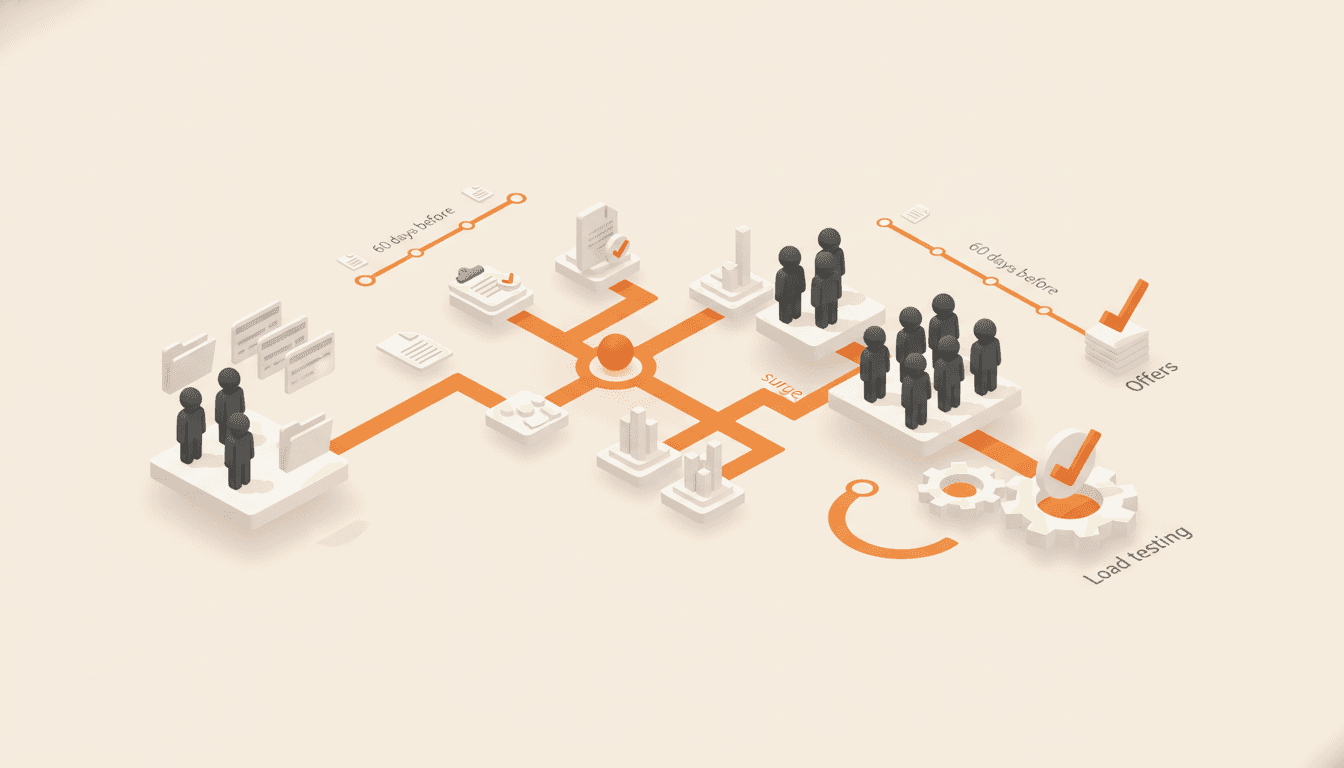
A hiring surge does not create process, it load tests the process you already have. Here is what to document in the 60 days before the offers go out, and the sequencing rule that keeps fast hiring from undoing a year of work.
How much of your business runs on you?
Twelve questions, about three minutes. You get a score across six areas, the one carrying the most risk, and the first thing to fix.