Do You Need a Fractional COO or an SOP Consultant?
By Derek Coffey · November 24, 2026
You need a fractional COO when the business lacks someone to make operating decisions and hold the team to them, and you need an SOP consultant when the decisions are sound but the way the work gets done lives in people's heads. Many owners need both. In that case the documenting should start first, or alongside, so the COO has something to run.
The two get confused because their first months look alike. Much of a fractional COO's early work is finding out how the business really runs and writing it down. For a documentation firm, that work is the whole job. The difference is what each one does next. The COO stays and leads. The documentation firm hands you the playbook and steps back.
We are the second kind. We have a short page for owners weighing this, a fractional COO alternative. This article is the longer version, and it includes the cases where the COO is the better hire.
A COO runs the operation. A playbook is what the operation runs on. You can buy them separately.
What does a fractional COO do?
A fractional COO is a senior operations leader who works in your business part of the time instead of full time. You get an experienced executive's judgment without hiring one for the whole week.
What they do with that time is leadership work:
- Turn the owner's goals into a plan the team can carry out
- Run the operating rhythm: the meetings, the numbers, the follow-through
- Make day-to-day operating decisions so they stop landing on the owner
- Manage or coach the managers
- Decide which problems get fixed first, and see that they are
The important word is authority. A fractional COO is given the right to decide and to hold people accountable. That is what you are buying, and it is what a consultant of any kind does not have.
What does an SOP consultant do?
An SOP consultant, or a process documentation firm, finds out how the work is done, writes it down, and puts it where the team will use it. The output is something you keep: SOPs, process maps, training, a playbook.
Here is how we do it. We interview and record the people who do the work, ask follow-up questions to close the gaps, and map how the work moves between roles. We fix what the map shows is broken, then build the playbook, SOPs and training from that. You approve everything we write. It takes about two hours a week from the people who know the most.
What an SOP consultant does not do is manage anyone. We do not run your meetings, set your priorities or hold your team to their numbers. We build what they run on.
Fractional COO vs SOP consultant: what is the difference?
| Fractional COO | SOP consultant or documentation firm | |
|---|---|---|
| What you are buying | Leadership: someone to decide and follow through | A build: the business written down and trained in |
| Authority over your team | Yes, and that is the point | None. Your people approve what is written about their work |
| Main output | Decisions, priorities, a team that is managed | SOPs, process maps, training, a playbook |
| Works from | Whatever exists, which is often people's memory | Interviews and recordings of the people who do the work |
| Time from your team | Ongoing, as their manager | With us, about two hours a week from the people who know the most |
| When it ends | When you hire full time, promote someone, or no longer need the seat | When the build is done. With us, at the end of any three-month block |
| What stays when they leave | Better habits, and whatever got written down | Every page, in your own platform |
| How it is priced | Ask each provider. We do not quote other people's prices | Ours starts at $3,500 for one role or $4,500 a month |
The row most owners overlook is the one about what stays. Leadership leaves with the leader. Documentation stays.
How do you tell which one you need?
Ask what would stop if you were gone for two weeks, and sort the answers into two piles.
Pile one: decisions. Nobody would know whether to take the big job, how to handle the angry customer, or which candidate to hire. People know how to do their work. They do not know who decides when you are not there. That is a leadership gap, and it points to a COO or an operations manager.
Pile two: tasks. Nobody else knows how payroll gets run, how a quote is built, or what the office manager does every Friday. The work would stall because the steps are in one person's head. That is a knowledge gap, and it points to documentation.
Most owners find something in both piles. Count which is bigger, and which is more dangerous this year.
Two more checks, if the piles look even:
- If you hired a brilliant operations leader tomorrow, what would they do in their first month? If the honest answer is "follow people around asking how things work," you have a documentation problem, and a COO would be solving it slowly.
- If every process were written down perfectly tomorrow, would the business run better? If the honest answer is "no, because nobody would hold anyone to it," you have a leadership problem that no document will fix.
The Owner-Dependence Scorecard is twelve questions and takes about three minutes. It shows where the business leans on one person, which is usually the place to start.
When is a fractional COO the right hire?
A fractional COO is the right hire when the gap is leadership. These are the signs.
- Decisions queue on you all day, and they are real decisions, not questions with a known answer.
- Your managers need managing, and you are not doing it.
- You have goals and no plan, or a plan and no follow-through.
- The team knows how to do the work and still misses, because nobody is watching the numbers.
- You want to step out of operations for good, and no one inside is ready to step in.
In each of these, the missing thing is a person with authority. Documentation helps that person. It does not replace them. If this list describes you, hire the COO, and ask in the interview how they plan to get the business written down, because they will need it.
If stepping back yourself is the goal behind all of this, how to get out of day-to-day operations lays out the steps in order.
When is an SOP consultant the right hire?
An SOP consultant is the right hire when the gap is knowledge. These are the signs.
- One person leaving would be a crisis, because the job lives in their head.
- New hires learn by shadowing, and each one learns a different version.
- The same questions come to you every week, and the answer is always the same.
- You already have a capable manager or second in command, and they are too busy running the day to write anything down.
- A sale, a second location or a new system is coming, and each one needs the business on paper.
For many small businesses this is most of the picture. In our research across 16 small businesses and 461 process areas, average documented-process coverage was 27%, and half of all role areas had no documentation at all (The State of Owner-Dependence).
Todd Watson, founder of Watson Media House, described the knowledge gap from the inside: "There was so much in our business I was handling." The cause he gives is plain: "we had no processes, no procedures." And afterward, on a trip with his family: "I was able to literally check my phone two times in a matter of two weeks."
When do you need both?
You need both when the business has a leadership gap and nothing is written down. That pair is common, and the order matters.
Documentation first, or alongside. A COO who arrives at an undocumented business spends the first months learning it by asking around. You are paying a leader to do an interviewer's job, and when they finish, the knowledge sits in one more head instead of on paper. If the playbook exists when they start, or is being built as they start, their first months go to leading.
The COO owns it afterward. A playbook needs someone to keep it true as the work changes, and to hold people to it. That is a natural job for whoever runs operations. Whoever that is next, a COO or a manager you promote, they start from the playbook instead of from your memory.
The split of work is clean. The COO decides how the business should run. The documentation firm finds out how it runs today, writes down the agreed version, and trains the team on it. A good COO should welcome that, because it is the part of the job that competes hardest with everything else on their calendar.
If you already have a fractional COO, the split works the same way. They point to the roles and processes that matter most, the documentation firm does the capture and the building, and they approve it alongside the people who do the work.
Can a fractional COO document your processes?
They can, and many start by doing some of it. The question is whether it is a good use of them.
Documenting a business takes hours of interviewing, recording, writing and checking. A fractional COO has a limited number of hours with you by definition, and the same hours are needed for decisions, people and emergencies. When those collide, the emergency wins. The usual result is a leader who starts one document, gets pulled into operations, starts another, and finishes neither.
There is also a question of craft. Getting a long-serving employee to explain what they now do without thinking is a specific skill: knowing what to ask, what to record, and which missing step to chase. Some operations leaders have it. Many are better at deciding than at drawing knowledge out of other people.
A fair arrangement is this: the COO decides what gets documented and in what order, and someone else does the capture and the writing.
Can an SOP consultant replace a fractional COO?
No, and you should be careful with one who says yes.
We describe ourselves as a fractional systems partner, and the limit is in the name. We do not manage your team. We build what they run on. If your managers need a boss, we are not it. If nobody is making operating decisions, a playbook will record that problem accurately and leave it unsolved.
What documentation can do is shrink the leadership gap. A good share of what lands on an owner's desk is not a decision at all. It is a question with a known answer that only the owner knows. Once those answers are written down and the team is trained on them, what remains is the real decision-making, and it is often a smaller job than it looked. Some owners find that a manager they already have can carry it. Others find they still need the COO, who now has something to run.
So the honest answer to "which one" is sometimes this: document first, then see how big the leadership job really is.
What should you ask a fractional COO before you hire one?
Ask six things.
- What will you own, and what stays with me?
- How will you learn how we operate today, and how long will that take?
- What will be written down by the time you leave, and who will write it?
- How much of your time do we get, and what happens on the days you are not here?
- How will we both know, a few months in, that it is working?
- What does the end look like: a full-time hire, a promotion from inside, or a handover?
Listen closely to the third answer. If nothing will be written down, the business will depend on the COO the way it depends on you now.
What should you ask an SOP consultant before you hire one?
Ask six different things.
- Who gets the knowledge out of my people, you or us?
- How much of my team's time does it take each week?
- Do you map how the work moves between roles, or only write up single tasks?
- Do you fix a broken process, or document it as it is?
- Who approves what you write?
- Who keeps it current after you leave?
Our answers: we do the interviewing and the recording. It takes about two hours a week from the people who know the most. We map across roles and design the fix for what the map shows. You approve everything. Upkeep is included while a partnership runs, and starts at $1,500 a month after that. How the mapping works is on Business Process Documentation Services.
What does each one cost?
We will not quote what fractional COOs charge. They price in different ways, and the only fair number is the one in a provider's own proposal. Ask for it early, and ask how much of the person's time it buys.
Our prices are public, and all of them are starting prices. A Systems Sprint covers one focused role, starts at $3,500 and takes about 30 days. Optimization and Implementation covers one system, mapped, fixed and rolled out across the roles it touches, and starts at $12,500, one time. A Systems Partner covers the roles the work touches across the business and starts at $4,500 a month, in three-month blocks.
The Systems Partner is the closest of the three to the build a COO would otherwise do. You can stop at the end of any three-month block and keep everything. There is no paid discovery phase: the first call is free, and capture starts in the first week.
When you compare the two kinds of hire, compare what is left at the end. One buys leadership for as long as you pay for it. The other buys something you own.
What do you have when the documentation work is done?
Three things.
- Operations you can see. Every process is mapped from the people who do the work, so you can see where it stalls and who it depends on.
- Fixes that stick. The fixed process becomes the SOP and the training, so the team keeps running it the same way.
- A business that is written down. A playbook with a chapter for each role and its SOPs inside, which whoever runs operations next can start from.
The third is what a new operations leader would want on their first day and rarely gets. What goes into it is on our Business Playbook Services page.
Where should you start?
Tell us which pile is bigger. Send one line through the contact page: "decisions" or "tasks," with one example. We will reply with what we would do first, and if the answer is a COO, we will say so.
If you would rather talk it through, book the 45-minute call. It is free. If you already think the systems are the gap, the fractional COO alternative page shows how we work, and Business Playbook Services shows what you end up holding.
Frequently Asked Questions
Do I need a fractional COO or someone to document our processes?
You need a fractional COO if nobody is making operating decisions and holding the team to them. You need someone to document your processes if people know who decides but the steps live in a few heads. If both are true, start the documentation first or alongside.
What is the difference between a fractional COO and an SOP consultant?
A fractional COO is a part-time operations leader with authority over the team. An SOP consultant has no authority over anyone and builds the SOPs, process maps and training the team runs on. One leads the operation, and the other writes it down.
Can a fractional COO write our SOPs?
Yes, but it is rarely the best use of their hours. Documenting takes interviewing, recording, writing and checking, and that work competes with the decisions and the people a COO was hired to handle.
Is The Systems Effect a fractional COO?
No. The Systems Effect is a fractional systems partner: we do not manage your team. We interview your people, map and fix the processes, and build the playbook, SOPs and training they run on.
Should documentation come before hiring a COO?
Usually yes, or at the same time. A COO who joins an undocumented business spends the first months finding out how it works. A COO who joins a documented one can start leading.
What does a fractional COO alternative cost?
The Systems Effect starts at $3,500 for one role, $12,500 for one system across several roles, or $4,500 a month in three-month blocks for the whole business. We do not quote fractional COO prices, so ask each provider for theirs.
Can a documentation firm work alongside a fractional COO we already have?
Yes. The COO decides what matters and in what order, the documentation firm does the capture and the building, and the COO approves it alongside the people who do the work.
Keep reading
Why What Worked at 10 People Breaks at 50
Growing pains in business are not random. At 10 people the business runs on human checks: the owner sees everything, everyone overhears everything, and memory is the system. Those checks depend on proximity, so they fail quietly as headcount grows. Here is what breaks, why, and the system that replaces each one.
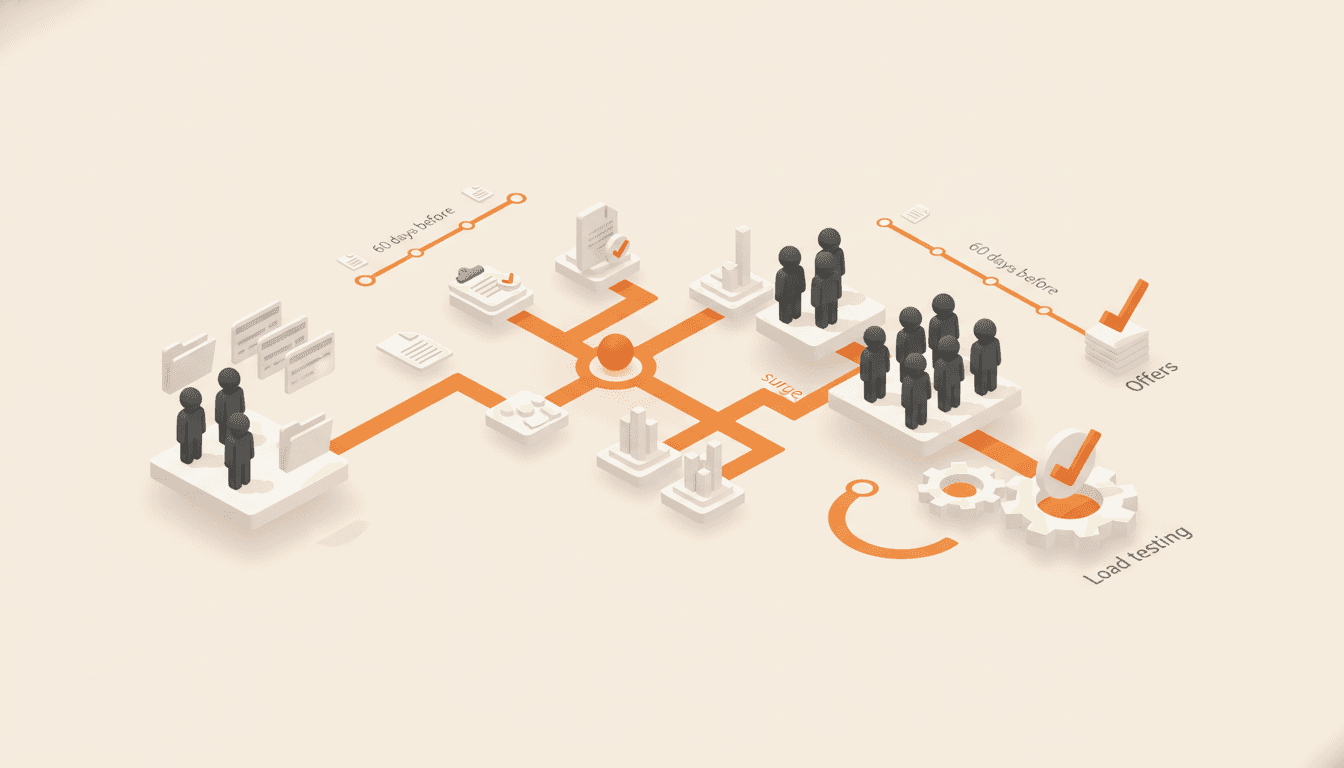
How to Hire Fast Without Breaking the Systems You Just Built
A hiring surge does not create process, it load tests the process you already have. Here is what to document in the 60 days before the offers go out, and the sequencing rule that keeps fast hiring from undoing a year of work.
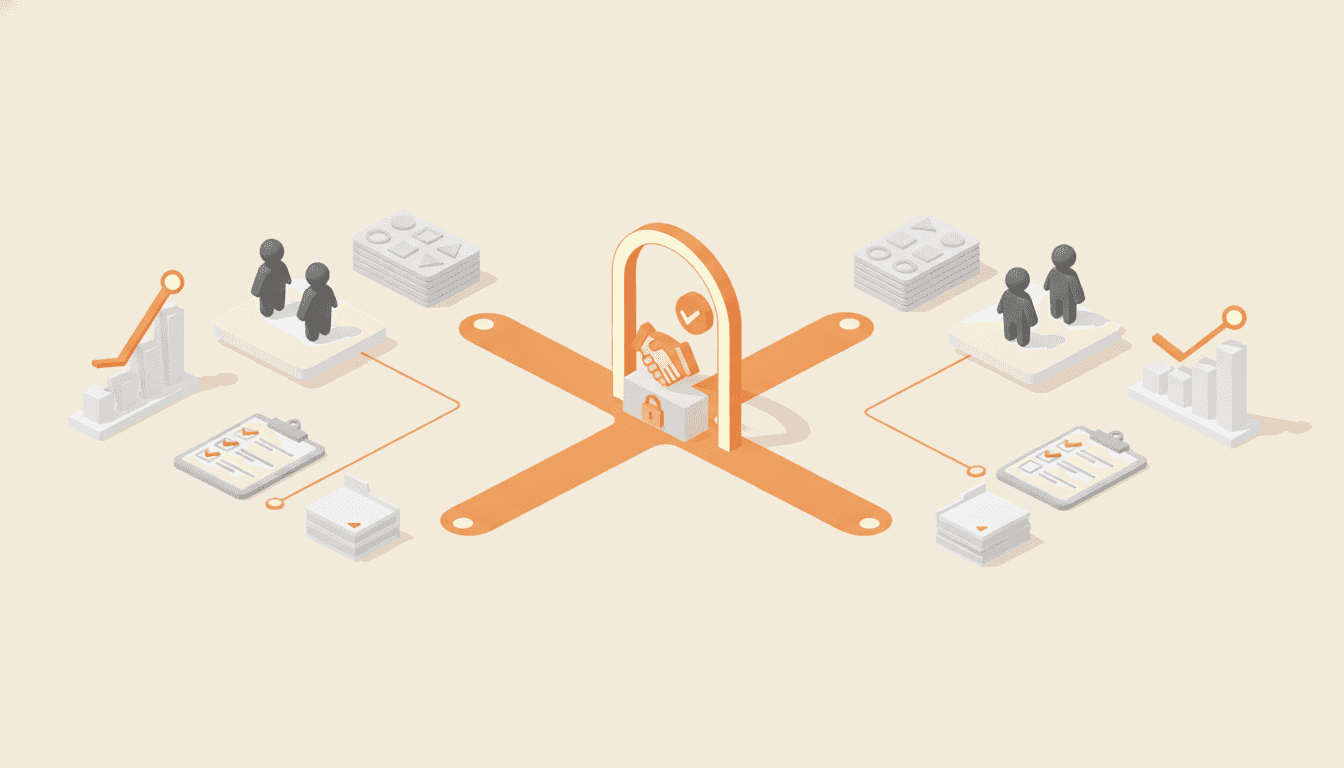
Opening a Second Location: What to Document Before You Sign the Lease
A second location does not fix a weak process, it runs a second copy of it. Here is what to document, who to train, and which numbers to check before you sign anything.
How much of your business runs on you?
Twelve questions, about three minutes. You get a score across six areas, the one carrying the most risk, and the first thing to fix.