
Core Process vs SOP vs Checklist: What EOS Actually Asks For (and What Your Team Needs)
One document can't serve the leadership table and the person in the seat at once. How the three layers fit, and why the giant hybrid doc fails at both altitudes.
Key Takeaway
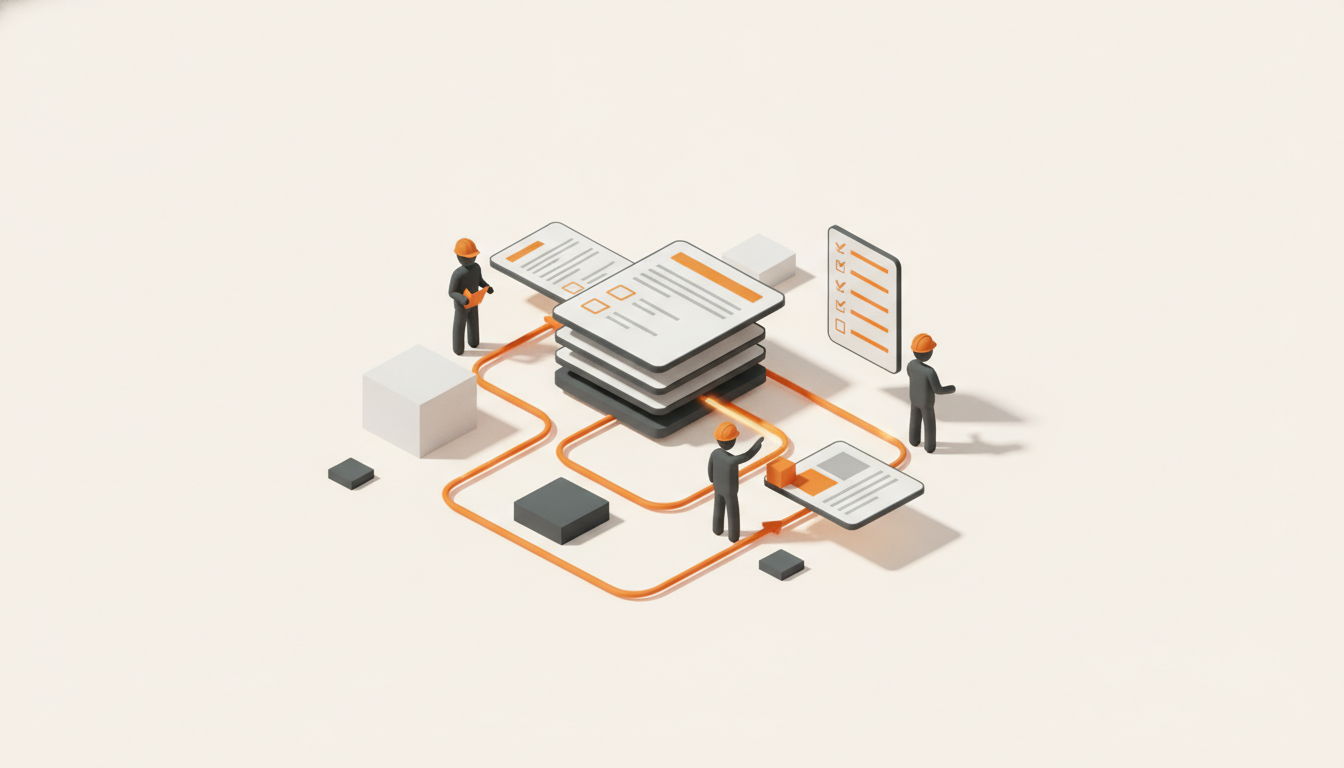
A core process is the 1 to 3 page, 20/80 skeleton EOS® asks for: the WHAT and the order. An SOP is the role-level HOW hanging off individual steps. A checklist is the runtime artifact your team runs mid-task. They are layers, not rivals. Most companies write one giant document that is too detailed to be a core process and too shallow to be an SOP.
In This Article
- What a Core Process Is: The 20/80 Skeleton
- What an SOP Is: The Role-Level How
- What a Checklist Is: The Runtime Artifact
- Core Process vs SOP vs Checklist: Side by Side
- The Altitude Failure: Why One Giant Document Fails Both Jobs
- The Layered Package: How the Three Fit Together
- Who Reads Core Processes, SOPs, and Checklists (and When)
- Where This Fits in the 3-Step Process Documenter™
- One Process at All Three Altitudes: A Worked Example
- Video or Written at Each Layer?
This argument plays out every quarter. The Integrator holds up Traction: core processes are supposed to be 20/80, a page or three each. The ops manager holds up the 38 page monster they spent all quarter writing: the team can't run onboarding from bullet points. Then everybody looks at the Process Component™ score on the Organizational Checkup and sighs.
Both of them are right. They're arguing about different documents. EOS asks for a core process. Your team needs SOPs. The work needs checklists. Three artifacts, three altitudes, three readers. Gino Wickman calls Process the most neglected of the Six Key Components in Traction, and a big reason is companies trying to make one document do all three jobs. It can't. (For the bigger picture, start with our full guide to the EOS Process Component.)
What a Core Process Is: The 20/80 Skeleton
A core process is the short skeleton document EOS asks for: one of your 6 to 10 major processes captured at the 20/80 level. It names the major steps in order, roughly 5 to 15 of them, with a few bullets under each, and it fits on 1 to 3 pages. Past step 15, you are not writing a core process anymore; you are writing an SOP with a heading problem. It documents the WHAT and the sequence, on purpose.
The 20/80 rule is the design principle: document the 20 percent of the process that produces 80 percent of the results, and deliberately leave the rest out. That's altitude control, not laziness. The core process exists so leadership can agree on the one way the business does sales, delivery, or hiring.
My test: if your leadership team can't read it aloud in a meeting and agree or fight about each step, it's not a core process. To see what the 20 percent looks like on the page, we've published real examples of the 20/80 rule in practice.
What an SOP Is: The Role-Level How
An SOP, a standard operating procedure, is the role-level HOW that hangs off a single step of a core process. Where the core process says "Set up the client in the project system," the SOP shows the person in that seat exactly how: the tool, the clicks, the naming conventions, the edge cases.
Notice something: EOS never asks you for SOPs. That's not an oversight. The 80 percent EOS tells you to leave out of the core process doesn't vanish. It moves down a layer, to the people who need it. Leadership doesn't need to know which billing code the coordinator selects. The coordinator absolutely does.
The working rules for this layer: one step, one role, one SOP, about a page and a half of scrolling, written with the person who does the work. That craft is its own topic: see how to write an SOP and these real SOP examples for the anatomy.
What a Checklist Is: The Runtime Artifact
A checklist is the runtime artifact, extracted from the SOP after the SOP exists. It's the bare sequence of confirmations someone runs while doing the task, once they already know how. A checklist is not training and it's not reference. It exists to catch skipped steps in the moment, and it fits on one screen.
A pilot's checklist doesn't teach anyone to fly. It assumes training and protects against the one thing training can't fix: humans under load skip steps. Your best coordinator's 200th client setup is exactly where the billing code gets forgotten.
One rule: generate the checklist from the SOP, never write it independently. Maintained separately, the two drift, and your team runs a version of the process no document describes. When the SOP changes, regenerate the checklist. Same source of truth, two altitudes.
Core Process vs SOP vs Checklist: Side by Side
The three artifacts differ on every dimension that matters: what they're for, how long they run, who reads them, when they get read, who keeps them current, and what EOS calls them. Put them side by side and the pattern is obvious. Each layer trades detail for altitude.
| Core Process | SOP | Checklist | |
|---|---|---|---|
| Purpose | Leadership alignment on the WHAT and the order | Execution: the role-level HOW for one step | In-the-moment error prevention |
| Length | 1 to 3 pages, 5 to 15 high-level steps | About a page and a half per procedure | One screen, 5 to 12 checkboxes |
| Audience | Leadership team and process owners | The person in the seat | Everyone who runs the task |
| When it's read | Quarterly reviews and when the business changes | During training and mid-task, until it's muscle memory | Every single run |
| Who owns updates | The process owner, with leadership sign-off | The seat that does the work, with the process owner | Regenerated from the SOP whenever it changes |
| EOS's term for it | A core process, documented at 20/80 | No EOS term. The 80 percent EOS tells you to leave out | No EOS term. Part of Step 3 packaging |
The Altitude Failure: Why One Giant Document Fails Both Jobs
The most common Process Component failure is one giant document written at no particular altitude: 15 to 40 pages that mix skeleton and screenshots. It's too detailed for leadership to review and agree on, and too shallow and disorganized for the person in the seat to work from. It fails both jobs, so nobody follows it.
It's usually written by the most conscientious person in the building: handed a Process Rock, a blank template, and a deadline, everything they knew went into one file. Right instinct, wrong packaging.
At the leadership table, nobody can hold 38 pages in their head, so review becomes a rubber stamp. In the seat, the detail exists but it's interleaved with strategy paragraphs, so finding one field name mid-task is keyword archaeology. Operators try it twice, then go back to asking the person next to them. Documented on paper, tribal in practice.
The 40 Page Rock
If your Process Rock produced one long document per process, it didn't fail because your team is undisciplined. It failed because the deliverable was defined at the wrong altitude. A document that tries to be a core process and an SOP at once gets followed by no one, so the Followed By All™ half of the component never starts.
The Layered Package: How the Three Fit Together
The fix is a layered package: the 1 to 3 page core process on top, SOPs linked beneath only the steps that need them, and checklists extracted from those SOPs. Each layer links down to the next. Leadership signs off on the top layer. The team operates from the layers underneath it.
Build it in sequence:
- Write the core process first, at 20/80. Major steps in order, a few bullets each, an owner per step. Resist every urge to explain how.
- Run the seat test on each step. Could a competent person in this seat execute this step from this line plus their training? If yes, it needs nothing more. If no, it earns an SOP.
- Write SOPs only where the test fails. One step, one role, one procedure, built with the person who does the work, linked directly beneath its step so detail is one click down.
- Extract a checklist from each SOP's critical path. Strip the instruction, keep the confirmations. That's what gets opened at runtime, and it inherits every SOP update.
Most Steps Don't Earn an SOP
In a typical 10 step core process, expect a minority of steps to need a full procedure. "Hold the kickoff call" might need an agenda bullet. "Set up the client in three systems" needs the whole treatment. An SOP on every step is over-documenting; on none, you've written a poster.
Who Reads Core Processes, SOPs, and Checklists (and When)
Leadership reads core processes, at the quarterly review and whenever the business changes. Operators read SOPs during training and mid-task, then less and less as the work becomes muscle memory. Everyone runs checklists on every run, forever. If the wrong audience keeps opening the wrong layer, the artifact is at the wrong altitude.
Use that as a diagnostic. Leadership keeps reading SOPs? They're micromanaging, or the core process above is missing. Operators keep re-opening the core process mid-task? Detail is missing one layer down. Nobody opens anything? That's a followership problem, and followership is measurement: if following the process doesn't show up on a Scorecard number, it doesn't exist. We break that down in how to actually measure Followed By All.
The Organizational Checkup holds every component to an 80 percent strength target. You get there when each layer is read by its intended audience at its intended moment.
Where This Fits in the 3-Step Process Documenter™
This layering is what Step 3 of the 3-Step Process Documenter™ is actually asking for. Steps 1 and 2 identify your core processes and document them at 20/80. Step 3 says package them so they're easy to find and use, in a format that matches the work: document, workflow diagram, photos, or video.
Most companies read Step 3 as "export a PDF to the shared drive." That's storage, not packaging. Packaging means the stack lives where the work happens, every layer links downward, and each artifact takes the format its job demands. Software helps with storage and delivery: PlaybookBuilder, for example, describes itself as the Process software used by EOS Corporate. But no platform writes the layers for you, and loading a monolith into better software gives you a prettier monolith.
Cleared Step 1 but circling Step 2 for three quarters? That stall has specific causes and fixes: see why teams get stuck on the 3-Step Process Documenter.
One Process at All Three Altitudes: A Worked Example
Here's one process at all three altitudes: new client onboarding at a generic B2B service company. This is a composite example, not a real client's document, but the shape is exactly what we build. Watch how each layer compresses the one below it and serves a completely different reader.
Altitude 1: The Core Process (1 page)
A purpose line, a named process owner, one Scorecard measurable (percentage of onboardings hitting the 30 day review on time), and eight steps, each with an owning seat:
- Signed agreement received, deal marked closed-won in the CRM
- Internal kickoff held: account team assigned, scope reviewed
- Welcome email and intake questionnaire sent to the client
- Client set up in the project system
- Kickoff call held, success metrics agreed
- First 30 day plan built and shared
- Weekly status cadence started
- 30 day review: scope confirmed, first invoice cycle verified
That's the whole document. Leadership reads it aloud in four minutes and argues about whether step 6 belongs before step 5. That argument is the point.
Altitude 2: One SOP Beneath Step 4 (about 2 pages)
Step 4 fails the seat test: setting up a client touches three tools and a dozen decisions. So an SOP hangs off it: "Set Up a New Client in the Project System." It names the owning seat, lists the tools, then walks twelve numbered instructions with screenshots: the template to clone, the folder naming convention, permissions, the billing code. Two edge cases (multi-entity clients, mid-month starts), plus a three minute screen recording at the top. Steps 2, 3, and 8 carry their own SOPs. Steps 1, 5, and 7 don't need one.
Altitude 3: The Checklist Extracted From That SOP
From that SOP, a seven line runtime checklist:
- CRM record flipped to closed-won
- Project created from current template
- Folder named to convention
- Client users invited, permissions verified
- Billing code added and confirmed
- Onboarding tasks assigned to the account team
- Kickoff call on the calendar
No instructions, no screenshots. The coordinator has done this forty times. The checklist exists for run forty-one, at 4:45 on a Friday, when the billing code quietly gets skipped.
Video or Written at Each Layer?
Written for core processes, either for SOPs, written for checklists. A core process has to be scannable in a leadership meeting, so it stays text. An SOP can be video, written, or both, matched to the work. A checklist is always written, because nobody scrubs a video mid-task to confirm a step.
At the SOP layer, let the work pick the medium. Screen work wants a screen recording plus written steps: watch once, reference forever. Physical work wants photos and short clips. Judgment work, like qualifying a lead, wants written guidance with real examples, because there's nothing to film. That's Step 3's "format that matches the work" in practice; we've gone deep on the tradeoffs in video SOPs vs written SOPs.
Need All Three Layers Built?
We build the full stack: core processes at 20/80 that leadership signs off on, SOPs beneath the steps that need them, and checklists your team runs. Extracted from your people, trained back in. You keep operating. We hold the pen.
Book a Discovery CallNot ready to talk? Score your owner dependence in 3 minutes.
Keep Reading

Frequently Asked Questions
EOS says keep it to 20/80 but my team needs more detail. What's the difference between a core process and an SOP?
There is no conflict, because they are different layers. The core process stays at 20/80: 1 to 3 pages of high-level steps leadership aligns on. The detail your team needs goes into SOPs hanging off individual steps, written for the person in the seat. Keeping the core process short is what makes room for genuinely detailed SOPs.
Is a core process the same as an SOP?
No. A core process is a 1 to 3 page skeleton of one of your 6 to 10 major processes: the WHAT and the order, at the 20/80 level. An SOP is the role-level HOW for a single step within it: tools, clicks, edge cases, screenshots. Same process, two different altitudes, two different readers.
How long should an EOS core process document be?
1 to 3 pages, with roughly 5 to 15 high-level steps and a few bullets under each. The test: your leadership team should be able to read it aloud in a meeting and agree or disagree with each step. If it takes twenty minutes to read, it has absorbed SOP-level detail and needs to be split into layers.
Do checklists replace SOPs?
No. A checklist assumes competence; an SOP builds it. The SOP teaches someone in the seat how to do the work, with full detail. The checklist is extracted from that SOP for people who already know how, so skipped steps get caught in the moment. Hand a checklist to an untrained person and you get confident mistakes.
How many core processes should a company have?
EOS guidance is 6 to 10 core processes that together describe your unique way of doing business: marketing, sales, operations or delivery, accounting, HR, customer retention, and the like. If you count 30, you are listing sub-processes. Push those down into the SOP layer beneath the core process they belong to.
EOS® and related marks are trademarks of EOS Worldwide. The Systems Effect is an independent company and is not affiliated with or endorsed by EOS Worldwide.